Anthropic Builds AI Chips as Nvidia Moves Into AI Models
The boundary between AI model developers and semiconductor companies is rapidly disappearing.
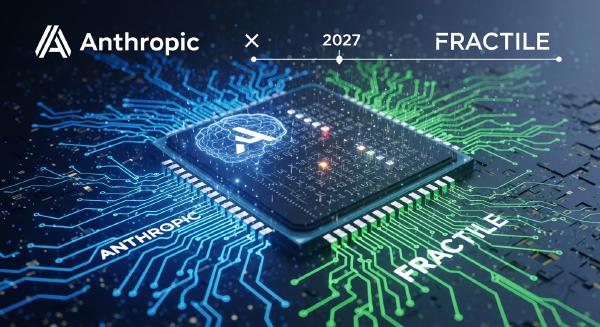
Anthropic has recruited Amir Salek, the founding leader of Google’s Tensor Processing Unit (TPU) program, to lead its custom silicon effort. The move follows Anthropic’s hiring of Clive Chan, an early contributor to OpenAI’s custom AI-chip initiative.
Together, the hires indicate that Anthropic is moving beyond a strategy centered exclusively on purchasing compute from external suppliers. The company is building the engineering capability required to design hardware specifically around its Claude model workloads while continuing to procure accelerators from Nvidia, Google, and AWS.
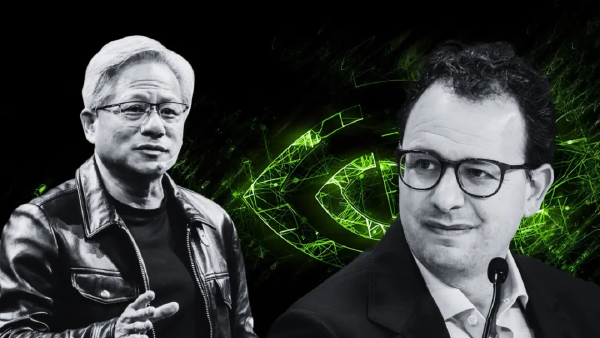
At the same time, Nvidia is moving in the opposite direction. The world’s leading AI accelerator vendor is expanding further into AI models and model infrastructure, using open-source software and models to strengthen demand for its GPU and CUDA ecosystem.
The result is a structural shift across the AI industry:
AI labs are moving upstream into chip design, while chipmakers are moving downstream into models and software.
🧠 Anthropic Builds a Custom Silicon Team #
Anthropic’s custom-chip strategy became significantly more credible after two high-profile engineering hires.
Amir Salek brings Google TPU experience #
Amir Salek spent years at Google building the company’s custom silicon organization. Between 2013 and 2022, he helped establish and lead the team responsible for Google’s TPU program.
His work covered multiple generations of Google’s AI accelerators, including:
- TPU v1
- TPU v2
- TPU v3
- TPU v4
- Edge TPU
Before joining Google, Salek spent approximately eight years at Nvidia working on SoC design.
After subsequently moving into venture capital, his return to semiconductor engineering at Anthropic represents a significant addition to the company’s hardware expertise.
At Anthropic, Salek reports to Head of Compute James Bradbury and is responsible for helping build the company’s custom AI silicon organization.
The significance of this appointment goes beyond a single executive hire. Someone who helped establish one of the world’s most important AI accelerator programs is now applying that experience directly to a frontier AI model developer.
Clive Chan adds OpenAI chip expertise #
Anthropic also hired Clive Chan in June 2026.
Chan was an early member of OpenAI’s custom hardware effort and contributed to its internal inference-chip program, reportedly known by the codename “Jalapeno.”
His move to Anthropic complements Salek’s much broader TPU experience.
The combination gives Anthropic expertise spanning both sides of the custom-AI-chip development spectrum:
AI workload requirements → accelerator architecture → silicon implementation → deployment
This is a fundamentally different capability from simply negotiating large accelerator purchases with external semiconductor vendors.
💰 Why Is Anthropic Building Custom AI Silicon? #
The primary motivation is economics.
Reducing inference costs #
Anthropic confirmed the formation of its internal chip-design team on August 5, 2026, with the stated objective of co-designing hardware with its Claude models.
The underlying concept is straightforward: general-purpose accelerators must support a broad range of workloads, while a custom accelerator can be optimized around the exact characteristics of a company’s models and inference stack.
Potential optimization targets include:
- Matrix and tensor operations
- Memory bandwidth
- On-chip SRAM capacity
- Interconnect architecture
- Precision formats
- Model-specific operators
- Power efficiency
- Inference scheduling
- Software-hardware co-optimization
If successful, this approach could substantially reduce the cost of running inference at scale.
Anthropic has indicated that its custom-silicon effort is intended to reduce inference costs by approximately 50%.
That target becomes increasingly important as Claude API traffic grows. Every inference request consumes compute resources, and accelerator costs become a direct component of the company’s operating economics.
Moving from compute procurement to compute ownership #
Anthropic already has access to substantial external compute resources.
Its infrastructure strategy spans several accelerator ecosystems:
- Nvidia GPUs
- Google TPUs
- AWS Trainium
The company has agreements involving up to 1 million Google TPUs, while its AWS infrastructure plans have also scaled to extremely large Trainium deployments.
Large procurement agreements provide capacity, but they do not eliminate several strategic risks.
External dependence can create challenges involving:
- Accelerator availability
- Supply-chain constraints
- Hardware pricing
- Memory and networking bottlenecks
- Vendor roadmaps
- Architecture mismatches
- Long-term infrastructure costs
Custom silicon provides another option: optimize the hardware around the workload rather than adapting the workload entirely around commercially available hardware.
This does not mean Anthropic will stop buying Nvidia GPUs, Google TPUs, or AWS accelerators.
Instead, the strategy increasingly resembles:
External accelerators + custom silicon + workload-specific optimization
That hybrid approach can provide both near-term compute capacity and long-term architectural control.
🏭 The Broader AI Industry Is Building Custom Chips #
Anthropic is not alone in moving toward proprietary accelerators.
Leading AI companies increasingly view compute infrastructure as a strategic asset rather than a commodity purchased entirely from semiconductor vendors.
| Company | Custom Silicon Initiative |
|---|---|
| OpenAI | Developing the “Jalapeno” inference accelerator in cooperation with Broadcom, with deployment targeted for the second half of 2026. |
| DeepSeek | Reportedly developing an internal inference accelerator to reduce dependence on Nvidia and Huawei. |
| Meta | Continuing development of its Meta Training and Inference Accelerator (MTIA) family. |
| Microsoft | Scaling its proprietary Maia AI accelerator platform. |
| Continuing to evolve its TPU architecture for internal and cloud AI workloads. | |
| AWS | Expanding its Trainium accelerator family for AI training and inference. |
The common objective is not necessarily to eliminate Nvidia.
Rather, companies want more control over the hardware layer and a larger set of options for matching accelerator architectures to their workloads.
ASICs become increasingly important #
The shift is also reflected in the broader accelerator market.
TrendForce has projected ASIC growth of approximately 44.6% in 2026, compared with roughly 16.1% growth for GPUs.
The distinction is important.
GPUs remain highly flexible and are extremely effective for rapidly evolving AI workloads. ASICs sacrifice some generality in exchange for greater specialization.
For high-volume inference, that trade-off can become attractive because inference workloads tend to be more predictable once model architectures and serving patterns stabilize.
The economic equation increasingly becomes:
Higher specialization → better efficiency → lower cost per inference
The challenge is that the engineering investment required to reach that efficiency is substantial.
🔄 AI Labs and Chipmakers Are Moving in Opposite Directions #
Anthropic’s hardware expansion is only half of the larger industry transition.
Semiconductor companies are simultaneously moving deeper into AI software and models.
Nvidia’s move into AI models #
Nvidia has increasingly expanded beyond accelerator hardware into the software and model layers of the AI stack.
Its NemoTron 4 model family represents part of this broader strategy, targeting the rapidly growing open-model ecosystem.
The strategic objective does not necessarily require Nvidia to become a conventional model vendor.
Instead, strong models can reinforce demand for Nvidia infrastructure.
If developers train, fine-tune, deploy, and optimize models around Nvidia’s software stack, the resulting workloads can generate additional demand for:
- Nvidia GPUs
- CUDA
- TensorRT
- Networking products
- AI inference infrastructure
- Developer software
This creates a powerful ecosystem effect.
The model does not have to be the primary source of revenue if it helps make the underlying hardware platform more attractive.
The value chain is becoming vertically integrated #
Historically, the AI stack was relatively segmented:
Chip designer → Accelerator vendor → Cloud provider → AI lab → Model developer → Application
That separation is increasingly breaking down.
Today, individual companies can occupy several layers simultaneously.
For example:
- Google develops TPUs, operates cloud infrastructure, and trains its own models.
- AWS develops Trainium and Inferentia while operating a massive cloud platform.
- Microsoft develops Maia while building and deploying AI services.
- Nvidia develops GPUs, networking hardware, CUDA software, and AI models.
- Anthropic develops frontier models while increasingly investing in custom silicon.
The competitive advantage therefore increasingly comes from optimizing the entire stack rather than a single layer.
🧩 Hardware and Software Can No Longer Be Optimized Independently #
AI workloads create unusually strong coupling between software and hardware.
A model’s architecture directly affects:
- Compute intensity
- Memory requirements
- Communication patterns
- Precision requirements
- Accelerator utilization
- Inference latency
- Energy consumption
Conversely, hardware capabilities influence which model architectures are economically attractive.
This creates a feedback loop:
Model architecture → Hardware architecture → Compiler/runtime → Model optimization → Hardware utilization
A general-purpose GPU provides broad flexibility, but a custom accelerator can potentially eliminate unnecessary capabilities and dedicate silicon to the operations that matter most.
This is why the distinction between “AI company” and “chip company” is becoming increasingly artificial.
🛡️ Custom Silicon Is Both Defense and Offense #
Building a custom AI accelerator is not a short-term solution.
A production chip requires years of work across:
- Architecture
- RTL design
- Verification
- Physical design
- Packaging
- Memory integration
- Firmware
- Compilers
- Runtime software
- System validation
- Manufacturing
- Deployment
As a result, Anthropic will continue to depend heavily on external accelerators for the foreseeable future.
The strategic value of custom silicon lies elsewhere.
Defensive value #
An internally controlled accelerator can provide protection against:
- GPU supply shortages
- Vendor pricing pressure
- Hardware allocation constraints
- Changes in external accelerator roadmaps
- Architectural limitations imposed by third-party hardware
It can also provide greater predictability for long-term infrastructure planning.
Offensive value #
Custom silicon can also become a competitive weapon.
If Anthropic can design hardware specifically around Claude’s workload characteristics, it may be able to achieve a better combination of:
- Cost per token
- Performance per watt
- Inference latency
- Accelerator utilization
- Memory efficiency
Those improvements can translate directly into more competitive AI services.
The same logic applies to other frontier AI companies developing their own accelerators.
🌐 The AI Stack Is Converging #
The most important development is not that Anthropic is hiring chip engineers or that Nvidia is developing models independently.
The deeper change is the convergence of previously separate layers of the AI industry.
AI laboratories increasingly want control over compute.
Cloud providers increasingly want proprietary accelerators.
Chipmakers increasingly provide software, models, and complete AI platforms.
And model developers increasingly understand that hardware efficiency can directly determine the economics of large-scale inference.
The traditional stack:
Models → Software → Cloud → Hardware
is evolving toward a vertically integrated architecture:
Models ↔ Software ↔ Compilers ↔ Accelerators ↔ Networking ↔ Data Centers
In this environment, the companies that can co-design the entire stack have more opportunities to optimize performance, cost, and supply-chain resilience.
Anthropic’s recruitment of Google’s TPU founder is therefore more than a high-profile personnel move. It signals that frontier AI laboratories increasingly view semiconductor architecture as part of their core competitive advantage.
At the same time, Nvidia’s expansion into models demonstrates the reverse trend: chipmakers are moving upward into the software and intelligence layers that ultimately determine accelerator demand.
The emerging AI competition is no longer simply GPU versus GPU or model versus model.
It is increasingly a competition between vertically integrated computing stacks.