
The Real Story Behind Gemini’s “Five Drops of Water”
Google recently published a report claiming that a single Gemini query consumes only tiny amounts of energy, carbon, and water. The headline figure—“five drops of water per prompt”—quickly grabbed attention.
But does it tell the full story?
🌍 The Headline Numbers #
According to Google:
- 0.24 Wh energy per prompt
- 0.03 g CO₂ emissions
- 0.26 ml water usage (~5 drops)
Google also claims:
- 33× lower energy use (year-over-year)
- 44× lower carbon footprint
On paper, that’s remarkably efficient—almost trivial.
⚙️ Where the Efficiency Comes From #
Architecture & Algorithms #
Gemini leverages modern transformer optimizations:
- Mixture of Experts (MoE) reduces active compute
- Quantization (AQT) lowers precision cost
- Speculative decoding speeds up inference
- Lightweight variants like Gemini Flash
These techniques significantly reduce unnecessary computation and improve efficiency per query.
Hardware Acceleration #
Google relies heavily on its custom Tensor Processing Units (TPUs):
- Designed specifically for AI workloads
- Much higher performance-per-watt than CPUs/GPUs
- New generations (e.g., Ironwood TPU) improve efficiency dramatically
Software & System Optimization #
- XLA compiler optimizes execution graphs
- Pathways system distributes workloads efficiently
- Kernel-level tuning reduces overhead
Data Center Design #
Google’s infrastructure is among the most efficient globally:
- PUE ≈ 1.09 (near theoretical limits)
- Advanced cooling strategies
- Regional optimization (energy vs. water trade-offs)
⚠️ Why Experts Are Skeptical #
The “five drops” claim isn’t necessarily wrong—but it’s incomplete.
1. Indirect Water Usage Is Missing #
The reported 0.26 ml only includes direct cooling water.
It excludes:
- Water used in electricity generation
- Cooling at power plants (gas, nuclear, etc.)
Real water footprint can be significantly higher.
2. Carbon Accounting Isn’t Absolute #
Google uses market-based emissions:
- Includes renewable offsets
- Doesn’t reflect actual grid energy mix
Experts prefer location-based emissions, which show real-world impact.
3. Apples-to-Oranges Comparisons #
Google compares:
- Its median optimized workloads
- Against older studies with full lifecycle metrics
This can make efficiency gains appear larger than they truly are.
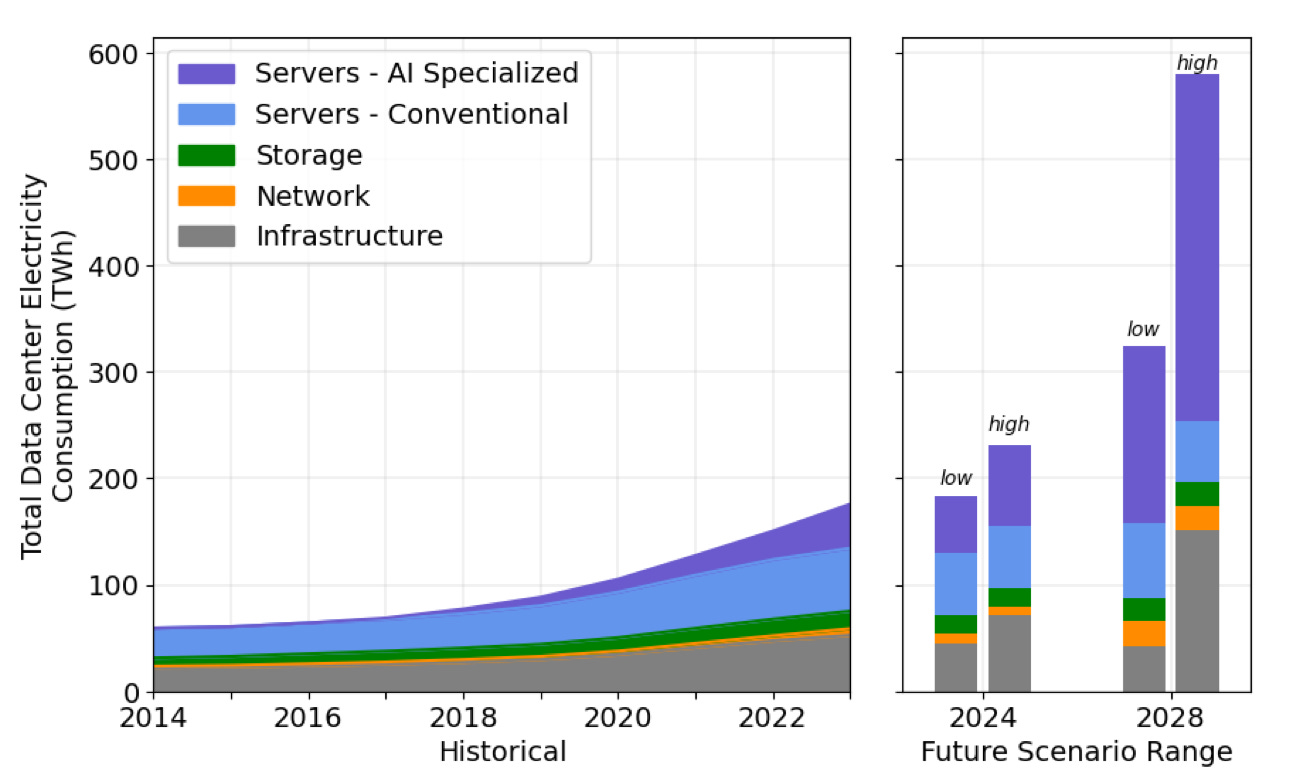
4. The Jevons Paradox Effect #
Efficiency improvements often lead to higher overall consumption.
And we’re already seeing that:
- Google’s emissions are up ~51% since 2019
- AI demand is growing exponentially
Efficiency gains are being offset by increased usage.
📊 The Bigger Picture #
| Perspective | Reality |
|---|---|
| Per-query efficiency | Extremely low |
| Total energy use | Rapidly increasing |
| Water impact | Likely underestimated |
| Carbon footprint | Still rising overall |
🧠 What This Actually Means #
The “five drops of water” metric is:
- ✔️ Technically accurate (within a narrow scope)
- ❌ Not representative of full environmental impact
The real issue isn’t how efficient one query is—
it’s how many billions of queries are being run every day.
🏁 Key Takeaways #
- Gemini is highly efficient per request
- The methodology excludes major indirect costs
- AI’s total environmental footprint is still growing
- Efficiency alone does not guarantee sustainability
💡 Final Thought #
The future of AI sustainability won’t be decided by per-query efficiency metrics.
It will depend on:
- Total compute demand
- Energy sourcing
- Infrastructure scaling
And most importantly—whether efficiency gains can outpace exponential growth.