Grok Bot vs. OpenClaw: Two Paradigms for AI Agent Platforms
AI agent platforms are increasingly competing on something beyond model intelligence: how much infrastructure the user has to understand before an agent can actually do useful work.
The difference becomes obvious when comparing SpaceXAI’s Grok Bot with OpenClaw. One approach attempts to hide most of the underlying infrastructure behind a hosted, consumer-oriented interface. The other exposes considerably more of the system to the user, providing greater control at the cost of additional configuration.
Dan McAteer’s experience testing Grok Bot for five days led to a concise analogy: Grok Bot is like unboxing a MacBook, while OpenClaw is like installing Linux.
The comparison captures a broader architectural question for agent-platform developers: should an agent system optimize primarily for time-to-value, or should it prioritize ownership, configurability, and infrastructure control?
⚡ Zero Configuration Is the Real Product Innovation #
Grok Bot’s most significant advantage is not necessarily a new agent capability. It is the reduction of configuration work required to access existing capabilities.
When McAteer explored Grok Bot’s plugin directory, the workflow was straightforward: find a service, select it, authenticate through a browser window, and continue.
There was no need to manually configure an MCP server, edit system files, or distribute API credentials across configuration files.
That difference becomes more significant when building real workflows.
McAteer connected Grok Bot to his X account so the agent could inspect his feed, identify areas of interest, and produce a daily news briefing. He also connected a work account to Freshdesk and configured an automated support workflow that checks for new tickets every 15 minutes.
The configuration model was essentially:
Select service → authenticate → use the agent.
For users who simply want automation rather than an infrastructure project, this abstraction can eliminate a substantial amount of friction.
Configuration Is Becoming a Product Feature #
Traditional agent infrastructure often exposes implementation details directly to the user.
A developer may need to understand:
- MCP server installation
- Tool schemas
- API credentials
- Environment variables
- Process management
- Authentication flows
- Webhook configuration
- Scheduled jobs
- Runtime permissions
A hosted agent platform can absorb most of those concerns into the product itself.
The result is not necessarily a more capable agent. It is an agent with a higher-level interface to its capabilities.
That distinction is central to understanding why platforms such as Grok Bot can feel dramatically easier to use despite relying on many of the same underlying technologies available to more developer-oriented systems.
💻 MacBook vs. Linux: Two Models of Ownership #
The MacBook-versus-Linux analogy is useful because the difference is fundamentally about who controls the computing environment.
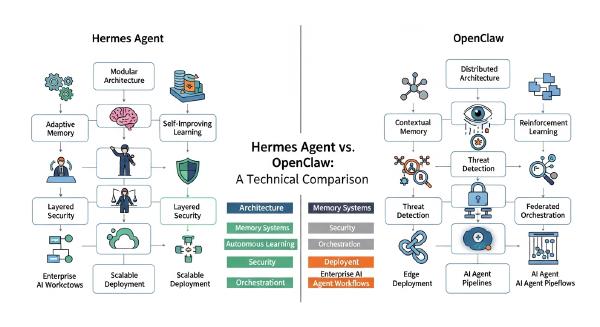
| Dimension | Grok Bot | OpenClaw |
|---|---|---|
| Platform model | Hosted agent computer | User-owned agent platform |
| Initial setup | Extremely low | Medium to high |
| Infrastructure control | Vendor-managed | User-controlled |
| Configuration | Highly abstracted | Highly configurable |
| Primary advantage | Fast onboarding | Flexibility and ownership |
| Typical fit | Personal automation and rapid deployment | Long-term infrastructure and custom workflows |
Grok Bot hides the underlying machine and runtime behind a managed service.
OpenClaw takes the opposite approach by providing a user-owned Gateway, allowing the user to control where the system runs and how its components are configured.
The trade-off is straightforward:
Grok Bot optimizes for convenience; OpenClaw optimizes for control.
OpenClaw Is Narrowing the Usability Gap #
OpenClaw 2.0 also reduces some of the configuration burden traditionally associated with user-owned agent platforms.
Its Quick Start functionality can reuse existing Claude Code or Codex authentication, while its browser application moves configuration, plugin management, and automation into graphical and conversational interfaces.
This does not eliminate the architectural distinction between the two systems, but it reduces the amount of infrastructure knowledge required to operate a user-controlled agent environment.
The result is a convergence from opposite directions: hosted platforms are exposing more functionality, while user-owned platforms are attempting to hide more complexity.
🧑💻 Agent Platforms Are Moving Programming Up the Abstraction Stack #
The deeper insight is that Grok Bot is not necessarily making programming easier through better tooling. It is moving programming to a higher abstraction layer.
The historical progression is familiar:
Machine Code → Assembly → C → Python → English-Prompted BotsEach transition allows developers to express intent at a higher level while delegating more implementation details to the underlying system.
Machine code requires direct instruction-level control. Assembly introduces symbolic representations. C abstracts hardware operations. Python abstracts many low-level runtime details.
Agent platforms push the abstraction further.
The primary programming primitive is no longer necessarily a function, class, or service. It can become a Bot with a role, identity, tools, permissions, and routing logic.
The Bot as an Atomic Programming Unit #
Within this model, users can describe what a specialized agent should do, connect the relevant tools, and compose multiple agents into a larger workflow.
The resulting programming model is closer to:
Define intent → assign capabilities → delegate execution.
This significantly lowers the amount of implementation knowledge required to create useful automation.
The required skill therefore shifts from syntax and low-level implementation toward precise intent specification.
That does not eliminate engineering. Instead, it changes where engineering effort is concentrated.
Developers must increasingly reason about system boundaries, permissions, tool selection, context management, failure modes, and delegation policies rather than manually implementing every integration.
🤖 Named Bots Create Useful Mental Models #
Another distinctive feature of Grok Bot is its use of anthropomorphic identities.
A Bot can have a name, role, identity, and description. At first glance, these may appear to be little more than interface conveniences.
They can, however, provide an important cognitive abstraction for complex agent systems.
Instead of thinking about individual models, CLIs, MCP servers, and APIs, users can reason in terms of roles.
Routing Work Through an Agentic Engineer #
McAteer’s setup provides a practical example.
His “Agentic Engineer Bot” connects multiple agentic coding systems and routes tasks according to predefined rules:
- Visual, design, and front-end work: Claude Code
- Debugging and deep code inspection: Codex
- Simple tasks: Grok Build CLI
The user does not need to remember which underlying tool should handle every request.
Instead, the instruction becomes:
“Ask the Agentic Engineer Bot to handle this.”
The Bot then applies the routing policy.
This is conceptually similar to delegating work to a technical team lead. The abstraction hides implementation details while preserving the ability to specialize execution underneath.
Identity as a Systems Abstraction #
The important point is not that the agents have human-like names.
The value comes from establishing stable conceptual boundaries.
A named role can represent:
- A specific class of tasks
- A collection of tools
- A routing policy
- A model-selection strategy
- A permission boundary
- A persistent workflow context
This makes increasingly complex agent architectures easier for humans to reason about.
Instead of managing dozens of technical components individually, the developer can operate at the level of organizational roles.
🔮 Context Management Becomes Part of the Platform #
Agent usability is also heavily influenced by context management.
When developers work directly with systems such as Claude Code or Codex, they may need to monitor context-window consumption, decide when to compress state, and determine when a session should be restarted.
For complex coding tasks, this can become a form of context anxiety: the developer is constantly aware that the current session has a finite working memory.
A higher-level agent platform can partially abstract this problem by maintaining continuity across interactions and handling more of the session-management layer automatically.
That does not eliminate context limits. Instead, it changes who is responsible for managing them.
The platform becomes responsible for deciding when information should persist, when context should be summarized, and when execution should be delegated elsewhere.
For long-running agent workflows, that abstraction can be as important as raw model capability.
🏗️ What Agent Platform Builders Should Learn #
The comparison between Grok Bot and OpenClaw points toward two broader design principles.
Higher Abstractions Expand the Creator Base #
When the primary programming primitive becomes an English-defined Bot, software creation becomes accessible to people who can clearly describe a desired workflow without necessarily knowing how every underlying integration works.
The opportunity is larger than simply making existing developer tools easier.
The goal becomes turning intent into executable systems.
For independent developers, this could reduce the engineering cost of turning workflow ideas into working products. Instead of implementing every service integration manually, developers can increasingly define behavior and delegate execution to reusable agent components.
Ownership and Convenience Are Different Optimization Targets #
Hosted and user-owned platforms are not necessarily competing to solve exactly the same problem.
A hosted platform can optimize:
- Time-to-first-use
- Authentication simplicity
- Managed infrastructure
- Automatic updates
- Minimal configuration
A user-owned platform can optimize:
- Infrastructure control
- Data sovereignty
- Customization
- Runtime portability
- Fine-grained permissions
- Long-term system ownership
Neither approach eliminates the trade-off.
The fundamental choice remains whether the user wants the platform to own the complexity or wants the user to own the infrastructure.
🔭 The Real Competition Is Between Abstraction and Control #
Grok Bot and OpenClaw represent two ends of an emerging spectrum in agent-platform design.
Grok Bot treats the agent computer as a managed service. The user primarily interacts with the outcome: authenticate, describe the task, and let the platform handle the machinery.
OpenClaw exposes more of that machinery to the user. The additional complexity provides greater control over the Gateway, runtime, integrations, and deployment environment.
The MacBook-versus-Linux analogy therefore works because it captures a fundamental systems trade-off rather than merely a difference in interface design.
Hosted agent computers optimize for immediate utility. User-owned agent platforms optimize for control.
The next evolution of agent platforms may not be about choosing one side exclusively. The most successful systems could combine the usability of a hosted environment with the configurability and ownership characteristics developers expect from self-managed infrastructure.
That would push the abstraction stack one step further: users would specify what they want built, while the platform determines the models, tools, runtimes, authentication, context management, and infrastructure required to make it happen.
At that point, the defining unit of programming may no longer be a function or even an application.
It may simply be the agent that understands the intent and assembles the system behind it.