Google Custom Chips Explained: Axion ARM CPU and TPU v6 Trillium
As cloud computing evolves, infrastructure is becoming just as important as platform services. Google has moved beyond relying solely on third-party hardware by developing custom silicon to optimize performance, efficiency, and cost.
This strategy focuses on reducing Total Cost of Ownership (TCO) for internal workloads such as search, ads, and analytics—while also offering differentiated infrastructure to cloud customers.
This article analyzes Google’s latest custom chips:
- Trillium (TPU v6) for AI/ML workloads
- Axion ARM CPU for general-purpose computing
- Titanium offload engine for system efficiency
🤖 Trillium: TPU v6 AI Accelerator #
Google’s Tensor Processing Units (TPUs) are purpose-built for large-scale AI workloads. The latest generation, Trillium (TPU v6), delivers significant performance and efficiency gains.
Performance Improvements #
- 4.7× higher peak performance vs TPU v5e
- ~3.85× real-world training improvement
- 2× HBM memory capacity and bandwidth
- 2× interconnect (ICI) bandwidth
Training Benchmark Comparison #
| Model / Benchmark | Performance Gain |
|---|---|
| MaxText (Llama 2) | ~4.1× |
| Gemma 2 | ~3.9× |
| Stable Diffusion XL | ~3.7× |
Cost Efficiency #
- 1.8× better price-performance vs TPU v5e
- 2× improvement vs TPU v5p
These improvements make Trillium one of the most cost-efficient AI accelerators in large-scale cloud environments.
🧠 Axion: Google’s Custom ARM CPU #
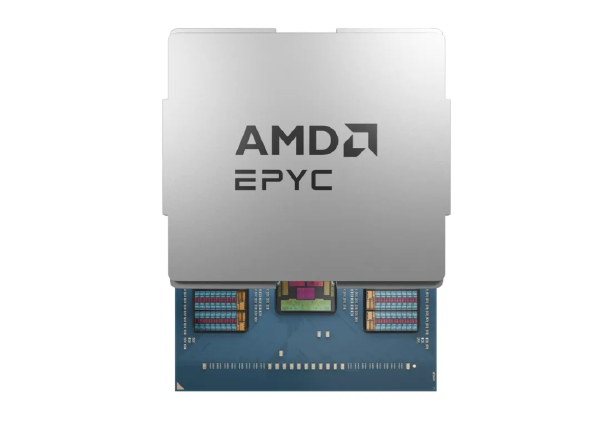
The Axion CPU is Google’s first in-house ARM-based processor, designed to compete with offerings like AWS Graviton and Azure Cobalt.
Built on ARM Neoverse V2, Axion powers the C4A instance family.
Performance Claims #
- 64% better price-performance vs x86 instances
- 60% higher energy efficiency
- 10% better performance vs competing ARM instances
Key Design Characteristics #
- No Simultaneous Multithreading (SMT)
- One physical core = one vCPU
- Predictable performance for multi-tenant workloads
C4A Instance Configurations #
| Instance Type | Memory per vCPU | Max vCPUs |
|---|---|---|
| Standard | 4 GB | 72 |
| High-CPU | 2 GB | 72 |
| High-Memory | 8 GB | 72 |
This design emphasizes efficiency, scalability, and workload consistency.
⚙️ Titanium: Infrastructure Offload Engine #
The Titanium subsystem is a critical but less visible component of Google’s architecture.
Responsibilities #
- Networking
- Storage management
- Security processing
Benefits #
- Reduces CPU overhead
- Improves overall system efficiency
- Frees compute resources for application workloads
By offloading infrastructure tasks, Titanium allows both Axion CPUs and TPUs to operate more efficiently.
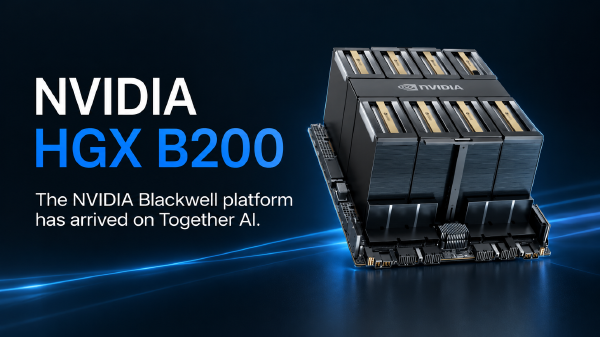
🎮 Nvidia GPU Integration #
Despite its custom silicon strategy, Google continues to support Nvidia GPUs for customers relying on the CUDA ecosystem.
Current Offerings #
-
A3 Ultra Instances
- Powered by Nvidia H200 GPUs
- Up to 141 GB HBM3E memory
-
Next-Generation Support
- Integration of Nvidia GB200 NVL72 (Blackwell architecture)
This hybrid approach ensures flexibility for workloads that depend on industry-standard AI frameworks.
📊 Summary of Google’s Hardware Stack #
| Category | Product | Architecture | Role |
|---|---|---|---|
| CPU | Axion | ARM Neoverse V2 | General-purpose compute |
| AI Accelerator | Trillium (TPU v6) | Custom Tensor | AI training and inference |
| Offload Engine | Titanium | Custom silicon | Networking, storage, security |
🚀 Strategic Impact #
Google’s custom silicon strategy reflects a broader industry shift toward vertical integration in cloud computing.
Key Advantages #
- Lower infrastructure costs (TCO)
- Higher performance per watt
- Workload-specific optimization
- Reduced dependency on third-party vendors
By controlling the full stack—from silicon to data center networking—Google can deliver better performance and cost efficiency than traditional hardware approaches.
✅ Conclusion #
Google’s investment in Axion CPUs, Trillium TPUs, and Titanium offload engines highlights a clear direction: purpose-built hardware for cloud-scale workloads.
This approach enables:
- Optimized AI training and inference
- Efficient general-purpose computing
- Improved infrastructure utilization
As cloud providers continue to differentiate through hardware, Google’s custom silicon ecosystem positions it as a leader in next-generation data center architecture.