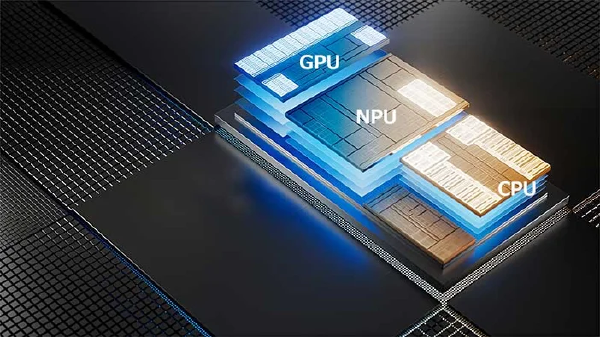
Computing power represents a system’s ability to execute computational tasks efficiently. Because processors handle different types of operations—floating-point math, AI inference, general instructions—multiple units exist to quantify performance accurately. Below is an overview of the most common metrics: FLOPS, TOPS, MIPS, and DMIPS, along with Hash/s for cryptographic workloads.
1. FLOPS (Floating Point Operations Per Second) #
FLOPS measures how many floating-point operations a processor can perform per second—a critical metric for scientific computing, graphics, and GPU workloads.
Common FLOPS magnitudes:
- GFLOPS — \(10^9\)
- TFLOPS — \(10^{12}\)
- PFLOPS — \(10^{15}\)
Calculation Formula:
$$ \[ \text{FLOPS} = \text{Core Count} \times \text{Frequency} \times \text{Instructions per Cycle} \times \text{FLOPs per Instruction} \] $$
Example:
A CPU with 4 cores at 3.5 GHz, 4 IPC, and 1 FLOP per instruction:
$$ \[ 4 \times 3.5\,\text{GHz} \times 4 = 56\,\text{GFLOPS} \] $$This metric is commonly used for GPUs, vector processors, and HPC systems.
2. TOPS (Tera Operations Per Second) #
TOPS measures trillion operations per second and is widely used in AI accelerators, NPUs, and ML inference engines.
$$ \[ \text{TOPS} = \text{Clock Frequency} \times \text{Instructions per Cycle} \times \text{Ops per Instruction} \] $$TOPS focuses more on integer and mixed-precision operations, which dominate AI inference workloads.
TOPS/W (performance per watt) is also a major efficiency metric for mobile and edge AI chips.
3. MIPS (Million Instructions Per Second) #
MIPS measures how many general instructions a processor can execute per second:
$$ \[ \text{MIPS} = \frac{\text{Instruction Count}}{10^6} \] $$Example:
A CPU executing 500,000 instructions per second achieves:
MIPS is simple but not always meaningful because not all instructions require equal effort or time.
4. DMIPS (Dhrystone MIPS) #
DMIPS is based on the Dhrystone benchmark, providing a more realistic measure of CPU performance under typical workloads.
$$ \[ \text{DMIPS} = \frac{\text{Dhrystone Instruction Count}}{10^6} \] $$Example:
A CPU executing 800,000 Dhrystone operations per second achieves:
DMIPS is widely used for embedded systems, microcontrollers, and general-purpose CPUs.
5. Hash/s (Hashes Per Second) #
Used primarily in cryptography and blockchain mining, Hash/s quantifies how many hash calculations a device can perform per second.
Example:
If a system performs 100,000 SHA-256 hashes per second:
This metric is crucial for mining hardware (ASICs, GPUs) and evaluating cryptographic performance.
Summary Table #
| Unit | Full Name | Measures | Typical Use Case |
|---|---|---|---|
| FLOPS | Floating Point Operations Per Second | Floating-point performance | Scientific computing, GPUs, HPC |
| TOPS | Tera Operations Per Second | AI-specific operations | AI inference, NPUs, accelerators |
| MIPS | Million Instructions Per Second | General instruction throughput | CPUs, embedded systems |
| DMIPS | Dhrystone MIPS | Real-world CPU performance | Benchmarking CPUs and MCUs |
| Hash/s | Hashes Per Second | Cryptographic hashing rate | Mining, security workloads |
Understanding these units helps engineers evaluate processors across drastically different domains—from AI and gaming to embedded systems and cryptography.