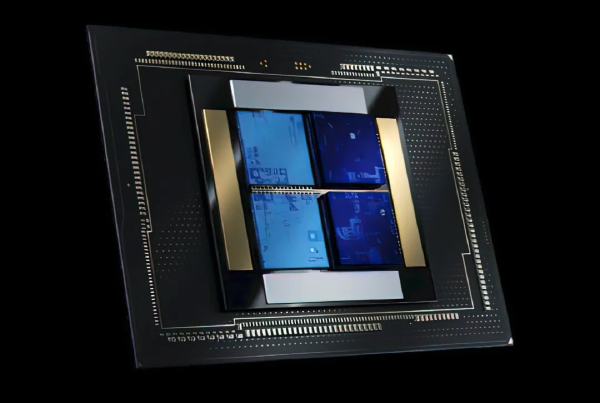
AMD MI450X vs NVIDIA Rubin: The HBM4 AI GPU Showdown
The competition for AI accelerator leadership is entering a new phase. As large language models grow and inference workloads become increasingly demanding, AMD and NVIDIA are preparing their next-generation platforms around higher memory bandwidth, greater compute density, and increasingly sophisticated packaging technologies.
Two products attracting attention are AMD’s Instinct MI450X and NVIDIA’s Vera Rubin platform. Both are associated with HBM4 memory and are designed to support large-scale AI training and inference, where memory capacity, bandwidth, power consumption, and interconnect performance can be as important as raw arithmetic throughput.
Pre-launch reports have suggested that AMD could offer greater memory capacity per accelerator, while NVIDIA could maintain an advantage in reported low-precision compute performance and system-level integration. These figures remain subject to confirmation, and comparisons require care because accelerator specifications, power measurements, and performance estimates may use different configurations.
Nevertheless, the emerging competition highlights a broader shift in the AI hardware market: the race is no longer about GPU compute alone, but about delivering a balanced system for training and serving increasingly large models.
⚔️ AMD MI450X vs NVIDIA Rubin: Reported Specifications #
Early industry reports have outlined the following potential specifications for the two platforms.
| Specification | AMD Instinct MI450X | NVIDIA Rubin VR200 |
|---|---|---|
| Memory technology | HBM4 | HBM4 |
| Reported memory capacity | Up to 432 GB | Up to 288 GB |
| Reported memory bandwidth | Approximately 19.6 TB/s | Approximately 20 TB/s |
| Reported low-precision compute | Approximately 40 PFLOPS FP4 | Approximately 50 PFLOPS FP4 |
| Manufacturing and packaging | Advanced process and chiplet packaging reported | Advanced process and chiplet packaging reported |
| Primary workloads | AI training and inference | AI training and inference |
These are preliminary figures reported in the original pre-launch coverage, not a verified specification sheet. Product configurations, performance conventions, and system-level measurements may differ. They should not be treated as directly comparable until AMD and NVIDIA publish consistent official specifications.
The numbers suggest two different potential strengths.
AMD’s reported 432 GB memory configuration would offer a substantial capacity advantage over a 288 GB configuration. NVIDIA’s reported bandwidth and FP4 figures, meanwhile, point toward a modest advantage in peak throughput.
However, peak specifications alone do not establish which accelerator will deliver better performance on a particular workload.
Actual results depend on model architecture, numerical precision, memory access patterns, software optimization, interconnect topology, and how many accelerators participate in the computation.
🔮 HBM4 Becomes a Critical Differentiator #
High Bandwidth Memory is becoming increasingly important as AI models grow beyond the capacity and bandwidth constraints of conventional accelerator memory.
Modern AI workloads repeatedly move model weights, activations, attention data, and intermediate results through the memory hierarchy. Large models can become memory-bound even when substantial arithmetic capability is available.
HBM4 is intended to push memory performance further by increasing the bandwidth available to the accelerator.
Three characteristics matter particularly for AI systems:
- Capacity: Determines how much model state and intermediate data can reside in accelerator memory.
- Bandwidth: Determines how quickly the accelerator can move data between memory and compute units.
- Efficiency: Influences how much energy and cooling capacity are required to sustain that data movement.
AMD’s reported MI450X configuration is notable because of its potential memory capacity. More memory per accelerator can reduce the need to partition a model across multiple devices or repeatedly move data between memory tiers.
NVIDIA’s reported Rubin configuration emphasizes a similar HBM4 foundation, paired with a broader platform designed around high-speed accelerator interconnects and system-level integration.
Why Capacity and Bandwidth Are Not the Same #
Memory capacity and bandwidth solve different problems.
Capacity determines whether model data fits. Bandwidth determines how quickly that data can be supplied to the processing units.
For inference, larger memory capacity can help accommodate model weights and workloads with substantial key-value (KV) caches. Higher bandwidth can help keep compute units supplied with the data required to generate tokens efficiently.
For training, memory capacity can influence batch size and model partitioning, while bandwidth affects the movement of parameters, gradients, activations, and optimizer state.
Neither metric alone determines performance. An accelerator with more memory may be more economical for a particular model, while one with higher bandwidth or better interconnect performance may deliver better throughput under a different configuration.
⚡ Power Consumption and Performance Density #
Power is becoming one of the defining constraints in AI infrastructure.
Early reports suggested that the MI450X design’s power target had increased by approximately 200 W compared with an earlier estimate. NVIDIA’s Rubin-related power figures were also reported to have risen by approximately 500 W, with a figure of 2,300 W cited in some coverage.
These numbers require careful interpretation. Accelerator board power, complete server power, and platform-level thermal design power are different measurements. A reported increase is meaningful only when the baseline and the measured component are clearly defined.
Even so, the broader direction is evident: next-generation AI hardware is pushing power delivery, cooling, and rack design into increasingly demanding territory.
Power Efficiency Matters as Much as Peak Performance #
A useful way to evaluate an accelerator is to consider how much useful work it performs for each unit of energy consumed.
For a given workload, a simplified metric is:
$$ \text{Energy Efficiency} = \frac{\text{Useful AI Throughput}}{\text{Power Consumption}} $$This relationship becomes especially important when operators deploy thousands of accelerators.
A system with higher peak performance may still be less attractive if it requires disproportionately more power or cooling capacity. Conversely, an accelerator with a larger power budget may deliver better overall economics if its additional throughput substantially reduces the time or number of devices needed to complete a workload.
For operators building large AI clusters, the real comparison must include accelerator efficiency, networking, cooling, rack density, utilization, and the cost of the complete system.
🏭 AMD’s Challenge: Building an Alternative to NVIDIA #
AMD’s opportunity extends beyond individual GPU specifications.
For years, NVIDIA has benefited from a tightly integrated AI computing ecosystem that combines accelerators, interconnects, system designs, libraries, and software frameworks. This integration has made NVIDIA a default choice for many large-scale AI deployments.
AMD’s Instinct family offers an alternative, but competing effectively requires more than matching memory capacity or peak compute performance.
AMD must deliver across several areas:
- Competitive performance on real AI workloads
- Reliable software support and developer tools
- Efficient multi-accelerator communication
- Scalable server and rack configurations
- Predictable product availability
- Strong performance per dollar and per watt
AMD executive Forrest Norrod reportedly compared the opportunity surrounding MI450 to the company’s earlier “Milan moment,” when EPYC Milan processors strengthened AMD’s position in the server market.
The comparison reflects AMD’s ambition to establish a more substantial position in AI infrastructure.
However, the outcome will depend on the delivered hardware and software ecosystem, not just the specifications announced before launch.
Annual Product Development Could Narrow the Gap #
AMD’s Instinct roadmap has increasingly emphasized a faster release cadence.
A more regular schedule of accelerator updates could help the company respond to changes in AI model requirements and reduce the time between architectural improvements.
It could also make AMD more attractive to data-center operators seeking a second supplier, better negotiating leverage, or an alternative platform for selected workloads.
The challenge is maintaining consistency across generations. Customers need confidence that software investments, deployment processes, and performance improvements will carry forward to future products.
🔗 NVIDIA Rubin: A Complete AI Infrastructure Strategy #
NVIDIA’s strategy extends beyond the GPU itself.
The Vera Rubin platform is associated with a broader system architecture incorporating accelerators, CPU technology, high-speed interconnects, networking, and software infrastructure.
The objective is to scale AI workloads across large collections of compute devices while reducing communication overhead and improving end-to-end performance.
NVLink and Multi-GPU Scaling #
As model sizes grow, accelerators increasingly need to communicate with one another.
This is particularly important when model weights, activations, gradients, or KV-cache data are distributed across multiple devices.
NVIDIA’s NVLink technology and associated switch architecture are intended to provide high-bandwidth communication within accelerator systems. The Rubin roadmap has also been associated with continued improvements in interconnect technology.
Reported figures for NVLink-related products, including bandwidth claims, must be interpreted according to the specific component and whether a figure describes per-link, per-device, or aggregate bidirectional throughput.
For large-scale AI systems, interconnect performance can directly affect how efficiently additional accelerators contribute to the workload.
Adding more GPUs does not automatically produce proportional speedups if communication becomes a bottleneck.
From Individual Chips to Integrated Systems #
NVIDIA’s platform strategy combines several layers:
| Layer | Role in AI infrastructure |
|---|---|
| GPU accelerators | Execute AI training and inference |
| HBM | Supplies high-bandwidth memory |
| NVLink and switches | Support communication among accelerators |
| Networking | Connects servers and racks |
| CPUs | Coordinate system tasks and general-purpose computation |
| Software stack | Supports model execution, optimization, and deployment |
This integrated approach makes platform-level evaluation essential.
A comparison between individual accelerators may look very different from a comparison between complete servers or rack-scale systems. Memory capacity, communication bandwidth, power delivery, cooling, and software all affect the final result.
📊 What the MI450X vs Rubin Battle Means for AI Buyers #
The competition between AMD and NVIDIA could benefit data-center operators by expanding hardware choices and increasing pressure to improve performance, availability, and cost.
However, procurement decisions should be based on workload-specific measurements rather than headline specifications.
Large Language Model Training #
Training performance depends on compute throughput, memory capacity, interconnect bandwidth, distributed-training efficiency, and software support.
An accelerator with strong peak compute may lose some of its advantage if scaling across many devices introduces communication overhead.
Large-Scale Inference #
Inference workloads place different demands on hardware depending on model size, batch size, sequence length, and latency targets.
Memory capacity is particularly important for serving large models or maintaining extensive KV caches. Memory bandwidth can be critical when moving weights and attention data, while low-latency communication matters when a request spans multiple accelerators.
Total Cost of Ownership #
A more useful purchasing comparison considers the complete cost of delivering a required level of AI performance.
Important factors include:
- Accelerator acquisition cost
- Server and rack integration
- Electricity consumption
- Cooling requirements
- Network infrastructure
- Software-development effort
- Utilization and scheduling efficiency
- Maintenance and product availability
A cheaper accelerator is not necessarily the lower-cost choice if it requires more devices to deliver the same throughput. Likewise, a more capable system may be difficult to justify if the workload cannot keep it fully utilized.
🔮 The Road Ahead for AI Accelerators #
The reported MI450X and Rubin specifications illustrate how closely the next generation of AI accelerators may compete on memory capacity, bandwidth, and low-precision compute.
AMD’s potential memory-capacity advantage could appeal to workloads that benefit from keeping more model data on each accelerator. NVIDIA’s broader platform strategy emphasizes compute performance, accelerator interconnects, and integration across the data center.
But the definitive comparison will come from shipping products, verified specifications, real workload benchmarks, and complete-system efficiency.
The most important questions are not simply which accelerator has the most memory or the highest theoretical FP4 throughput. They are whether a platform can run real models efficiently, scale predictably, fit within a data center’s power and cooling limits, and justify its cost.
As AI infrastructure expands, the competition between AMD and NVIDIA is likely to be decided at multiple levels: silicon, memory, software, networking, and rack-scale system design.
For AI developers and data-center operators, stronger competition could mean more architectural options and greater flexibility in deciding how to build the next generation of AI infrastructure.