AMD Ryzen 9000X3D: The Upside-Down Cache Breakthrough
With the launch of the Ryzen 9000X3D series (Zen 5), AMD has introduced the second generation of 3D V-Cache—and fundamentally reworked how it is physically integrated into the processor.
While the total cache size remains familiar, the internal structure has been flipped, addressing the most critical limitation of previous X3D chips: thermal efficiency.
🔄 A New Layout: Cache Beneath the Cores #
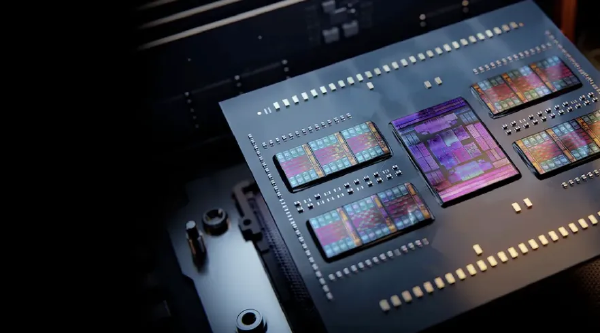
Earlier X3D designs (Ryzen 5000X3D and 7000X3D) stacked the cache on top of the Core Complex Die (CCD). This improved performance, but created a thermal bottleneck by insulating the CPU cores from the heat spreader.
What Changed in Ryzen 9000X3D #
-
Bottom-stacked cache design
- 3D V-Cache is now placed under the CCD
-
Direct thermal path
- CPU cores sit closer to the IHS (Integrated Heat Spreader)
- Improved contact with cooling solutions
-
Thermal efficiency gains
- Reduced heat trapping
- Better sustained performance under load
Real Impact #
This redesign transforms X3D chips from thermally constrained specialists into fully scalable high-performance CPUs, enabling higher clocks and new tuning flexibility.
⚡ Performance Leap: Ryzen 7 9800X3D #
The Ryzen 7 9800X3D is the first processor to showcase this new architecture, delivering significant gains over its predecessor.
Clock Speed Improvements #
| Metric | Ryzen 7 7800X3D | Ryzen 7 9800X3D | Improvement |
|---|---|---|---|
| Base Clock | 4.2 GHz | 4.7 GHz | +500 MHz |
| Boost Clock | 5.0 GHz | 5.2 GHz | +200 MHz |
| Overclocking | Limited | Fully unlocked | Up to ~5.7 GHz |
Productivity Gains #
- PugetBench (Premiere Pro): ~14,201
- 7800X3D: ~13,005
- Ryzen 7 9700X: ~13,349
This marks a major shift: X3D chips are no longer just gaming-focused—they now compete in content creation and professional workloads.
💻 Expanding the Platform: “Krackan” APUs #
Alongside desktop advancements, AMD is pushing Zen 5 into mainstream mobile platforms with the “Krackan” APU family.
Target Segment #
- Competes with Intel’s Core Ultra (Lunar Lake class)
- Focused on thin-and-light and mainstream laptops
Key Specifications #
- Up to 8 Zen 5 / Zen 5c cores
- Up to 8 RDNA 3.5 GPU cores
- Support for LPDDR5X-8000 memory
Why Memory Speed Matters #
High-frequency LPDDR5X is critical for integrated GPUs:
- Provides sufficient bandwidth for RDNA 3.5
- Enables smooth 1080p gaming on integrated graphics
- Reduces reliance on discrete GPUs in mobile systems
🤝 The x86 Ecosystem Alliance #
In a notable industry shift, AMD and Intel have formed the x86 Ecosystem Advisory Group, signaling a unified response to increasing competition.
Strategic Motivation #
-
Rising ARM competition
- Apple Silicon and Qualcomm Snapdragon gaining traction
-
AI PC standardization
- Simplifying development across x86 platforms
- Reducing fragmentation between vendors
-
Future roadmap alignment
- Intel’s 18A node and next-gen architectures (e.g., Panther Lake) progressing rapidly
This collaboration highlights the importance of maintaining x86 relevance in an AI-driven computing era.
🔮 Final Take: Thermal Engineering as a Performance Multiplier #
The Ryzen 9000X3D series demonstrates that performance gains are no longer driven solely by more cores or higher frequencies—but by better physical design and thermal efficiency.
By flipping the cache stack:
- AMD removes a key limitation of previous X3D chips
- Unlocks higher sustained clocks and overclocking
- Expands X3D from gaming dominance into all-around performance leadership
At the same time, advancements in mobile APUs and ecosystem collaboration signal a broader shift toward efficient, AI-ready computing platforms.