📖 Overview #
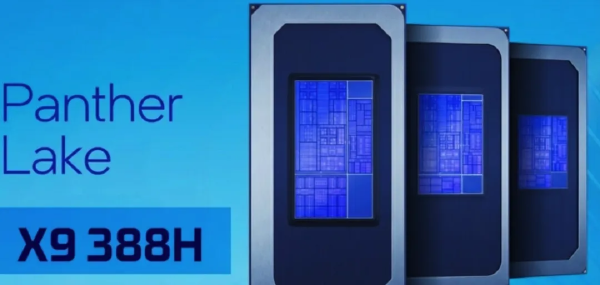
Intel has added the Core Ultra 378H to its Panther Lake lineup, but a closer look reveals an unusual situation:
It is essentially identical to the existing Core Ultra 368H.
Rather than introducing new hardware, this release reflects a product segmentation strategy—where the same silicon is repackaged for different market targets.
⚙️ Identical Hardware Specifications #
Both processors share the exact same architecture, performance characteristics, and configuration.
| Feature | Core Ultra 378H | Core Ultra 368H |
|---|---|---|
| Cores / Threads | 16C / 16T (4P + 8E + 4LPE) | 16C / 16T (4P + 8E + 4LPE) |
| Max Turbo Frequency | 5.0 GHz | 5.0 GHz |
| L3 Cache | 18MB | 18MB |
| GPU | 12-core Xe3 iGPU | 12-core Xe3 iGPU |
| Memory Support | LPDDR5X-9600 (Up to 96GB) | LPDDR5X-9600 (Up to 96GB) |
| Power Range | 25W – 80W | 25W – 80W |
Additional notes:
- Same silicon die
- Same voltage-frequency curves
- Same GPU clock behavior (~2.5 GHz dynamic)
From a performance perspective, the two chips are functionally indistinguishable.
🧠 The Real Difference: Market Positioning #
The key distinction lies not in hardware, but in product definition.
-
Core Ultra 368H
- Targets both consumer and embedded/industrial markets
- Includes long-term availability and validation guarantees
-
Core Ultra 378H
- Focused exclusively on consumer devices
- Does not carry embedded lifecycle commitments
This separation allows Intel to tailor the same silicon to different market requirements.
📦 Why Create Two Identical SKUs? #
Supply Chain and Lifecycle Management #
Embedded markets require:
- Long product lifecycles (often 7–10 years)
- Strict validation for reliability and environmental conditions
By isolating consumer-only chips under the 378H:
- Intel avoids long-term supply obligations
- Improves flexibility in production and distribution
Inventory and Binning Strategy #
Not all chips are suited for industrial-grade deployment.
With separate SKUs:
- Chips meeting consumer standards can be routed to 378H
- Higher-validation parts remain in the 368H pool
This improves yield utilization and inventory efficiency.
Product Stack Positioning #
The naming also serves a marketing purpose:
- 378H sits between mid-tier and flagship models
- Creates a more continuous product ladder
- Helps OEMs position devices more clearly
Even without performance differences, naming influences perceived segmentation.
📅 Market Availability #
The Core Ultra 378H is expected to launch in:
- Q1 2026
For end users:
- No measurable performance difference vs 368H
- Differences are largely invisible in real-world usage
🧾 Summary #
- Same Hardware: 378H and 368H share identical specifications
- Key Difference: Market segmentation (consumer vs consumer + embedded)
- Purpose:
- Simplify supply chain management
- Optimize binning and yields
- Strengthen product lineup positioning
- User Impact: No performance difference in actual devices
The Core Ultra 378H is a clear example of how modern CPU products are shaped not only by engineering, but also by logistics, lifecycle planning, and market strategy.