Snapdragon 8 Elite Gen 2: Qualcomm’s 3nm Flagship Leap
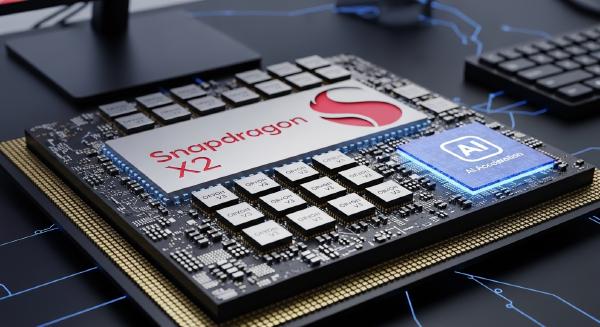
Qualcomm’s next-generation flagship mobile chip—the Snapdragon 8 Elite Gen 2 (SM8850)—marks another aggressive step forward in the company’s post-Oryon era.
Expected to debut in late 2025 and power flagship devices through 2026, this chip is more than a routine refresh. It represents a continued push to redefine performance ceilings in the Android ecosystem—while also expanding the role of AI in everyday mobile computing.
🚀 Architecture: Second-Gen Oryon Goes Mobile #
At the heart of the Snapdragon 8 Elite Gen 2 is Qualcomm’s second-generation Oryon CPU architecture, signaling a deeper departure from standard ARM reference designs.
- Core Configuration: 2 + 6 Design
- 2 × high-performance “prime” cores
- 6 × performance-optimized cores
This layout prioritizes:
- Sustained performance under load
- Better thermal balance in thin smartphones
Frequency Push #
- Expected peak clock: up to 5.0 GHz
- Previous generation: ~4.47 GHz
That jump is significant—not just numerically, but thermally. Sustaining near-5 GHz on mobile silicon suggests:
- Improved power delivery design
- More efficient transistor behavior from the new node
🎮 GPU & Graphics: Adreno 840 Steps Up #
Graphics performance continues to be a major battlefield in flagship SoCs.
- Next-Gen GPU: Adreno 840
- Improved rasterization and compute throughput
- Better sustained performance under thermal limits
What This Enables #
- Smoother high-refresh gaming
- More stable performance in demanding titles
- Improved support for:
- Real-time ray tracing
- Advanced mobile rendering pipelines
The gap between mobile GPUs and entry-level discrete GPUs continues to narrow.
📊 Performance: A Generational Jump #
Early projections suggest a substantial uplift over the first-generation Snapdragon 8 Elite.
- AnTuTu V10 Score
- Gen 2: ~3.8 million+
- Gen 1: ~2.6 – 3.0 million
➡️ Estimated improvement: ~26% to 40%
What’s Driving This? #
- Transition to Armv9 architecture
- Support for advanced instruction sets:
- SVE2 (Scalable Vector Extension 2)
- SME (Scalable Matrix Extension)
These enhancements significantly boost:
- Parallel computation
- AI and machine learning workloads
- Multimedia processing efficiency
🔮 AI Capabilities: Moving Toward On-Device Intelligence #
AI is no longer a side feature—it’s becoming central to mobile platforms.
With new instruction sets and architectural improvements, the Snapdragon 8 Elite Gen 2 is designed to:
- Accelerate on-device AI inference
- Enable real-time processing for:
- Voice assistants
- Image enhancement
- AR applications
Why This Matters #
- Reduced reliance on cloud processing
- Lower latency for real-time tasks
- Better privacy (data stays on-device)
This is part of a broader shift toward AI-native smartphones.
⚙️ Process Technology: TSMC 3nm (N3P) #
The chip is expected to be manufactured using TSMC’s N3P process, an evolution of the earlier N3E node.
Key Advantages #
- Higher transistor density
- Improved power efficiency
- Better performance scaling
Compared to N3E, N3P offers:
- More refined power-performance tuning
- Greater headroom for higher clock speeds
For end users, this translates to:
- Better battery life
- Less thermal throttling
- More consistent performance
📱 Ecosystem Impact: Flagships and Beyond #
Mass production is expected in H2 2025, with devices launching:
- Late 2025
- Early 2026
Likely Early Adopters #
- Xiaomi
- OPPO
- OnePlus
These brands traditionally push Qualcomm’s latest silicon to its limits, often showcasing:
- Peak benchmark performance
- Advanced cooling solutions
- Early adoption of new GPU features
🔄 Beyond Smartphones: A Unified Oryon Strategy #
Qualcomm’s ambitions extend beyond mobile.
The same architectural foundation is being deployed across:
-
Automotive platforms
- Snapdragon Cockpit Elite
- Snapdragon Ride Elite
-
Future devices
- Tablets
- Laptops
- Edge AI systems
This signals a long-term strategy:
➡️ Build a scalable, cross-platform CPU architecture similar to Apple Silicon.
🔮 Final Take: More Than Just a Faster Chip #
The Snapdragon 8 Elite Gen 2 isn’t just about higher clocks or bigger benchmark numbers.
It reflects three deeper shifts:
-
Custom CPU dominance
Qualcomm is no longer dependent on off-the-shelf ARM cores -
AI-first design philosophy
On-device intelligence is becoming a core feature—not an add-on -
Platform convergence
Mobile, automotive, and PC silicon are beginning to share the same DNA
As competition with Apple’s A-series chips intensifies, Qualcomm is no longer playing catch-up.
➡️ It is actively shaping what the next generation of mobile computing looks like.
And if these projections hold, the 2025–2026 flagship cycle may mark one of the most competitive—and innovative—periods in smartphone silicon history.