Valve Fremont Leak: AMD Zen 4 CPU and Radeon RX 7600 GPU
Valve has a long history of experimenting with gaming hardware, from the original Steam Machines initiative to the successful Steam Deck handheld gaming PC. A project codenamed Fremont has attracted attention after benchmark listings reportedly revealed a system powered by an AMD Zen 4 processor and a discrete Radeon GPU.
If the reported hardware configuration is accurate, Fremont could represent a different approach to Valve’s living-room gaming strategy: a compact PC designed for television-based gaming, with more CPU and GPU resources than the Steam Deck.
However, benchmark listings and hardware identifiers do not establish a finalized retail configuration. The reported specifications should therefore be treated as preliminary rather than confirmed product specifications.
🎮 Valve’s Hardware Journey: From Steam Machines to Steam Deck #
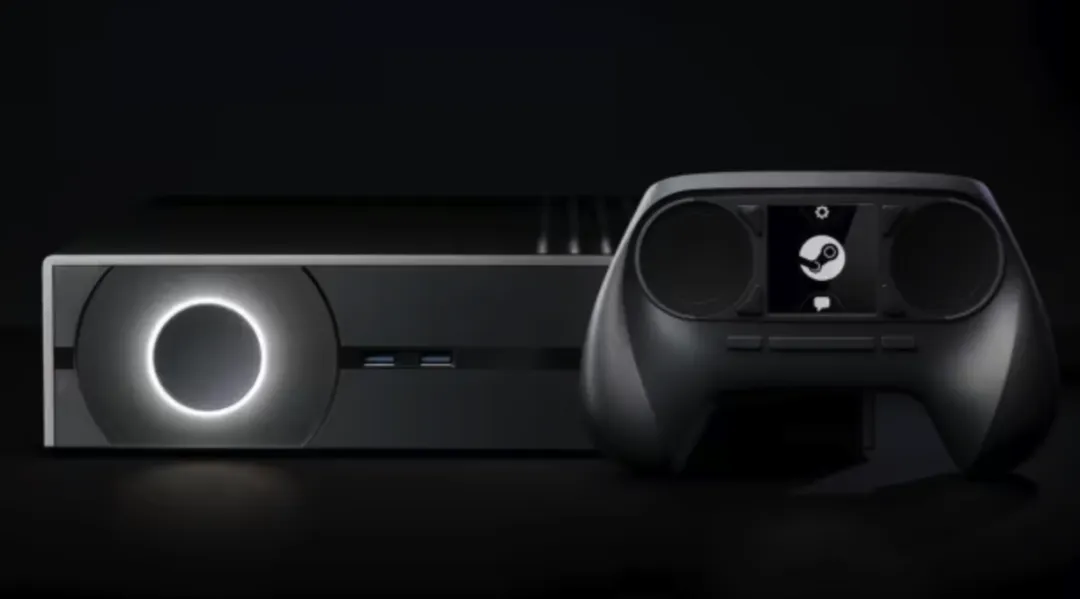
Valve’s earlier Steam Machines initiative attempted to bring PC gaming into the living room through a range of third-party systems running SteamOS. The approach offered flexibility, but differences in hardware configurations, pricing, software compatibility, and the user experience made it difficult to establish a consistent console-like platform.
The Steam Deck took a more integrated approach. Valve combined custom AMD hardware, a standardized handheld form factor, SteamOS, and a controller-oriented interface into a single product.
That integration helped establish a clearer hardware and software experience.
Fremont could extend the same general philosophy to a stationary system. Instead of prioritizing portability and battery efficiency, a living-room device can allocate more power and cooling capacity to CPU and GPU performance.
The key question is whether Valve can deliver that additional performance while retaining the simplicity and software integration associated with the Steam Deck.
⚙️ Fremont Specifications: AMD Zen 4 CPU and Discrete Radeon GPU #
According to the reported benchmark information, Fremont uses an AMD processor identified as Custom CPU 1772, associated in the original reports with AMD’s Hawk Point family and Zen 4 architecture.
The reported CPU configuration includes:
- Architecture: AMD Zen 4
- Core count: 6 cores
- Thread count: 12 threads
- Reported clock range: 3.2–4.8 GHz
These specifications suggest a processor with substantially more CPU resources than the Zen 2-based APU in the original Steam Deck.
The reported graphics configuration is particularly notable because it points to a discrete GPU rather than relying exclusively on integrated graphics.
Reported hardware configuration #
| Component | Reported Specification | Significance |
|---|---|---|
| CPU | AMD Zen 4, 6 cores / 12 threads | More CPU resources for demanding games |
| CPU clock | 3.2–4.8 GHz | Reported operating frequency range |
| GPU | Radeon RX 7600 / Navi 33 | Discrete RDNA 3 graphics |
| Compute units | 32 | Reported GPU configuration |
| Graphics memory | 8 GB GDDR6 | Dedicated graphics memory |
| Operating system in benchmark | Windows 11 Pro | Indicates a reported test environment, not the final OS |
The association between the processor identifier and the reported product configuration remains subject to verification. Benchmark entries can use preliminary identifiers, and engineering samples may differ from retail hardware.
Why a discrete GPU matters #
The Steam Deck uses an integrated AMD APU, meaning its CPU and GPU share a single package and system memory architecture. This design supports compact dimensions, lower power consumption, and efficient cooling.
A discrete GPU changes that balance.
A Radeon RX 7600-class configuration would provide dedicated graphics hardware and its own GDDR6 memory. This can increase available graphics resources for higher-resolution rendering, complex shaders, and more demanding game workloads.
However, a discrete GPU also introduces additional design requirements:
- Higher total system power consumption.
- Greater thermal dissipation requirements.
- Additional board space and memory hardware.
- More complex cooling and airflow management.
- Potentially higher manufacturing costs.
These trade-offs make the enclosure, power budget, and cooling architecture central to the final product design.
📊 Geekbench Results: What the Numbers Tell Us #
The reported Geekbench results for Fremont are:
| Benchmark Metric | Reported Score |
|---|---|
| Single-core | 2,412 |
| Multi-core | 7,451 |
These scores provide an initial indication of CPU performance in the tested configuration. They do not directly establish gaming performance, GPU throughput, or the performance of a future SteamOS release.
Geekbench primarily measures general-purpose computing performance. Gaming workloads depend on additional factors, including GPU architecture, memory bandwidth, driver behavior, shader compilation, and game-engine optimization.
Benchmark limitations #
Several factors should be considered when interpreting the results:
- Engineering-sample hardware: CPU frequencies, power limits, firmware, and memory configuration may change before release.
- Operating-system differences: The reported test used Windows 11 Pro. Results under SteamOS may differ because of operating-system overhead, drivers, and benchmark implementation.
- GPU performance: CPU benchmark scores do not measure the Radeon GPU’s rendering performance.
- Thermal behavior: Short benchmark runs may not reflect sustained performance in a compact enclosure.
- Workload variation: Performance differences between individual games can be substantial even on identical hardware.
The reported scores are therefore useful as preliminary data points, not as proof that Fremont will deliver a particular frame rate or outperform a specific console.
🖥️ Why Fremont Could Matter for Living-Room Gaming #
If Valve develops Fremont into a commercial product, it could extend the Steam ecosystem into the living room with a hardware configuration designed for stationary gaming.
Several characteristics would distinguish this approach from a conventional console.
An open PC gaming ecosystem #
A SteamOS-based system can provide access to a broad PC game library without requiring users to purchase titles exclusively through a single console platform.
SteamOS also supports a console-oriented interface while retaining the underlying flexibility of a Linux-based PC operating system.
Game compatibility is not universal, however. Individual titles may depend on Windows-specific software, anti-cheat systems, launchers, or other components that require additional compatibility work.
A different hardware and upgrade model #
A stationary system has different constraints from a handheld device.
Without a battery or strict handheld thermal limits, designers can allocate more power to the processor and graphics subsystem. Nevertheless, a compact integrated gaming system is not automatically as upgradeable as a conventional desktop PC.
Whether Fremont supports user-replaceable components, memory upgrades, or GPU replacement would depend on its final hardware design.
Integration with Steam #
Valve can build on its existing software ecosystem, including Steam accounts, game libraries, cloud saves where supported, controller configuration, and remote-play functionality.
This integration could reduce the setup complexity normally associated with a general-purpose gaming PC connected to a television.
The extent of that benefit would depend on the final interface, compatibility support, and system-level features.
🌡️ Engineering Challenges: Thermals, Power, and Software #
A compact living-room gaming PC must balance performance, acoustics, cost, and physical dimensions.
The reported combination of a Zen 4 CPU and a discrete Radeon GPU makes these constraints particularly relevant.
Thermal and power design #
A discrete GPU adds heat to the system, while the CPU and other components contribute to the same overall thermal budget.
Engineers must design the cooling system to maintain stable operating temperatures without excessive fan noise. The power supply, voltage regulation, airflow path, and heatsink capacity must also accommodate sustained gaming workloads.
Peak benchmark performance alone cannot establish whether a compact enclosure will maintain its performance during extended gaming sessions.
SteamOS compatibility and optimization #
SteamOS provides a console-style gaming environment, but a new hardware configuration still requires appropriate graphics drivers, firmware support, and performance tuning.
Game compatibility also depends on the broader software stack, including Proton, graphics APIs, anti-cheat support, and individual game updates.
A well-integrated hardware and software configuration could simplify the living-room experience, but the quality of that experience must be evaluated using the final system rather than assumed from the hardware specifications alone.
Pricing and market positioning #
Pricing would influence how Fremont compares with traditional consoles, handheld PCs, and compact gaming desktops.
The system’s final cost would depend on its CPU and GPU configuration, memory, storage, cooling, enclosure, and software support.
Until Valve announces official pricing and a finalized specification, direct value comparisons remain premature.
🔍 Fremont and the Future of Valve Gaming Hardware #
Fremont’s reported specifications suggest a potential expansion of Valve’s hardware strategy beyond handheld gaming.
The Steam Deck demonstrates how a tightly integrated PC platform can combine portable hardware, a controller-friendly interface, and a large existing game library. A stationary system could apply a similar approach while allocating more resources to graphics performance and sustained workloads.
The reported AMD Zen 4 processor and Radeon RX 7600-class GPU would represent a different balance of CPU performance, graphics capability, power consumption, and cooling requirements from the Steam Deck.
Several details remain essential to understanding the project: the final hardware configuration, GPU power limits, memory architecture, cooling design, SteamOS support, pricing, and commercial availability.
The central point is that Fremont’s benchmark leaks provide clues about a possible Valve gaming system, but they do not yet establish the specifications or performance of a finalized retail product. Official announcements and independent testing of production hardware will be needed to determine how the system ultimately fits into the PC and console gaming markets.