100 Network Basics Every Developer and Engineer Should Know
Modern software systems depend on networks at almost every layer. APIs, microservices, cloud infrastructure, databases, containers, authentication systems, and distributed applications all rely on networking fundamentals.
This reference covers 100 essential networking concepts, ranging from physical media and OSI layers to TCP/IP, routing, addressing, network security, troubleshooting, and common infrastructure technologies.
Some terminology and legacy technologies have evolved over time, so the explanations below use modern networking terminology where appropriate while preserving the practical intent of the original concepts.
🌐 Core Networking Concepts #
1. What is a link? #
A link is the communication path between two network devices. It includes the physical or wireless medium and the protocols used to exchange data across that connection.
2. What are the layers of the OSI reference model? #
The OSI model consists of seven layers:
- Physical
- Data Link
- Network
- Transport
- Session
- Presentation
- Application
The model is primarily a conceptual framework for understanding network communication.
3. What is a backbone network? #
A network backbone is a high-capacity infrastructure that connects multiple networks or network segments and carries large volumes of traffic between them.
Backbones are commonly built from high-bandwidth fiber links, routers, and switches.
4. What is a LAN? #
A LAN (Local Area Network) connects devices within a relatively limited geographic area, such as a home, office, campus, or data center.
5. What is a node? #
A node is a device or logical endpoint capable of participating in network communication.
Examples include computers, servers, routers, switches, printers, and IoT devices.
6. What is a router? #
A router connects different IP networks or network segments and forwards packets based on routing information.
Routers maintain routing information and select paths according to factors such as destination prefixes, routing metrics, and routing policies.
Routers primarily operate at Layer 3, the OSI Network layer.
7. What is a point-to-point link? #
A point-to-point link is a direct communication connection between two endpoints.
The endpoints may communicate directly without an intermediate switching device, depending on the technology being used.
8. What is anonymous FTP? #
Anonymous FTP allows users to access publicly available files on an FTP server without using a personal account.
The client typically authenticates using the username anonymous, often with an email-like string as the password.
Because traditional FTP does not provide encryption, anonymous FTP should only be used where the security requirements are appropriate.
9. What is a subnet mask? #
A subnet mask determines which portion of an IPv4 address represents the network prefix and which portion identifies the host.
For example:
IP address:  192.168.1.25
Subnet mask: 255.255.255.0
CIDR:        /24
Modern networks generally use CIDR notation rather than relying on traditional address classes.
10. What is the maximum allowed length of a UTP cable? #
For common Ethernet twisted-pair installations, the standard channel length is typically 100 meters, including the permanent link and patch cabling.
Exceeding the specified distance can cause signal integrity and Ethernet performance problems.
11. What is data encapsulation? #
Encapsulation is the process of adding protocol-specific metadata as data moves through networking layers.
For example, application data may be encapsulated in a transport-layer segment, then an IP packet, and finally a data-link frame.
Application Data
      ↓
Transport Segment
      ↓
IP Packet
      ↓
Data-Link Frame
12. What is network topology? #
Network topology describes how devices and communication links are organized.
It can describe either the physical layout of network infrastructure or the logical relationships through which data flows.
13. What is a VPN? #
A Virtual Private Network (VPN) creates a protected communication path across an untrusted network such as the Internet.
VPN technologies can provide encryption, authentication, and secure connectivity between users, networks, or systems.
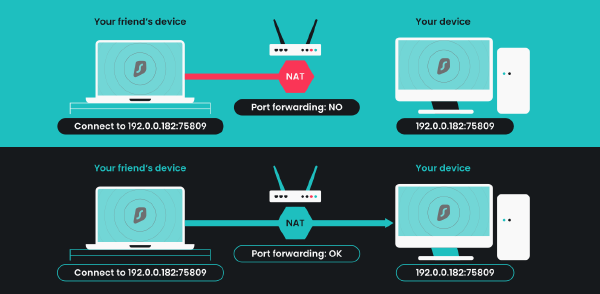
14. What is NAT? #
Network Address Translation (NAT) translates IP addresses between network domains.
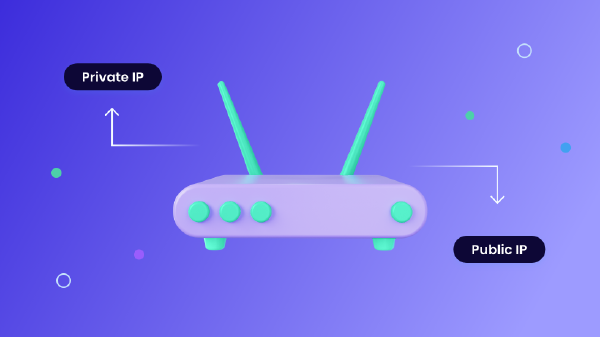
A common use case is allowing multiple private IPv4 hosts to share one or more public IPv4 addresses when accessing external networks.
15. What is the function of the OSI Network layer? #
The OSI Network layer is responsible for logical addressing and routing packets between networks.
IP is the dominant Network-layer protocol in modern TCP/IP networks, while routers perform forwarding based on destination network information.
16. How does network topology affect network design? #
Topology influences the required cabling, interfaces, switching infrastructure, redundancy, physical layout, and failure characteristics of a network.
The selected topology should therefore reflect requirements such as scalability, availability, cost, and performance.
17. What is RIP? #
Routing Information Protocol (RIP) is a distance-vector routing protocol that uses hop count as its routing metric.
RIP is historically important but is largely unsuitable for modern large-scale networks because of its limited scalability and maximum hop-count metric.
18. How can a computer network be secured? #
Network security generally requires multiple layers of controls, including:
- Firewalls.
- Strong authentication.
- Access control.
- Network segmentation.
- Encryption.
- Endpoint protection.
- Secure configuration.
- Monitoring and logging.
- Patch management.
- Intrusion detection and prevention.
No single security mechanism is sufficient by itself.
19. What is a NIC? #
A Network Interface Card (NIC) provides the hardware interface between a device and a network.
An Ethernet NIC normally has a hardware-associated MAC address, although modern systems can also use software-configured or randomized MAC addresses.
20. What is a WAN? #
A Wide Area Network (WAN) connects geographically distributed networks.
The Internet is the largest example of an interconnected global network, while enterprise WANs commonly connect offices, data centers, and cloud environments across regions.
🧱 OSI and TCP/IP Architecture #
21. What is the importance of the OSI Physical layer? #
The Physical layer defines how raw bits are represented and transmitted over a physical medium.
It covers characteristics such as signaling, connectors, cabling, radio transmission, electrical properties, and physical interfaces.
22. How many layers are in the TCP/IP model? #
A commonly used four-layer TCP/IP model consists of:
- Network Access
- Internet
- Transport
- Application
Some references use a five-layer model by separating the Physical and Data Link functions.
23. What is a proxy server? #
A proxy server acts as an intermediary between clients and external services.
Depending on its type and configuration, a proxy can provide access control, caching, traffic inspection, identity abstraction, filtering, and policy enforcement.
A proxy should not be considered a complete security boundary by itself.
24. What is the function of the OSI Session layer? #
The Session layer conceptually manages communication sessions between applications, including session establishment, coordination, and termination.
In modern TCP/IP systems, many of these functions are implemented directly by application protocols rather than through a distinct Session-layer protocol.
25. What is a fault-tolerant system? #
A fault-tolerant system is designed to continue operating despite failures in individual components.
Redundancy can eliminate or reduce single points of failure.
However, fault tolerance does not automatically protect against every type of data loss, such as accidental deletion, corruption replicated across systems, or destructive attacks.
26. What does 10Base-T mean? #
In 10Base-T:
10indicates a nominal 10 Mbps data rate.Baseindicates baseband signaling.Trefers to twisted-pair cabling.
27. What is a private IP address? #
Private IPv4 addresses are intended for use within private networks and are not directly routable across the public Internet.
The RFC 1918 private ranges are:
10.0.0.0/8
172.16.0.0/12
192.168.0.0/16
These ranges can be reused independently across different private networks.
28. What is a NOS? #
A Network Operating System (NOS) is an operating system or software environment that provides networking capabilities and services.
Modern server operating systems generally include networking functionality as an integrated part of the operating system rather than as a completely separate NOS product.
29. What is a DoS attack? #
A Denial-of-Service (DoS) attack attempts to make a system, service, or network resource unavailable to legitimate users.
An attack may consume CPU, memory, bandwidth, connection state, or another limited resource.
A distributed version involving many systems is called a DDoS (Distributed Denial-of-Service) attack.
30. What is OSI, and what role does it play? #
The Open Systems Interconnection (OSI) model is a seven-layer reference framework for understanding network communication.
It separates networking functionality into conceptual layers, making it easier to analyze protocols, interfaces, and failures.
🔌 Cabling, Addressing, and Network Hardware #
31. What is the purpose of shielded twisted-pair cable? #
Shielded twisted-pair cabling uses shielding to reduce electromagnetic interference and crosstalk in environments where electrical noise may affect signal integrity.
32. What are the advantages of address sharing? #
Address sharing through NAT allows multiple private hosts to access external networks using a smaller number of public IPv4 addresses.
It also means that external systems generally communicate with the translated public address rather than directly addressing private hosts.
NAT can reduce exposure, but it should not be treated as a substitute for a firewall or access-control policy.
33. What is a MAC address? #
A Media Access Control (MAC) address identifies a network interface at the data-link layer.
Traditional Ethernet MAC addresses are typically 48 bits, commonly represented as six hexadecimal octets.
34. Which OSI layers correspond to the TCP/IP application layer? #
The TCP/IP Application layer broadly encompasses functionality associated with the OSI:
- Application layer.
- Presentation layer.
- Session layer.
The TCP/IP model intentionally uses fewer, broader layers.
35. How were IPv4 address classes identified? #
Traditional IPv4 classful networking classified addresses using the leading bits of the first octet:
- Class A: leading bit
0. - Class B: leading bits
10. - Class C: leading bits
110.
Classful addressing has been superseded by CIDR, which allows arbitrary prefix lengths.
36. What is the main purpose of OSPF? #
Open Shortest Path First (OSPF) is a link-state interior gateway protocol.
Routers exchange topology information and independently calculate shortest paths using the accumulated link-state database.
37. What is a firewall? #
A firewall controls network traffic according to defined security policies.
Depending on the implementation, a firewall may filter traffic based on addresses, ports, protocols, connection state, applications, identities, or other attributes.
38. What is a star topology? #
A star topology connects endpoint devices to a central networking device, such as an Ethernet switch.
It is widely used because individual endpoint failures generally do not affect other endpoints.
39. What is a gateway? #
A gateway is a system or device that provides communication between different networks or protocol domains.
In IP networking, a host’s default gateway is normally the router responsible for forwarding traffic outside the local subnet.
40. What is a disadvantage of a star topology? #
The central switching infrastructure can represent a critical dependency.
If the central switch fails and there is no redundancy, all connected devices can lose network connectivity.
41. What is SLIP? #
Serial Line Internet Protocol (SLIP) is a legacy protocol that provided IP communication over serial connections.
It has largely been replaced by technologies such as PPP and modern IP networking mechanisms.
42. What are examples of private network addresses? #
Examples include:
10.0.0.0/8
172.16.0.0/12
192.168.0.0/16
For example, 172.16.0.0/12 includes addresses from 172.16.0.0 through 172.31.255.255.
43. What is tracert? #
tracert is the Windows implementation of a traceroute-style diagnostic utility.
It attempts to identify the sequence of network hops between a local system and a destination.
On Linux and many Unix-like systems, the equivalent command is commonly traceroute.
44. What does a network administrator do? #
Network administrators typically handle:
- Network deployment.
- Configuration.
- Monitoring.
- Security.
- Maintenance.
- Troubleshooting.
- Capacity planning.
- Documentation.
Modern network administration increasingly includes automation, infrastructure as code, and cloud networking.
45. What is a disadvantage of peer-to-peer networking? #
In a peer-to-peer network, individual workstations may provide resources directly to other users.
Heavy resource sharing can therefore consume the serving workstation’s CPU, memory, storage, or network bandwidth.
46. What is a hybrid network? #
A hybrid network combines multiple networking architectures or topologies.
For example, an organization might use centralized client-server services while also permitting peer-to-peer resource sharing in selected environments.
47. What is DHCP? #
Dynamic Host Configuration Protocol (DHCP) automatically provides network configuration to clients.
A DHCP server can assign parameters such as:
- IPv4 address.
- Subnet mask.
- Default gateway.
- DNS servers.
- Lease duration.
48. What is the main job of ARP? #
Address Resolution Protocol (ARP) maps an IPv4 address to a corresponding MAC address on a local Ethernet network.
For IPv6, the equivalent functionality is provided by Neighbor Discovery Protocol (NDP) rather than ARP.
49. What is TCP/IP? #
TCP/IP refers to the family of protocols used to communicate across interconnected networks.
TCP and IP are only two components of the broader protocol suite, which also includes protocols such as UDP, DNS, DHCP, HTTP, TLS, ICMP, and many others.
50. How can a network be managed through a router? #
Routers can provide management interfaces for configuring:
- Routing.
- Interfaces.
- Access-control policies.
- VPNs.
- NAT.
- Logging.
- Security policies.
- Quality-of-service settings.
Modern routers are often managed through CLI, web interfaces, APIs, automation frameworks, or centralized management platforms.
📡 File Transfer, Gateways, and Network Utilities #
51. Which protocol can transfer files between different platforms? #
FTP is platform-independent and can transfer files between different operating systems.
However, for modern deployments, SFTP, FTPS, or HTTPS-based transfer mechanisms are generally preferable when encryption is required.
52. What is the purpose of a default gateway? #
A default gateway is the router a host uses when the destination is outside its local routing table.
For a typical IPv4 LAN, this is usually the router interface belonging to the host’s subnet.
53. What makes a good password? #
Strong authentication credentials should be difficult to guess and resistant to automated attacks.
For passwords, long unique passphrases are generally preferable to short passwords with arbitrary character substitutions.
For sensitive systems, password authentication should also be supplemented with multi-factor authentication (MFA) where possible.
54. What is the characteristic impedance of UTP Ethernet cabling? #
Common twisted-pair Ethernet cabling has a nominal characteristic impedance of approximately 100 ohms.
This is a property of the transmission medium rather than simply a “termination rate.”
55. What is netstat? #
netstat is a command-line network diagnostic utility that can display information such as:
- Active connections.
- Listening ports.
- Routing information.
- Interface statistics.
Modern Linux systems often use the ss utility as a more capable replacement for many netstat functions.
56. How many network IDs are possible in a Class C network? #
Traditional Class C addressing allocated 21 bits for the network identifier.
That produced:
2^21 = 2,097,152possible Class C network IDs, with up to 254 usable host addresses per /24 network under traditional rules.
Classful addressing is obsolete in modern networks, which use CIDR.
57. What happens when a cable exceeds its specified length? #
Exceeding the supported cable distance can result in signal attenuation, timing problems, increased errors, or failure to establish a reliable link.
Ethernet standards specify maximum distances based on the cable type and signaling technology.
58. What software problems can cause network failures? #
Common software-related causes include:
- Incorrect configuration.
- Protocol mismatches.
- DNS failures.
- Routing configuration errors.
- Firewall rules.
- Authentication problems.
- Application bugs.
- Driver issues.
- Permission problems.
- Conflicting services.
59. What is ICMP? #
Internet Control Message Protocol (ICMP) provides control, diagnostic, and error-reporting messages for IP networks.
Tools such as ping use ICMP Echo Request and Echo Reply messages, while traceroute-style diagnostics can rely on ICMP responses depending on the implementation.
60. What is ping? #
ping is a network diagnostic utility used to test IP-level reachability and measure round-trip response time.
It commonly uses ICMP Echo Request and Echo Reply messages for IPv4 and IPv6.
61. What is peer-to-peer networking? #
Peer-to-peer (P2P) networking allows systems to communicate and share resources without requiring every resource to be hosted by a dedicated central server.
Each participating system can potentially act as both a client and a server.
62. What is DNS? #
The Domain Name System (DNS) translates domain names and other DNS records into information used by networked applications.
The most familiar use is mapping hostnames such as example.com to IP addresses.
63. What are the advantages of fiber optics? #
Fiber-optic cabling provides several advantages:
- High bandwidth.
- Long transmission distances.
- Low signal attenuation.
- Immunity to electromagnetic interference.
- Electrical isolation.
These characteristics make fiber particularly useful for data center, backbone, campus, and long-distance links.
64. What is the difference between a hub and a switch? #
A hub repeats incoming signals to multiple ports without selectively forwarding frames.
An Ethernet switch learns MAC addresses and forwards frames toward the appropriate destination port.
Switches therefore provide substantially better traffic isolation and network efficiency than traditional hubs.
65. Which protocols were historically supported by Windows RRAS? #
Legacy versions of Windows Routing and Remote Access Service supported protocols such as:
- TCP/IP.
- IPX.
- NetBEUI.
IPX and NetBEUI are now legacy technologies and are not relevant to most modern Windows networking environments.
66. What are the maximum networks and hosts in Class A, B, and C? #
Under traditional classful IPv4 addressing:
| Class | Network Count | Hosts per Network |
|---|---|---|
| A | 126 | 16,777,214 |
| B | 16,384 | 65,534 |
| C | 2,097,152 | 254 |
These figures are primarily useful for understanding historical IPv4 addressing. Modern networks use CIDR instead.
67. What is the standard T568B color order? #
The common T568B pinout is:
1. White/Orange
2. Orange
3. White/Green
4. Blue
5. White/Blue
6. Green
7. White/Brown
8. Brown
68. Which protocols belong to the TCP/IP Application layer? #
Examples include:
- HTTP.
- DNS.
- DHCP.
- SMTP.
- FTP.
- SSH.
- TLS-related application protocols.
The TCP/IP Application layer encompasses functionality that spans several OSI upper-layer concepts.
69. Can two computers share files without a hub or router? #
Yes. Two computers can communicate directly using a suitable Ethernet connection.
Modern Ethernet interfaces commonly support Auto MDI-X, which eliminates the need to manually select a crossover cable in many cases.
70. What is ipconfig? #
ipconfig is a Windows command-line utility for viewing and managing IP configuration.
Depending on the options used, it can display addresses, subnet masks, default gateways, DNS information, and DHCP-related information.
71. What is the difference between straight-through and crossover cables? #
A straight-through cable uses the same wiring standard on both ends.
A traditional crossover cable swaps the transmit and receive pairs and was historically used to directly connect similar Ethernet devices.
Auto MDI-X has made crossover cables largely unnecessary for modern Ethernet hardware.
72. What is client-server architecture? #
In a client-server architecture, clients request services or resources from dedicated server systems.
Servers may provide services such as:
- Databases.
- Files.
- Authentication.
- APIs.
- Applications.
- Network management.
73. What is a network? #
A computer network is a collection of interconnected devices that communicate and exchange data using defined protocols.
Connections can use wired, wireless, optical, cellular, or other communication technologies.
74. Does a NIC’s MAC address move when the NIC is moved to another PC? #
A hardware-associated MAC address belongs to the network interface rather than the computer chassis.
Therefore, moving the same NIC to another computer generally moves its factory-assigned MAC address with it.
However, operating systems and virtualization platforms can configure alternate or locally administered MAC addresses.
75. What is clustering support? #
Clustering connects multiple systems so they can provide a coordinated service with improved availability, scalability, or workload distribution.
A properly designed failover cluster can continue serving workloads when an individual node fails.
76. Where should endpoint protection be installed in a network with servers and workstations? #
Security controls should be deployed across all applicable endpoints and servers.
Protecting only the servers is insufficient because compromised workstations can become an entry point for malware, credential theft, lateral movement, and data exfiltration.
77. What is Ethernet? #
Ethernet is a family of networking technologies standardized primarily through IEEE 802.3.
It is widely used in LANs and data centers and supports speeds ranging from traditional low-speed implementations to modern multi-gigabit and terabit-class technologies.
78. What are disadvantages of ring topology? #
Traditional ring architectures can be sensitive to failures or disruptions in the ring.
A single failure may interrupt communication unless the implementation provides redundancy, such as a dual-ring design or automatic protection mechanisms.
79. What is the difference between CSMA/CD and CSMA/CA? #
CSMA/CD (Collision Detection) was used by traditional shared Ethernet networks to detect collisions after transmission began.
CSMA/CA (Collision Avoidance) is associated primarily with Wi-Fi, where devices attempt to reduce the probability of collisions before transmitting.
Modern switched full-duplex Ethernet does not use CSMA/CD for normal operation.
80. What is SMTP? #
Simple Mail Transfer Protocol (SMTP) is used to submit, send, and relay email messages between mail systems.
SMTP commonly operates with TCP and is paired with protocols such as IMAP for mailbox access.
81. What is multicast routing? #
Multicast routing delivers traffic from a source to a selected group of receivers rather than broadcasting it to every host.
It is useful for applications such as large-scale streaming, conferencing, and specialized distributed services.
82. Why is encryption important on a network? #
Encryption transforms readable data into ciphertext that cannot be meaningfully interpreted without the required cryptographic keys.
It protects data confidentiality and, depending on the protocol, can also provide integrity and authentication.
Common examples include TLS, IPsec, and SSH.
83. How are IPv4 addresses represented? #
IPv4 addresses are normally represented using dotted-decimal notation.
For example:
192.168.101.2An IPv4 address contains 32 bits, divided into four 8-bit octets.
84. Why is authentication important? #
Authentication verifies the identity of a user, device, service, or other entity before access is granted.
Authentication is distinct from authorization:
- Authentication: Who are you?
- Authorization: What are you allowed to do?
85. What is IPsec tunnel mode? #
In IPsec tunnel mode, an entire original IP packet is encapsulated inside a new IP packet protected by IPsec.
This mode is commonly used for site-to-site VPNs, where gateways establish a protected tunnel between networks.
86. What technologies can be used for WAN connectivity? #
WAN connectivity can use technologies such as:
- Dedicated fiber.
- Ethernet services.
- MPLS.
- Broadband.
- Cellular.
- Satellite.
- SD-WAN over multiple underlay connections.
- Legacy circuit-switched services.
The appropriate technology depends on availability, bandwidth, latency, reliability, cost, and security requirements.
87. What is an advantage of mesh topology? #
A mesh topology provides multiple communication paths between nodes.
This redundancy can improve fault tolerance because traffic may be rerouted when an individual link fails.
88. What hardware problems commonly affect networks? #
Common hardware failures include:
- Faulty NICs.
- Damaged cables.
- Failed switches or routers.
- Power problems.
- Incorrect transceivers.
- Faulty optics.
- Storage or server hardware failures.
- Incorrect hardware configuration.
89. How can signal attenuation problems be addressed? #
Solutions depend on the physical medium and Ethernet standard.
Possible approaches include:
- Staying within specified cable distances.
- Using appropriate repeaters or active network equipment.
- Replacing damaged cables.
- Checking connectors and terminations.
- Using fiber for longer distances.
- Verifying optical power levels on fiber links.
90. How does DHCP assist network management? #
DHCP centralizes network configuration and automatically assigns clients addresses from configured pools.
This reduces manual configuration and makes large networks easier to manage.
A DHCP scope can define an address range and associated configuration options such as gateways and DNS servers.
91. What is a network profile? #
A network profile is a collection of configuration or policy settings associated with a user, device, network connection, or operating-system environment.
Depending on the platform, profiles can control firewall behavior, authentication, access policies, and other networking parameters.
92. What is Sneakernet? #
Sneakernet describes physically transporting data using removable storage rather than transmitting it electronically across a network.
Examples include moving data using USB drives, external disks, or other physical media.
The approach can still be useful when network bandwidth is limited and the data volume is extremely large.
93. What is the role of IEEE in networking? #
The Institute of Electrical and Electronics Engineers (IEEE) develops and maintains numerous technical standards used in networking.
Examples include:
- IEEE 802.3 — Ethernet.
- IEEE 802.11 — Wi-Fi.
- IEEE 802.1Q — VLAN tagging.
94. Which protocols are associated with the TCP/IP Internet layer? #
Common Internet-layer protocols include:
- IP.
- ICMP.
- IGMP.
ARP is traditionally associated with the network access/link layer rather than the Internet layer in many TCP/IP models, although its function bridges IP addressing and local-link addressing.
95. What are network permissions? #
Network permissions determine which users, groups, devices, or services are authorized to access resources and perform specific operations.
Permissions can govern access to files, applications, shares, databases, network services, and administrative functions.
96. Why are VLANs used? #
A Virtual LAN (VLAN) logically separates devices into distinct Layer 2 broadcast domains, even when they share physical switching infrastructure.
VLANs are commonly used for:
- Network segmentation.
- Security boundaries.
- Broadcast-domain management.
- Organizational separation.
- Traffic isolation.
Routing between VLANs requires a Layer 3 device or Layer 3 switch.
97. What is IPv6? #
IPv6 (Internet Protocol version 6) is the successor to IPv4.
Its 128-bit address space provides vastly more addresses than IPv4’s 32-bit address space.
IPv6 also introduces architectural improvements such as simplified header processing, mandatory support for IPsec in the protocol specification, and mechanisms for address autoconfiguration.
98. What is the RSA algorithm? #
RSA, named after Rivest, Shamir, and Adleman, is a public-key cryptographic algorithm.
RSA can be used for digital signatures and, historically, for encryption and key transport. Modern cryptographic systems often use RSA signatures alongside more efficient symmetric encryption for bulk data.
99. What is a mesh topology? #
A mesh topology connects nodes through multiple direct communication paths.
A full mesh connects every node directly to every other node. A partial mesh connects selected nodes with redundant paths.
Full-mesh connectivity becomes increasingly expensive as the number of nodes grows because the number of links increases rapidly.
100. What is the maximum segment length for 100Base-FX? #
100Base-FX is a 100 Mbps Fast Ethernet technology using fiber optics.
Its maximum supported distance depends on the specific fiber type, transceivers, and implementation. Common specifications include approximately 2 km for multimode fiber in standard 100Base-FX deployments, rather than treating 412 meters as a universal limit.
For modern network design, always consult the specific Ethernet standard and optical module specifications rather than relying on a generic maximum-distance figure.
🧭 Networking Fundamentals at a Glance #
These 100 concepts provide a foundation for understanding modern network infrastructure:
| Area | Core Concepts |
|---|---|
| Architecture | OSI, TCP/IP, encapsulation |
| Addressing | IPv4, IPv6, MAC, subnetting, NAT |
| Configuration | DHCP, DNS, default gateway |
| Routing | RIP, OSPF, routers, gateways |
| Switching | Ethernet, switches, VLANs, ARP |
| Transport | TCP, UDP |
| Applications | HTTP, SMTP, FTP, DNS |
| Security | Firewalls, VPNs, TLS, authentication, encryption |
| Physical Networking | UTP, fiber, NICs, topology |
| Troubleshooting | Ping, tracert, netstat, ipconfig, ICMP |
| Availability | Clustering, redundancy, fault tolerance |
| Network Design | LAN, WAN, backbone, mesh, star, hybrid |
A strong understanding of these fundamentals provides the conceptual foundation for working with modern cloud networking, Kubernetes networking, service meshes, distributed systems, SD-WAN, zero-trust architectures, and large-scale infrastructure.