
AMD Rumored to Increase Radeon GPU and GDDR6 Bundle Prices by 10%
A new supply chain rumor suggests AMD is preparing to raise the pricing of Radeon GPU and GDDR6 memory bundles supplied to its board partners by approximately 10%. While the increase reportedly takes effect this month, its impact on retail graphics card prices is expected to be more nuanced than the headline figure suggests.
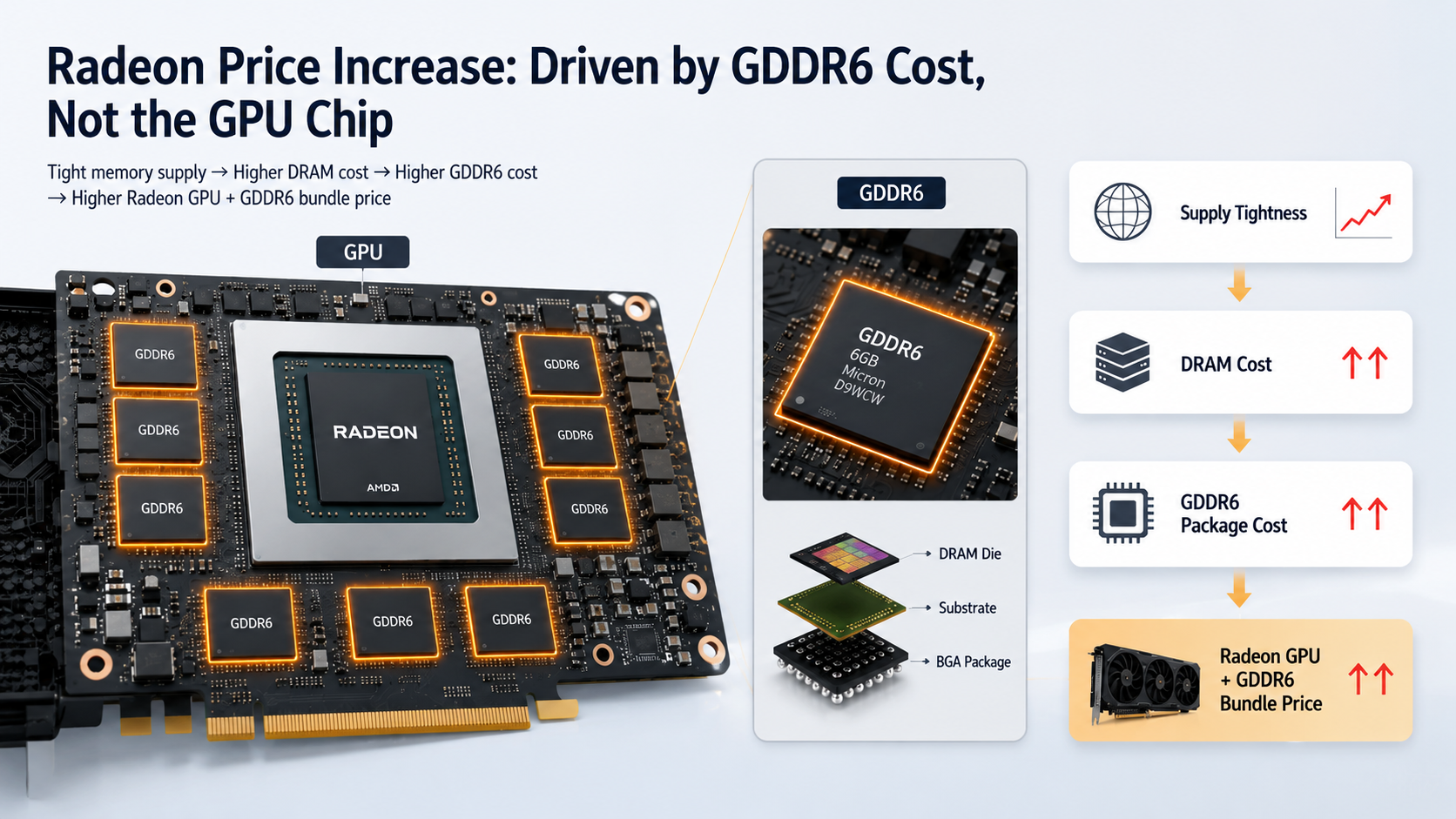
The reported adjustment is primarily attributed to rising GDDR6 memory costs rather than changes in GPU manufacturing expenses. If accurate, the move reflects broader trends across the semiconductor industry, where persistent DRAM shortages and AI-driven demand continue to reshape component pricing.
📈 AMD Reportedly Raises GPU and Memory Bundle Costs #
According to supply chain reports, AMD has informed add-in-board (AIB) partners that the cost of Radeon GPU and GDDR6 memory bundles will increase by roughly 10% for new orders placed this month.
The information first surfaced on the Chinese hardware distribution forum Board Channels before being referenced by international hardware publications, including VideoCardz and TweakTown. The reported price adjustment is said to affect major Radeon board partners, including:
- Sapphire
- ASUS
- XFX
- ASRock
- Vastarmor
Although AMD has not publicly acknowledged the reported change, the rumor aligns with ongoing increases in memory pricing throughout the semiconductor supply chain.
GDDR6 Memory Is Driving the Increase #
Unlike previous GPU pricing shifts that were influenced by manufacturing node costs or wafer pricing, this reported increase appears to be driven almost entirely by higher GDDR6 memory prices.
Current RDNA 4 graphics cards continue to rely on GDDR6 memory. For example, the Radeon RX 9070 XT ships with:
- 16 GB GDDR6 memory
- 256-bit memory interface
While the cost increase per individual memory chip may appear modest, it scales rapidly across millions of units, significantly increasing production costs for graphics card manufacturers.
Industry analysts have also pointed to tightening global memory supplies as a key contributor to rising component costs.
🔮 AI Demand Continues to Tighten Memory Supply #
The reported pricing adjustment reflects broader market conditions affecting the entire memory industry.
Recent market analyses have projected DRAM contract prices to remain elevated through at least the middle of 2026. Several factors continue to drive this trend:
- Low inventory levels throughout the memory supply chain
- Strong demand from AI servers and data center infrastructure
- Production capacity increasingly allocated toward enterprise memory products
As AI accelerators consume more DRAM manufacturing capacity, consumer hardware—including graphics cards—faces growing supply constraints. GDDR6 memory used in gaming GPUs competes for manufacturing resources with other high-demand memory products, placing additional upward pressure on pricing.
💰 Why Retail Graphics Card Prices May Not Rise by 10% #
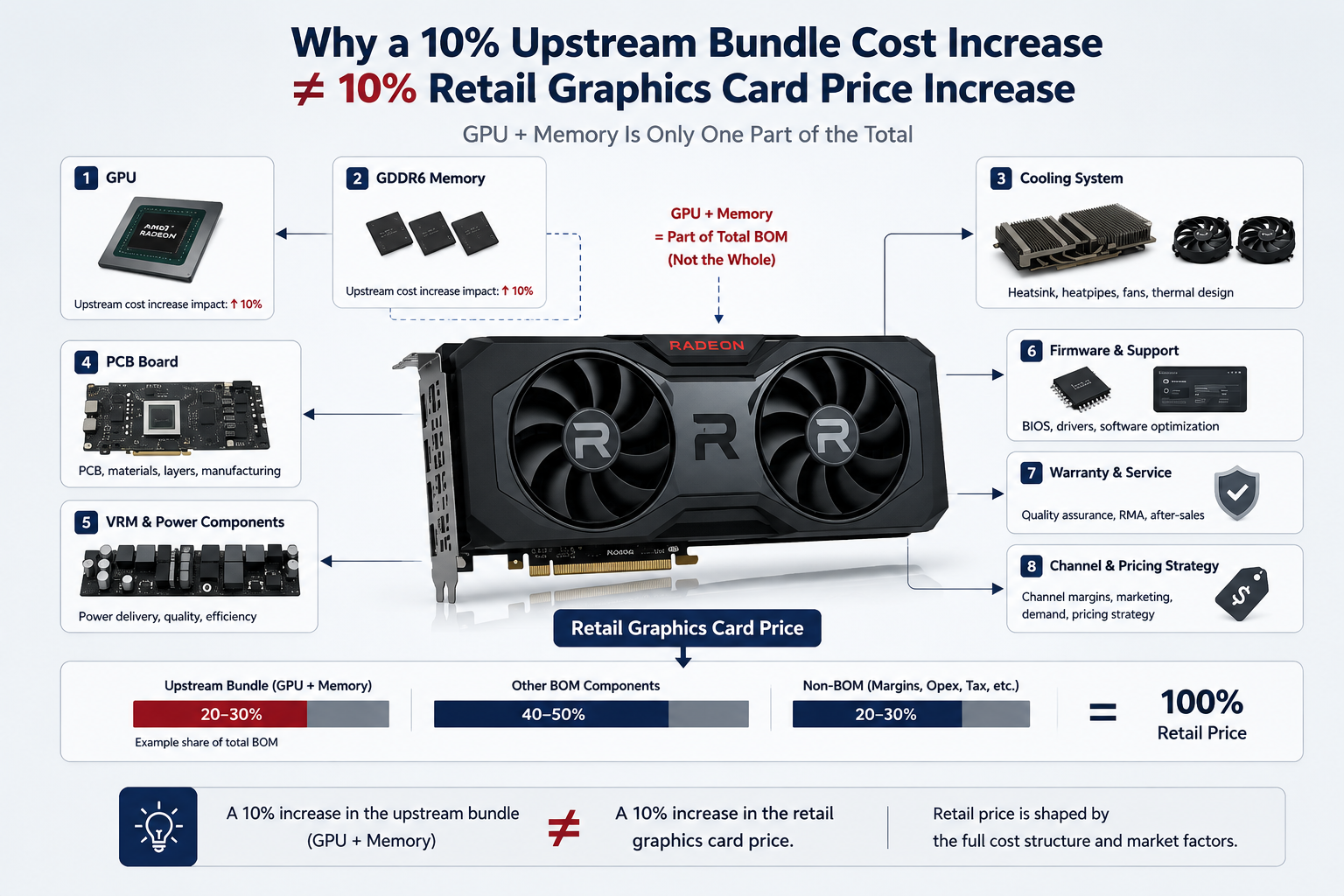
Although the reported increase sounds significant, consumers should not expect graphics card retail prices to immediately rise by the same percentage.
The adjustment reportedly applies only to AMD’s component bundles sold to its board partners. Those components represent only one portion of the overall manufacturing cost of a finished graphics card.
Graphics Cards Include Many Additional Costs #
Beyond the GPU and memory, AIB manufacturers must integrate several additional components before a graphics card reaches retail shelves, including:
- Custom PCBs
- Voltage regulation modules (VRMs)
- Cooling systems
- Firmware development and validation
- Product testing
- Warranty and after-sales support
These expenses collectively form the complete bill of materials (BOM), meaning fluctuations in GPU and memory costs do not translate directly into equivalent retail price increases.
Board Partners Have Multiple Pricing Options #
Manufacturers have several strategies available to manage higher upstream costs without implementing immediate MSRP increases.
Possible responses include:
- Reducing promotional discounts
- Maintaining pricing on slower-selling models
- Absorbing part of the increased production cost
- Adjusting pricing selectively across different product tiers
Given that consumer GPU demand remains relatively soft in many markets, aggressively passing the full increase to customers could negatively impact sales volumes. As a result, board partners are likely to adopt more flexible pricing strategies rather than applying a blanket increase.
📦 Existing Inventory Should Remain Unaffected #
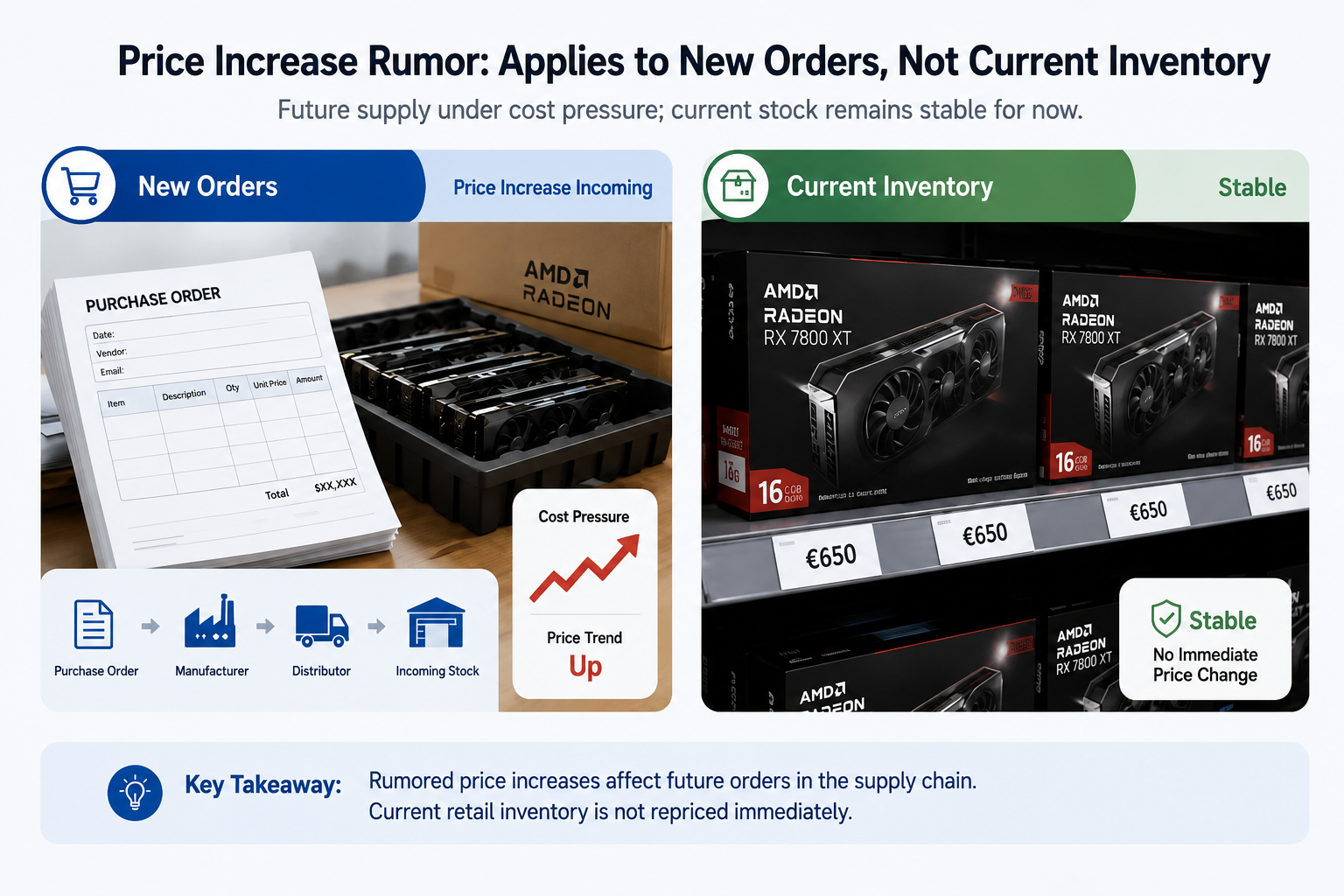
Another important detail is that the rumored adjustment reportedly applies only to new component orders placed after the effective date.
Existing graphics cards already manufactured and distributed through retail channels are not expected to experience immediate cost changes.
For example, the Radeon RX 9070 XT has recently maintained a starting price of approximately €650 in parts of the European market, indicating that current inventory remains priced according to earlier supply costs.
This lag between upstream component pricing and retail availability means consumers may still find existing inventory at current market prices until distributors replenish stock with newly manufactured cards.
⚠️ Rumor Status and Market Outlook #
At the time of writing, AMD has not officially confirmed the reported pricing adjustment, nor has it announced any changes to Radeon graphics card MSRPs.
The report currently relies on supply chain sources originating from Board Channels. While the forum has previously proven reliable for hardware manufacturing and distribution leaks, the information should still be treated as unconfirmed until AMD or its partners issue official statements.
Even so, the rumor is consistent with broader industry trends. Rising DRAM costs, constrained memory production, and continued AI infrastructure investment have placed sustained pressure on hardware pricing throughout 2026.
For buyers planning to purchase a Radeon graphics card in the near future, current retail inventory may represent the most favorable pricing available if the reported supply chain adjustment eventually propagates through distribution channels.