Google’s Massive TPU Order Could Transform Intel Foundry
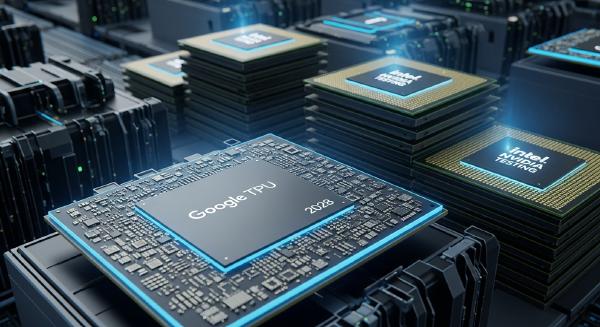
Intel’s long-struggling foundry business may have received its most significant endorsement yet. According to reports from industry sources, Alphabet, Google’s parent company, plans to have Intel manufacture more than three million of its proprietary Tensor Processing Unit (TPU) AI chips by 2028.
The news sparked a dramatic market reaction. Intel shares surged more than 13% during intraday trading on June 8 and ultimately closed with gains exceeding 11%, significantly outperforming the broader semiconductor sector.
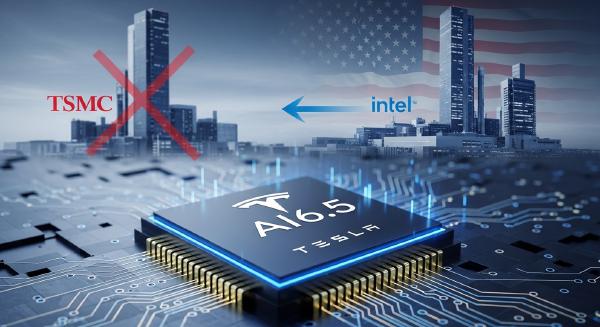
Beyond the immediate stock market rally, the reported deal has reignited discussions about whether Intel can successfully reposition itself as a major player in the global foundry market and challenge the longstanding dominance of TSMC.
🚀 A Major Vote of Confidence in Intel Foundry #
For years, Intel’s manufacturing business has struggled to regain momentum after losing its leadership position in advanced semiconductor process technology.
While Intel remains a major chip designer and CPU supplier, its contract manufacturing division has faced significant challenges, including:
- Delays in advanced process node development
- Rising manufacturing costs
- Intense competition from TSMC
- Limited foundry customer adoption
- Persistent operating losses
Securing a large-scale AI chip manufacturing contract from Google would represent a significant validation of Intel’s turnaround strategy.
Alphabet’s TPU processors are among the most important AI accelerators deployed within Google’s cloud and artificial intelligence infrastructure. Manufacturing millions of these chips would provide Intel with substantial wafer demand while demonstrating confidence in its ability to produce advanced AI silicon at scale.
📈 Intel Stock Surges as Investors Reassess the Outlook #
The timing of the report amplified its impact on investor sentiment.
Only days earlier, semiconductor stocks had experienced a sharp market correction that wiped out more than $1 trillion in combined market capitalization across the industry.
Against this backdrop, the prospect of a multi-million-unit AI chip contract provided investors with a compelling growth narrative.
The market interpreted the news as evidence that:
- Large technology companies are seeking alternative foundry partners.
- Demand for AI accelerators continues to grow rapidly.
- Intel’s manufacturing roadmap may be gaining credibility.
- The foundry market could become more competitive.
As a result, Intel quickly recovered recent losses and emerged as one of the strongest-performing semiconductor stocks during the trading session.
🤖 Why Google’s TPU Business Matters #
Google’s Tensor Processing Units are custom-designed AI accelerators optimized for machine learning workloads.
Unlike general-purpose GPUs, TPUs are specifically engineered to support Google’s AI ecosystem, including:
- Large language models
- Generative AI services
- Cloud AI platforms
- Search infrastructure
- Data center inference workloads
As AI adoption accelerates globally, TPU deployment is expected to increase significantly.
A manufacturing agreement involving more than three million chips would represent one of the largest AI-related semiconductor contracts ever awarded to Intel’s foundry business.
For Intel, such a deal would provide:
- Long-term manufacturing volume
- Improved fab utilization rates
- Greater economies of scale
- Enhanced credibility with future customers
🏭 Intel’s Ambition to Challenge TSMC #
Intel’s broader strategy extends far beyond a single customer relationship.
Under its foundry transformation initiative, the company aims to become a major contract manufacturer serving external customers across multiple industries.
Today, TSMC remains the dominant force in advanced semiconductor manufacturing, producing chips for companies including:
- Apple
- NVIDIA
- AMD
- Qualcomm
- MediaTek
- Broadcom
However, explosive growth in AI demand has placed enormous pressure on global manufacturing capacity.
As advanced-node production becomes increasingly constrained, major technology companies are actively seeking additional manufacturing partners to diversify supply chains and secure future capacity.
This shift creates a rare opportunity for Intel to establish itself as a viable alternative.
🤝 Other Technology Giants Are Showing Interest #
Google is not the only company reportedly evaluating Intel’s manufacturing capabilities.
Industry reports indicate that NVIDIA has been assessing Intel’s technology for future advanced processors, including designs that integrate multiple GPUs into a single package.
Meanwhile, Tesla has also expressed interest in Intel’s next-generation manufacturing technologies.
According to comments made by Elon Musk earlier this year, Tesla intends to explore Intel’s upcoming 14A process technology for future AI-focused semiconductor development associated with its advanced computing initiatives.
While many of these projects remain in evaluation or planning stages, they suggest that leading technology companies are increasingly willing to consider Intel as a strategic manufacturing partner.
⚙️ The Importance of Intel’s Advanced Process Roadmap #
The success of Intel Foundry ultimately depends on its ability to execute its manufacturing roadmap.
The company has invested heavily in next-generation process technologies designed to compete directly with TSMC’s most advanced nodes.
Key objectives include:
- Improving transistor density
- Enhancing performance-per-watt
- Reducing manufacturing costs
- Increasing yield rates
- Expanding advanced packaging capabilities
Intel’s upcoming 14A node is particularly important because it represents one of the company’s most ambitious attempts to reestablish leadership in semiconductor manufacturing technology.
If Intel can successfully execute this roadmap, it could significantly improve its attractiveness to AI chip developers and hyperscale cloud providers.
💰 The Profitability Challenge Remains #
Despite growing optimism, significant challenges remain.
Intel’s foundry business continues to operate at a loss, raising concerns among investors regarding the sustainability of its long-term strategy.
Several critical questions remain unanswered:
- Can Intel consistently attract large external customers?
- Will future contracts generate attractive margins?
- Can manufacturing yields reach competitive levels?
- Will capital expenditures produce adequate returns?
- Can Intel scale operations profitably?
Securing high-profile customers is an important first step, but long-term success will ultimately depend on transforming revenue growth into sustainable profitability.
🌐 AI Demand Is Reshaping the Semiconductor Industry #
The broader context behind Intel’s opportunity is the unprecedented growth in artificial intelligence infrastructure spending.
Major cloud providers and AI developers are investing aggressively in:
- AI training clusters
- Data center expansion
- Custom silicon development
- High-bandwidth memory
- Advanced packaging technologies
As demand accelerates, reliance on a single foundry supplier becomes increasingly risky.
Many industry observers believe that AI-driven capacity constraints could encourage a more diversified semiconductor manufacturing ecosystem, creating opportunities for alternative foundry providers such as Intel.
🔮 Could This Be Intel’s Turning Point? #
For much of the past decade, Intel has been viewed as a company attempting to recover from strategic missteps and manufacturing setbacks.
The reported Google TPU contract suggests that some of the world’s largest technology companies may now see Intel differently—not merely as a chip designer, but as a potential manufacturing partner capable of supporting next-generation AI infrastructure.
Whether this momentum ultimately translates into long-term success remains uncertain. Execution, profitability, and customer retention will determine the outcome.
However, one thing is clear: the explosive growth of AI is creating opportunities that did not exist just a few years ago.
🎯 Conclusion #
Google’s reported plan to have Intel manufacture more than three million TPU AI chips could represent a watershed moment for Intel Foundry. Beyond the immediate boost to investor confidence, the deal highlights a broader shift occurring across the semiconductor industry as AI demand stretches global manufacturing capacity.
If Intel can convert interest from companies such as Google, NVIDIA, and Tesla into sustained production contracts while successfully executing its advanced process roadmap, the company may finally achieve its long-sought transformation into a leading global foundry provider.
The coming years will determine whether Intel can capitalize on this historic opportunity and emerge as a credible challenger to TSMC in the era of AI-driven computing.