Intel Panther Lake: 18A Launch, Core Ultra X9 Specs and CES 2026
Intel has confirmed that its next-generation Panther Lake mobile processors will make their official debut on January 5, 2026, at CES, marking a major milestone in the company’s semiconductor manufacturing roadmap. Panther Lake will become Intel’s first client processor family built using the Intel 18A process, bringing together next-generation CPU cores, Xe3 integrated graphics, and dedicated AI acceleration.
The launch represents more than another mobile processor refresh. Intel 18A introduces RibbonFET gate-all-around transistors and PowerVia backside power delivery, two major manufacturing technologies intended to improve transistor performance, power efficiency, and integration density.
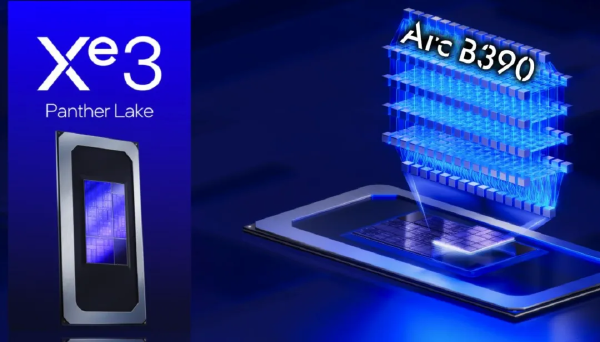
Panther Lake also introduces a new hybrid CPU architecture featuring Cougar Cove performance cores and Darkmont efficiency cores, alongside a low-power efficiency-core cluster. On the graphics side, the Xe3 architecture supports configurations with up to 12 Xe-cores, while the fifth-generation Neural Processing Unit (NPU 5) delivers up to 50 TOPS of dedicated AI computing performance.
Intel is positioning the platform as a foundation for its next-generation AI PC strategy, targeting mainstream laptops, premium ultrabooks, gaming systems, and mobile workstations.
With 18A entering volume production and OEM partners preparing their next-generation devices, Panther Lake is becoming an important test of Intel’s ability to translate advanced manufacturing technology into commercially competitive products.
🚀 Intel Confirms Panther Lake Launch for January 2026 #
Intel’s Panther Lake launch is particularly significant because it marks the transition of its 18A manufacturing technology from development into commercial client products.
The company has been using Panther Lake to validate its latest transistor and power-delivery technologies while preparing a broader range of laptop designs.
1. First Consumer Platform Built on Intel 18A #
Panther Lake is the first client processor family designed around Intel’s 18A manufacturing process.
The major technologies include:
- RibbonFET: Intel’s gate-all-around transistor architecture, designed to improve channel control and reduce leakage.
- PowerVia: Backside power delivery that separates power distribution from conventional frontside signal routing.
- Advanced packaging: A multi-tile architecture that integrates CPU, GPU, and platform components into a modular processor package.
These technologies provide the foundation for Intel’s next-generation mobile computing platform.
Intel previously targeted high-volume manufacturing for 18A in late 2025, aligning the production ramp with Panther Lake’s introduction.
2. Manufacturing Yield Improvements #
Manufacturing yield has been one of the most important factors affecting Intel’s 18A development schedule.
A leading-edge process node must achieve sufficient functional-die yield before it can support competitive high-volume production.
In November 2025, Intel executives indicated that 18A yield improvements had become more predictable.
Intel VP John Pitzer described the improvement trajectory as tracking the industry’s typical rate of approximately 7% per month.
However, Intel did not disclose a specific absolute wafer-yield percentage. The reported monthly improvement should therefore be understood as an indication of manufacturing progress rather than a confirmed measurement of production yield.
The improving yield trajectory is important because it can help reduce manufacturing costs and increase the number of usable processors produced from each wafer.
3. CES 2026 Debut and Retail Availability #
Intel selected CES 2026 as the official launch venue for Panther Lake.
The processor family was introduced on January 5, 2026, under the Intel Core Ultra Series 3 branding.
One important distinction is that the January 5 announcement was the product debut, not the retail availability date.
Intel subsequently confirmed the following commercial schedule:
| Milestone | Date |
|---|---|
| Official Core Ultra Series 3 unveiling | January 5, 2026 |
| Consumer laptop preorders begin | January 6, 2026 |
| Global retail availability | January 27, 2026 |
| Additional OEM designs | Throughout the first half of 2026 |
Intel also announced that more than 200 PC designs from global OEM partners would be powered by the new processor family.
This demonstrates the importance Intel places on broad platform adoption rather than limiting Panther Lake to a small number of flagship laptops.
The official launch announcement is available in Intel’s CES 2026 Core Ultra Series 3 announcement.
⚙️ Major Platform Changes Beyond the 18A Process #
Panther Lake introduces substantial changes across the processor architecture.
Rather than relying exclusively on improved transistor technology, Intel has updated the CPU core designs, graphics architecture, and AI acceleration hardware.
The result is a heterogeneous computing platform designed to distribute workloads across multiple specialized processing units.
1. Cougar Cove Performance Cores #
Cougar Cove is the performance-core microarchitecture used in Panther Lake.
P-cores are optimized for applications requiring high single-thread performance, low execution latency, and strong responsiveness.
Typical workloads include:
- Gaming and application execution.
- Software compilation.
- Content creation.
- Complex interactive workloads.
- Performance-intensive desktop applications.
The updated architecture focuses on improving instructions per clock (IPC), execution efficiency, and performance under mobile power constraints.
These improvements are important because laptop processors must deliver competitive performance without exceeding their thermal and battery-power budgets.
2. Darkmont Efficiency Cores #
Darkmont is the next-generation efficiency-core architecture used for both conventional E-cores and low-power E-cores.
The two configurations serve different roles:
Standard E-cores
Designed for multithreaded throughput and background workloads that can benefit from parallel execution.
Low-Power Efficiency Cores (LP-E)
Designed for lightweight tasks and background activity where minimizing power consumption is more important than maximizing peak performance.
This arrangement allows the processor to distribute workloads according to their performance and energy requirements.
For example, background applications can execute on low-power cores while demanding foreground applications receive additional resources from the performance cores.
3. High-End 16-Core Configuration #
A flagship Panther Lake configuration uses the following hybrid arrangement:
| Core Type | Architecture | Core Count |
|---|---|---|
| Performance Cores | Cougar Cove | 4 |
| Efficiency Cores | Darkmont | 8 |
| Low-Power Efficiency Cores | Darkmont | 4 |
| Total | Hybrid Architecture | 16 |
This 4P + 8E + 4 LP-E configuration provides 16 physical CPU cores.
The architecture enables Intel to scale processor configurations across different laptop segments.
High-performance systems can use the full configuration, while thinner and more power-constrained devices can adopt reduced core and graphics configurations.
💻 Core Ultra X Series: Product Lineup and Early Specifications #
Intel’s premium Panther Lake products introduce a new Core Ultra X branding tier within the Core Ultra Series 3 family.
The most important distinction is that the X designation identifies higher-end configurations with more powerful integrated graphics.
Intel’s launch positioning specifically includes Core Ultra X9 and X7 processors, alongside standard Core Ultra Series 3 products for mainstream systems.
1. Core Ultra X9, X7, and Mainstream Products #
The initial premium product categories include:
- Core Ultra X9: Flagship mobile configurations with the highest-performing integrated graphics.
- Core Ultra X7: High-performance mobile products targeting premium laptops.
- Standard Core Ultra Series 3: Broader configurations for mainstream and performance-oriented laptops.
The X branding should not be confused with a separate processor architecture. These products share the Panther Lake platform but differ in configuration, graphics capabilities, and product positioning.
2. Core Ultra X9 388H: Flagship Specifications #
One of the most important early products is the Intel Core Ultra X9 388H.
Its specifications include:
| Specification | Core Ultra X9 388H |
|---|---|
| Platform | Panther Lake |
| Product Family | Core Ultra Series 3 |
| CPU Architecture | Cougar Cove + Darkmont |
| Total CPU Cores | 16 |
| P-Cores | 4 |
| E-Cores | 8 |
| LP-E Cores | 4 |
| Maximum Turbo Frequency | 5.1 GHz |
| Smart Cache | 18 MB |
| Processor Base Power | 25W |
| Maximum Turbo Power | 80W |
| Minimum Assured Power | 15W |
| Integrated GPU | Intel Arc B390 |
| Xe Cores | 12 |
| NPU | NPU 5 |
| NPU Performance | 50 TOPS |
| CPU Process | Intel 18A |
The 5.1 GHz maximum turbo frequency makes the X9 388H a high-performance mobile processor, while its 16-core architecture provides substantial multithreaded processing capacity.
Its power configuration is also important.
The 25W Processor Base Power and 80W Maximum Turbo Power provide OEMs with flexibility to tune processor performance according to cooling-system capabilities.
Actual sustained performance will depend on laptop thermal design, firmware, and manufacturer-defined power limits.
3. Different Configurations for Different Laptop Segments #
Not every Panther Lake processor will use the flagship 16-core configuration.
Intel’s modular approach allows lower-tier products to use fewer CPU cores and different GPU configurations.
For example, lower-power laptop processors may use reduced P-core and LP-E-core configurations to prioritize battery life and thermal efficiency.
This gives OEMs the flexibility to develop:
- Premium ultrabooks.
- Business notebooks.
- Mainstream productivity laptops.
- Gaming laptops.
- Mobile workstations.
- High-performance portable computing systems.
The differentiation between product tiers is therefore not limited to clock speed. CPU core counts, GPU resources, memory support, and operating power limits all contribute to product segmentation.
🎮 Xe3 Graphics: A Major Integrated GPU Upgrade #
Panther Lake introduces Intel’s Xe3 graphics architecture, representing the next generation of Intel’s integrated GPU development.
The architecture succeeds Xe2 and is designed to deliver stronger graphics performance, improved execution efficiency, and enhanced media capabilities.
1. Up to 12 Xe3 Cores #
The flagship integrated graphics configuration supports up to 12 Xe-cores.
The top-end Arc B390 GPU provides a significant upgrade over previous generations of Intel integrated graphics.
Its capabilities target:
- Lightweight and mainstream gaming.
- GPU-accelerated content creation.
- Video editing and processing.
- 3D rendering.
- General-purpose GPU workloads.
- AI acceleration through supported GPU execution engines.
Importantly, the integrated GPU is part of the processor package, allowing laptop manufacturers to develop systems without necessarily requiring a separate discrete graphics card.
2. Improved Gaming Performance #
Integrated graphics have become increasingly important as mobile processors continue improving their GPU capabilities.
Panther Lake’s Xe3 architecture targets better gaming performance through updated graphics hardware and improved software support.
The Arc B390 configuration is particularly relevant for thin-and-light gaming laptops and portable computing devices.
Performance will still depend on:
- Available system memory bandwidth.
- GPU operating frequency.
- Thermal limits.
- Shared-memory allocation.
- Graphics driver optimization.
- Game engine compatibility.
As a result, specifications alone cannot establish whether an integrated GPU will outperform a particular discrete GPU in every workload.
3. Advanced Media and Display Capabilities #
Beyond gaming, Xe3 also improves the platform’s graphics and media capabilities.
These features are useful for:
- High-resolution video playback.
- Hardware-accelerated encoding and decoding.
- Multi-display productivity.
- Content creation.
- GPU-based application acceleration.
For mobile systems, improved integrated graphics can reduce reliance on discrete GPUs, potentially lowering system power consumption and simplifying thermal design.
🤖 Fifth-Generation NPU: Making Panther Lake an AI PC Platform #
AI acceleration is another major focus of Panther Lake.
Intel integrates its fifth-generation Neural Processing Unit, NPU 5, to support sustained AI workloads with lower power consumption than conventional CPU-based execution.
1. NPU 5: Up to 50 TOPS #
The NPU delivers up to 50 TOPS of dedicated AI performance.
Its primary purpose is to accelerate neural-network inference and other AI workloads that can benefit from specialized hardware.
Typical applications include:
- Local AI model inference.
- Real-time background AI processing.
- AI-enhanced productivity software.
- Video and image enhancement.
- Voice processing.
- Intelligent system features.
The NPU is particularly useful for workloads that need to execute continuously without consuming excessive battery power.
2. Up to 180 Platform TOPS #
Intel positions Panther Lake as a heterogeneous AI platform capable of delivering approximately 180 total platform TOPS.
The figure represents the combined AI computing potential of the CPU, GPU, and NPU.
| Processing Unit | Primary Responsibility |
|---|---|
| CPU | General-purpose execution and AI workload coordination |
| GPU | Parallel AI processing and graphics workloads |
| NPU | Power-efficient neural-network inference |
This architecture allows software to select the appropriate processing unit according to workload requirements.
For example, a lightweight AI assistant can use the NPU for sustained background inference, while a more demanding generative AI application may use the GPU.
However, TOPS is a theoretical throughput metric. Actual application performance depends on precision formats, model architecture, memory bandwidth, software optimization, and hardware utilization.
For a deeper look at Intel’s AI PC strategy, see Intel Panther Lake: Making AI PCs Mainstream.
3. Local AI and Edge Computing #
Panther Lake’s integrated AI hardware also has potential beyond traditional consumer laptops.
Intel has highlighted applications involving:
- Edge AI inference.
- Robotics.
- Industrial automation.
- Smart devices.
- Intelligent cameras.
- Local AI-assisted applications.
By integrating CPU, GPU, and NPU resources into one platform, Intel aims to provide an alternative to systems requiring separate processors for different computing tasks.
This can simplify system architecture and reduce hardware complexity in certain edge applications.
🧩 Chiplet Architecture, Memory, and Platform Connectivity #
Panther Lake adopts a modular tile-based design, allowing Intel to combine different silicon components into one processor package.
This is a continuation of Intel’s broader heterogeneous integration strategy.
1. Multi-Tile Processor Architecture #
The major functional components include:
- Compute Tile: Contains the CPU cores and NPU, manufactured using Intel 18A.
- Graphics Tile: Contains the Xe3 graphics architecture.
- Platform Controller Tile: Provides system I/O and platform management functions.
The tiles are integrated through advanced packaging technology.
This architecture allows Intel to manufacture different components using process technologies best suited to their requirements.
For example, the CPU compute tile benefits from Intel’s latest process technology, while the graphics and platform controller tiles can use alternative manufacturing processes.
This approach provides greater flexibility in optimizing performance, cost, and manufacturing yield.
2. Memory Support #
Memory bandwidth is especially important for Panther Lake because its integrated GPU shares system memory with the CPU.
The platform supports different memory configurations depending on the processor and laptop design.
Key memory technologies include:
- LPDDR5X.
- DDR5.
- Modular low-power memory configurations.
- Up to 96 GB of supported memory in applicable configurations.
The highest-end specifications include LPDDR5X memory speeds of up to 9600 MT/s, depending on the processor configuration and platform implementation.
Higher memory bandwidth can benefit integrated graphics, AI workloads, and applications that frequently transfer large data sets.
3. Thunderbolt and High-Speed Connectivity #
Panther Lake is designed to support modern high-speed connectivity for next-generation laptops.
Important platform features include:
- Thunderbolt 4.
- PCI Express 5.0 and PCI Express 4.0.
- USB connectivity.
- High-resolution display output.
- Wi-Fi 7-related platform capabilities.
- Advanced Bluetooth connectivity.
Thunderbolt 4 provides data transfer speeds of up to 40 Gbps.
Support for Thunderbolt 5, where implemented through the appropriate platform components and OEM configurations, can provide bandwidth of up to 80 Gbps.
These connectivity capabilities are particularly useful for external displays, high-speed storage, docking stations, and professional peripherals.
4. Power and Thermal Design #
Panther Lake targets multiple mobile product categories with different power requirements.
The final power configuration depends on the particular SKU and laptop manufacturer’s implementation.
For example, the Core Ultra X9 388H has:
- 15W minimum assured power.
- 25W processor base power.
- 80W maximum turbo power.
This broad operating range allows OEMs to tune performance according to cooling capacity and chassis design.
Thin-and-light systems can prioritize battery life and thermal efficiency, while larger gaming laptops and mobile workstations can provide additional cooling capacity for sustained workloads.
🏭 Intel 18A: Why Panther Lake Matters for Manufacturing #
Panther Lake is more than a new mobile CPU generation. It is also an important commercial validation platform for Intel 18A.
Intel’s manufacturing strategy relies on two major innovations: RibbonFET and PowerVia.
1. RibbonFET Gate-All-Around Transistors #
RibbonFET is Intel’s implementation of gate-all-around transistor technology.
Traditional FinFET transistors control current through a channel surrounded by the gate on multiple sides.
GAA technology improves this architecture by allowing the gate to surround the semiconductor channel more completely.
This provides better electrostatic control and helps reduce leakage as transistor dimensions shrink.
The expected benefits include:
- Improved switching characteristics.
- Reduced leakage current.
- Better transistor scaling.
- Higher design flexibility.
- Improved performance and power efficiency.
2. PowerVia Backside Power Delivery #
PowerVia moves the power-distribution network to the backside of the silicon wafer.
Traditional semiconductor processes route power and signals through frontside interconnect layers.
As transistor density increases, these networks compete for increasingly limited routing resources.
Backside power delivery separates much of the power-distribution infrastructure from frontside signal routing.
This can improve:
- Power-delivery efficiency.
- Frontside routing availability.
- Voltage-drop characteristics.
- Signal-routing flexibility.
- Overall chip integration.
Combining PowerVia with RibbonFET provides Intel with the manufacturing foundation for its next-generation logic products.
3. Panther Lake as a Foundry Validation Milestone #
Intel 18A is particularly important because Panther Lake brings the process into commercial client products.
This provides an opportunity to evaluate the technology under real production requirements, including:
- Manufacturing yield.
- Wafer throughput.
- Defect management.
- Package integration.
- Product reliability.
- Production cost.
For Intel, successful deployment of Panther Lake can strengthen confidence in its future manufacturing roadmap, including subsequent process technologies such as 14A.
⚠️ Key Challenges Ahead #
Although Panther Lake introduces major technological improvements, several factors will determine its commercial success.
1. 18A Yield and Manufacturing Capacity #
The transition to a new process introduces significant manufacturing complexity.
Intel must maintain a steady improvement in yield while increasing wafer production capacity.
Low yields can increase manufacturing cost and limit the number of processors available to OEM partners.
The company’s ability to scale 18A production is therefore just as important as the underlying transistor technology.
2. Competition From AMD and Qualcomm #
Intel faces competition across several mobile processor segments.
AMD continues to improve its Ryzen AI processor portfolio, while Qualcomm is expanding its Arm-based Snapdragon platforms.
Panther Lake must compete on multiple dimensions:
- CPU performance.
- Integrated graphics.
- Battery life.
- AI acceleration.
- Platform cost.
- Software compatibility.
The success of the platform will depend on delivering a balanced user experience rather than relying on individual benchmark advantages.
3. AI Software Ecosystem #
NPU hardware alone cannot guarantee widespread AI PC adoption.
Intel needs strong software and developer support to ensure that applications can effectively utilize NPU acceleration.
Important areas include:
- AI runtime optimization.
- Model compatibility.
- Inference framework support.
- Developer tools.
- Application integration.
- Heterogeneous CPU/GPU/NPU scheduling.
Without a mature software ecosystem, the practical value of dedicated AI hardware may remain below its theoretical capabilities.
4. Sustained Performance and Battery Life #
High peak clock speeds and theoretical AI throughput do not necessarily translate into strong real-world mobile performance.
Laptop thermal design, battery capacity, cooling systems, and firmware tuning all influence the final experience.
Intel must demonstrate that Panther Lake can maintain competitive performance during sustained workloads without sacrificing battery life or producing excessive heat.
🔮 Conclusion: Panther Lake Is a Critical Test of Intel 18A #
Intel Panther Lake represents a significant transition for the company’s client processor roadmap.
The combination of Intel 18A manufacturing, Cougar Cove performance cores, Darkmont efficiency cores, Xe3 graphics, and NPU 5 creates a platform designed for modern mobile computing and local AI workloads.
Its major specifications and features include:
| Category | Panther Lake |
|---|---|
| Product Family | Intel Core Ultra Series 3 |
| Manufacturing Process | Intel 18A compute tile |
| CPU Architecture | Cougar Cove + Darkmont |
| Maximum CPU Configuration | 16 cores |
| High-End Configuration | 4P + 8E + 4 LP-E |
| Integrated Graphics | Xe3 |
| Maximum Graphics Configuration | 12 Xe-cores |
| Flagship GPU | Intel Arc B390 |
| NPU | Fifth-Generation NPU 5 |
| Dedicated NPU Performance | Up to 50 TOPS |
| Total Platform AI Performance | Up to 180 TOPS |
| Flagship Model | Core Ultra X9 388H |
| Maximum Turbo Frequency | 5.1 GHz |
| Processor Base Power | 25W |
| Maximum Turbo Power | 80W |
| Official Debut | January 5, 2026 |
| Global Retail Availability | January 27, 2026 |
The most important aspect of Panther Lake is its role in validating Intel’s advanced manufacturing strategy.
RibbonFET and PowerVia provide the technological foundation for Intel 18A, while the modular chiplet architecture gives the company flexibility to scale products across different laptop categories.
At the same time, the introduction of Xe3 graphics and NPU 5 demonstrates Intel’s intention to make heterogeneous computing a central part of its next-generation AI PC strategy.
However, manufacturing yield, product pricing, battery efficiency, real-world benchmarks, and OEM adoption will ultimately determine whether Panther Lake can deliver the expected market impact.
For Intel, Panther Lake is not simply another Core Ultra generation. It is the first major commercial demonstration of 18A in client computing and an important step toward rebuilding competitiveness in the next generation of AI-enabled PCs.