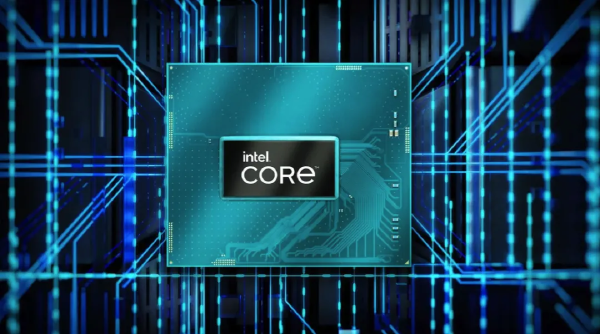
Intel has officially launched the Twin Lake processor family, the direct successor to the hugely successful Alder Lake-N (N100/N200) lineup. Twin Lake continues Intel’s E-core-only philosophy, targeting fanless mini PCs, entry-level laptops, Chromebooks, and low-power NAS systems.
Rather than a full architectural overhaul, Twin Lake focuses on refinement—slightly higher CPU clocks, improved integrated graphics frequencies, and clearer product segmentation under Intel’s refreshed branding strategy.
⚙️ Lineup and Specifications #
Twin Lake scales from 4-core to 8-core designs, all built on Gracemont E-cores using the Intel 7 process.
| Model | Cores / Threads | Max Turbo | iGPU | TDP |
|---|---|---|---|---|
| Core 3 N355 | 8 / 8 | 3.9 GHz | 1.35 GHz (32 EU) | 15W |
| Core 3 N350 | 8 / 8 | 3.9 GHz | 1.35 GHz (32 EU) | 7W |
| Processor N250 | 4 / 4 | 3.8 GHz | 1.25 GHz (32 EU) | 6W |
| Processor N150 | 4 / 4 | 3.6 GHz | 1.00 GHz (24 EU) | 6W |
Branding Shift Explained #
- Core 3 Naming:
Intel has promoted its higher-end E-core-only chips (N350/N355) into the Core 3 family. - Intel Processor Branding:
Entry-level parts (N150/N250) retain the simplified “Intel Processor” label.
Graphics Improvements #
The most tangible generational gain is in iGPU frequency:
- The N150 jumps to 1.0 GHz, a 33% increase over the 750 MHz iGPU found in the N100.
- This improves UI responsiveness, light gaming, and 4K media playback without increasing power draw.
📈 Performance: Incremental but Meaningful #
Twin Lake is best described as a polished refresh, not a radical leap.
CPU Performance #
- N150 vs. N100
- Single-core: ~5–8% improvement due to higher boost clocks
- Multi-core: Largely unchanged, as core counts remain identical
Power Efficiency #
- 6W TDP models remain ideal for fanless designs
- The Core 3 N350 stands out by delivering 8 cores at just 7W, making it extremely attractive for:
- Micro-servers
- Lightweight virtualization
- Always-on home services
Intel continues to dominate the performance-per-watt segment below 15W.
🧩 Market Availability and Devices #
Twin Lake systems are already shipping as of early 2025, with rapid adoption across multiple form factors.
Mini PCs #
- Examples:
- Beelink EQ14
- ASUS NUC 14 Essential
- Pricing:
- ~600–900 RMB
- ~$85–$130 USD (barebones)
Laptops and Chromebooks #
- Education-focused laptops and thin-and-light notebooks are transitioning from N100 → N150 throughout Q1 2025.
NAS and Networking #
- Strong adoption in:
- DIY NAS builds
- Home lab routers
- Key advantages:
- Native AV1 decode
- Extremely low idle power
- Silent, fanless operation
🏆 Final Verdict: The Efficiency King Stays Crowned #
Twin Lake doesn’t aim to reinvent Intel’s low-power strategy—it perfects it. With slightly higher clocks, faster graphics, and clearer branding, Intel ensures Alder Lake-N’s successor remains competitive for everyday computing and media workloads.
For users seeking maximum efficiency, silent operation, and excellent value, Twin Lake firmly retains Intel’s crown in the sub-15W CPU category.