🔍 Overview #
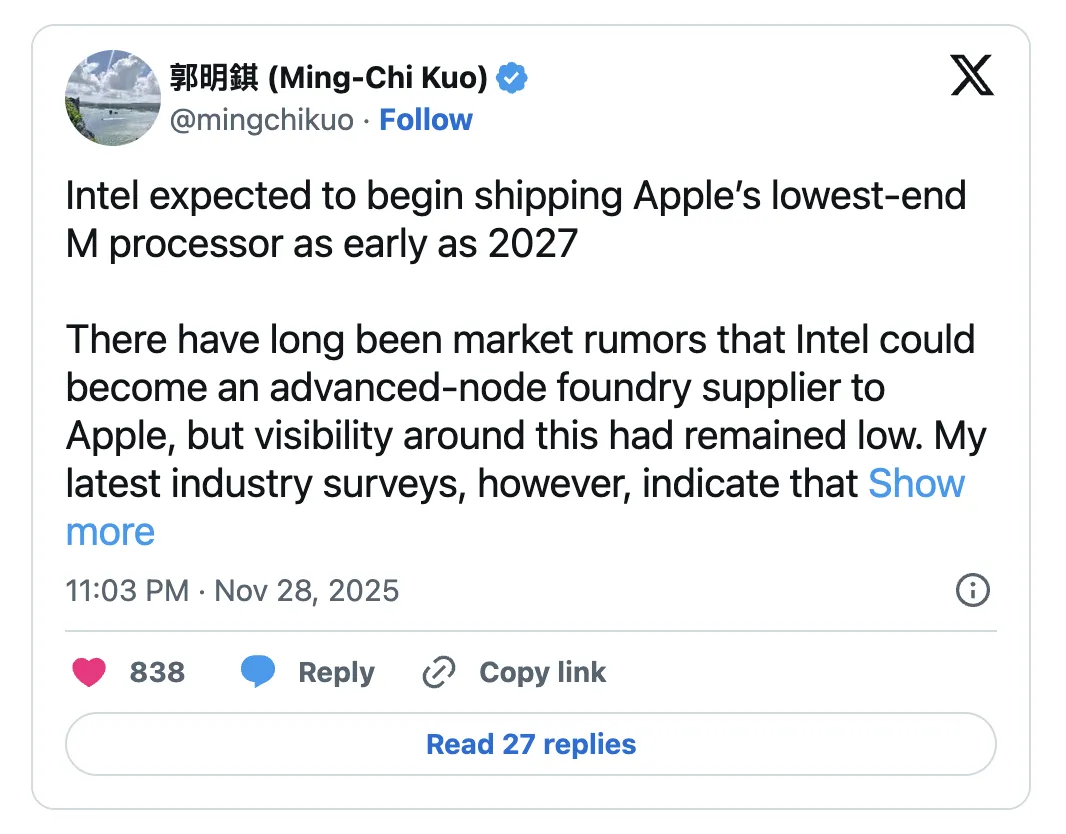
Analysis suggests that the early performance of Intel Foundry’s 18A-P process has exceeded expectations and may first attract orders from Apple. Renowned analyst Ming-Chi Kuo predicts that Apple is actively evaluating the use of 18A-P for future entry-level M-series processors in low-end MacBooks and iPads.
If the current progress continues, Apple may become an important external customer for this node, strengthening its U.S.-based manufacturing strategy.
🏗️ Intel’s 18A-P Progress and Apple’s PDK Validation #
Intel has continued advancing its 18A-related technologies and has been showcasing the new process to potential customers.
Key known details include:
- Multiple companies are in the early PDK validation phase for 18A.
- Apple is one of the most closely watched participants.
- Apple signed an NDA and received PDK 0.9.1GA for 18A-P.
- Apple has completed:
- Simulation runs
- PPA (Power, Performance, Area) analysis
- Apple expects PDK 1.0 and 1.1 in Q1 2026, which will allow full pre-mass-production development.
📅 Timeline: Potential M-Series Chip Production #
Based on Apple’s internal planning:
- Earliest Intel shipment of entry-level M-series chips:
Q2–Q3 2027 - Mass production depends on:
- PDK validation results
- Stability of Intel’s 18A-P during mid-/late-stage ramp
Kuo estimates Apple’s 2027 demand for entry-level M chips at 15–20 million units, enough to support high-volume manufacturing for Intel Foundry.
🧩 What Makes 18A-P Special? #
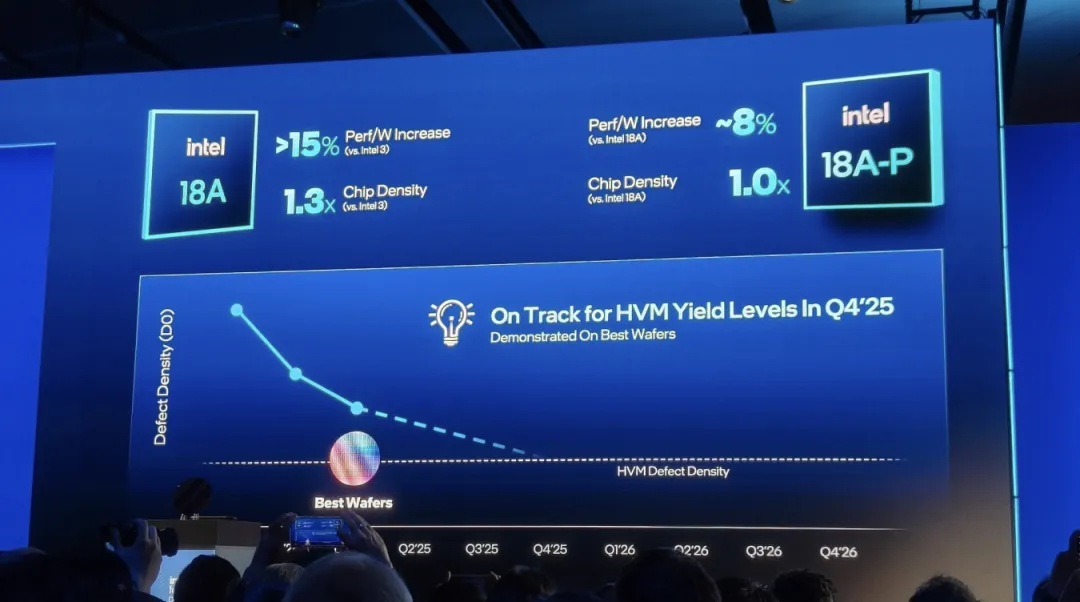
18A-P is a derivative of Intel’s 18A node, first announced at Direct Connect 2025.
Notable features:
🧱 Foveros Direct (3D Hybrid Bonding) #
- Enables multi-chip stacking through sub-5 μm metal bonding
- Supports high-bandwidth die-to-die connections
- Ideal for heterogeneous SoC architectures
⚡ Power & Voltage Optimization #
- Improved threshold voltage tuning
- Enhanced balance between performance and energy efficiency
- Well aligned with Apple’s design philosophy for low-power, high-performance chips
🌐 Supply Chain Implications #
While Apple will continue relying heavily on TSMC, partnering with Intel for high-end production supports:
- Supply chain diversification
- U.S. manufacturing localization goals
- Strategic risk reduction
Intel’s internal data indicates that 18A and 18A-P yield rates are steadily improving, suggesting readiness for large-scale production.
🔮 Industry Impact & Outlook #
18A-P’s power efficiency and advanced packaging make it attractive for fabless companies pursuing complex SoCs. If Apple adopts the node:
- It could significantly accelerate industry acceptance
- It would provide Intel Foundry with a major credibility boost
- It could reshape competitive dynamics in leading-edge manufacturing
For now, analysts are watching:
- Upcoming PDK 1.0/1.1 verification
- Process stability
- Intel’s ability to scale 18A-P for mass production
Whether 18A-P becomes a turning point for Intel Foundry depends on the maturity of the node and Apple’s eventual production decisions.