AMD EPYC 8005 Sorano Brings 84 Zen 5 Cores to SP6 Servers
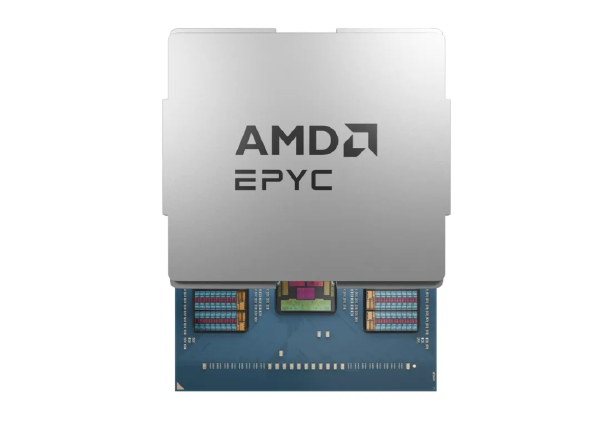
AMD has quietly introduced a major upgrade to its edge and infrastructure server portfolio with the launch of the EPYC 8005 Series, codenamed Sorano.
Rather than unveiling the platform through a high-profile keynote, AMD released the processors through official documentation updates and partner ecosystem disclosures on May 19, 2026. The restrained rollout reflects the realities of enterprise infrastructure markets, where purchasing decisions are driven more by deployment efficiency, lifecycle stability, and total cost of ownership than by consumer-style launch events.
Behind the understated release is a substantial architectural evolution.
The EPYC 8005 family replaces the previous Zen 4c-based Siena platform with full Zen 5 cores, scales up to 84 cores per socket, triples L3 cache capacity, and maintains complete compatibility with the existing SP6 ecosystem.
For edge infrastructure, telecom deployments, storage appliances, and dense cloud nodes, Sorano may become one of AMD’s most strategically important server launches in years.
🚀 EPYC 8005 vs. EPYC 8004 Siena #
The transition from EPYC 8004 “Siena” to EPYC 8005 “Sorano” represents a major shift in design philosophy.
Rather than maximizing core density through compact Zen 4c cores, AMD has returned to full-performance Zen 5 cores while preserving the same single-socket deployment footprint.
| Feature | EPYC 8004 Siena | EPYC 8005 Sorano | Architectural Impact |
|---|---|---|---|
| CPU Architecture | Zen 4c | Zen 5 | Higher IPC and stronger single-thread performance |
| Maximum Core Count | 64 Cores / 128 Threads | 84 Cores / 168 Threads | Significant increase in parallel compute density |
| Maximum Clock Speed | Up to 3.15 GHz | Up to 4.50 GHz | Major boost to latency-sensitive workloads |
| Maximum L3 Cache | 128 MB | 384 MB | Massive increase in on-die data locality |
| Memory Support | DDR5-4800 | DDR5-6400 | Expanded memory bandwidth |
| PCIe Connectivity | 96 PCIe 5.0 Lanes | 96 PCIe 5.0 Lanes | Maintains platform continuity |
| TDP Range | 70W–200W | 70W–225W | Slight increase for higher-performance SKUs |
| Platform Socket | SP6 (LGA 4844) | SP6 (LGA 4844) | Full drop-in compatibility |
The most important detail is not simply the higher core count, but the fact that AMD achieved these gains without forcing a platform migration.
🏗️ Why Sorano Uses Full Zen 5 Cores #
One of the most surprising aspects of Sorano is AMD’s decision to abandon dense “c” cores entirely for this product family.
Instead, EPYC 8005 uses full-performance Zen 5 cores throughout the stack.
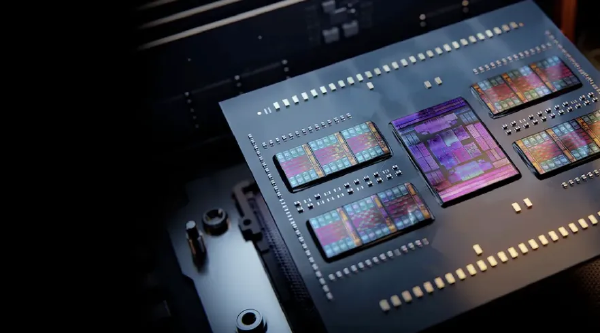
Sorano Die Layout Overview #
AMD EPYC 8005 "SORANO" TOPOLOGY

┌───────────────────────────────────────────┐
│              CENTRAL I/O DIE              │
│ DDR5-6400 | PCIe Gen5 | CXL Controllers   │
└─────────────────┬─────────────────────────┘
                  │
     ┌────────────┼────────────┐
     ▼            ▼            ▼

┌──────────┐ ┌──────────┐ ┌──────────┐
│ CCD 0-3  │ │ CCD 4-7  │ │ CCD 8-11 │
│ Zen 5    │ │ Zen 5    │ │ Zen 5    │
│ 128MB L3 │ │ 128MB L3 │ │ 128MB L3 │
└──────────┘ └──────────┘ └──────────┘
This decision fundamentally changes the platform’s workload profile.
Rather than targeting only massively parallel lightweight tasks, Sorano is optimized for a broader range of enterprise workloads requiring:
- Stronger per-core performance
- Lower latency
- Larger cache locality
- Better branch prediction
- Improved mixed-thread responsiveness
AMD appears to be positioning Sorano as a high-density infrastructure platform rather than purely a low-power throughput engine.
⚡ The Importance of 384MB of L3 Cache #
One of Sorano’s most aggressive upgrades is its massive increase in cache capacity.
The flagship configuration scales to 384 MB of shared L3 cache, tripling the capacity of the previous generation.
Why Large Cache Matters in Infrastructure Workloads #
Modern enterprise systems increasingly rely on workloads that are sensitive to memory latency rather than raw compute throughput alone.
Examples include:
- Edge inference systems
- Distributed databases
- Content delivery infrastructure
- Virtualization clusters
- Telecom packet processing
- Storage metadata indexing
Larger cache pools reduce the frequency with which cores must access external DRAM, significantly lowering latency penalties and improving throughput consistency under heavy concurrency.
This becomes especially important in edge deployments where:
- Memory channels are limited
- Power efficiency matters
- Physical server density is constrained
- Latency-sensitive services run continuously
The cache expansion may ultimately become one of Sorano’s most impactful real-world performance improvements.
🧩 AMD’s Core Harvesting Strategy #
The flagship 84-core configuration also reveals an interesting manufacturing strategy.
Based on current disclosures, AMD appears to be using a harvested CCD model to optimize yields.
How the 84-Core Layout Works #
Sorano reportedly uses:
- 12 CCDs total
- 7 active cores per CCD
- One disabled core per die
This allows AMD to:
- Improve silicon utilization
- Increase manufacturing efficiency
- Reduce defect-related waste
- Segment the SP6 platform below premium SP5 systems
The approach also helps AMD maintain separation between:
- Cost-optimized SP6 infrastructure servers
- High-end SP5 enterprise and hyperscale platforms
such as Turin and Genoa deployments.
From a manufacturing perspective, this is a highly efficient product segmentation strategy.
🔌 Full SP6 Compatibility Is a Major Enterprise Advantage #
For many businesses, Sorano’s most valuable feature may not be performance alone.
It is compatibility.
The EPYC 8005 family maintains full support for the existing SP6 (LGA 4844) platform ecosystem.
Infrastructure Preservation #
Organizations can upgrade existing deployments through:
- BIOS updates
- CPU replacement
- Minimal rack-level disruption
without replacing:
- Motherboards
- Cooling systems
- Power supplies
- Chassis infrastructure
- Rack mounting hardware
For small and medium businesses, this dramatically reduces modernization costs.
Why This Matters at the Edge #
Edge infrastructure environments are often heavily constrained by:
- Physical space
- Thermal limits
- Power availability
- Remote deployment conditions
Examples include:
- Telecom towers
- Retail branch infrastructure
- Industrial control sites
- Outdoor enclosures
- Distributed storage nodes
In these environments, adding more servers is frequently impractical.
Higher-density single-socket compute platforms therefore provide enormous operational value.
📈 Sorano’s Positioning Across the Market #
AMD has structured the EPYC 8005 lineup to target multiple infrastructure tiers efficiently.
Entry-Level Infrastructure #
EPYC 8025P
- 8 cores / 16 threads
- 64 MB L3 cache
- Approximate pricing: $529
This SKU targets:
- Firewalls
- Network appliances
- Edge gateways
- Compact storage systems
Mid-Range Virtualization #
EPYC 8225P
- 24 cores / 48 threads
- 128 MB L3 cache
- Approximate pricing: $1,079
Likely optimized for:
- SMB virtualization
- Private cloud hosting
- Web infrastructure
- Hypervisor clusters
High-Density Compute #
EPYC 8635P
- 84 cores / 168 threads
- 384 MB L3 cache
- Approximate pricing: $5,799
AMD claims the flagship delivers:
- Roughly 40% higher integer performance
- Improved performance-per-watt efficiency
- Significant workload consolidation potential
Importantly, the top SKU reportedly costs only modestly more than the previous-generation flagship while offering dramatically higher compute density.
🌐 AMD’s Broader Infrastructure Strategy #
Sorano reflects a larger strategic trend within AMD’s server roadmap.
The company is increasingly pushing enterprise-grade core density into lower-power, single-socket deployments traditionally underserved by hyperscale-oriented platforms.
This strategy directly targets:
- Enterprise refresh cycles
- Telecom modernization
- Distributed cloud infrastructure
- AI inference at the edge
- Compact virtualization clusters
By combining:
- Full Zen 5 cores
- Large cache pools
- Modern DDR5 bandwidth
- PCIe Gen5 connectivity
- Platform continuity
AMD is effectively offering organizations a low-risk modernization path with substantial performance gains.
🎯 Why EPYC 8005 Could Become a Major Edge Infrastructure Platform #
Although the launch itself was relatively quiet, the technical implications of Sorano are significant.
The EPYC 8005 family delivers:
- More cores
- Higher clocks
- Larger cache
- Better memory bandwidth
- Improved efficiency
- Full backward compatibility
within the same operational footprint already deployed across many enterprise environments.
For organizations facing rising power costs, growing virtualization density requirements, and increasing edge compute demand, that combination is extremely compelling.
AMD’s approach with Sorano demonstrates a broader industry shift:
Modern infrastructure buyers increasingly prioritize deployment efficiency and lifecycle stability over raw peak specifications alone.
By delivering a major architectural upgrade without forcing expensive infrastructure replacement, AMD has positioned EPYC 8005 as one of the most practical server refresh platforms currently entering the enterprise market.