AMD’s 2nm EPYC Venice CPUs Could Reshape the AI Server Market
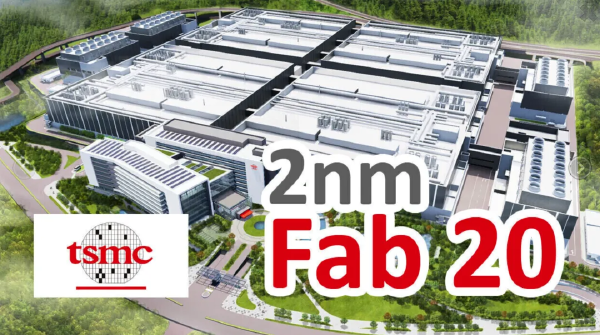
AMD’s decision to secure TSMC’s initial 2nm production capacity for its next-generation EPYC “Venice” server processors marks one of the most strategically important shifts in the semiconductor industry in years.
For a long time, the industry assumed TSMC’s leading-edge nodes would debut primarily through Apple products. That pattern held across multiple generations, including 5nm and 3nm, where Apple’s massive mobile volume and aggressive release cadence positioned it as the preferred launch customer for advanced manufacturing technologies.
This time, however, the narrative has changed.
AMD appears to have prioritized server infrastructure over consumer electronics, signaling how critical AI datacenter demand has become to the future of the semiconductor market.
The implications extend well beyond AMD itself. A successful 2nm EPYC rollout could reshape AI infrastructure economics, accelerate datacenter modernization, and intensify competitive pressure on Intel during one of the most important transitions in server computing history.
⚡ Why the 2nm Transition Matters So Much #
Advanced semiconductor nodes are no longer just about benchmark leadership or marketing prestige.
At hyperscale AI infrastructure levels, process technology directly affects:
- Datacenter operating costs
- Rack density
- Thermal efficiency
- Power consumption
- AI inference scalability
- GPU utilization efficiency
According to TSMC’s disclosed process targets, the 2nm node can deliver:
- Roughly 20% higher performance at the same power level or
- Approximately 30% lower power consumption at equivalent performance
For mobile devices, those improvements are valuable.
For AI datacenters operating tens of thousands of servers continuously at near-full utilization, they become transformational.
🧠 AI Infrastructure Is Increasingly CPU-Constrained #
Much of the public AI conversation focuses almost exclusively on GPUs.
However, modern AI infrastructure depends heavily on server CPUs for:
- Workload orchestration
- Memory management
- Scheduling
- Data preprocessing
- Distributed coordination
- Networking operations
- GPU feeding and synchronization
As AI clusters scale larger, CPUs increasingly become bottlenecks rather than supporting components.
Why Older Server CPUs Are Struggling #
Many existing AI deployments still rely on:
- 7nm-era server processors
- Early 5nm designs
- Legacy datacenter infrastructure
These systems were not originally optimized for modern large-scale AI workloads involving:
- Massive parallel inference
- Multi-node orchestration
- Reinforcement learning
- Agentic AI systems
- Distributed GPU clusters
As GPU throughput accelerated rapidly over recent years, many server CPUs failed to keep pace with surrounding infrastructure demands.
This created a growing imbalance inside AI datacenters:
GPUs became dramatically faster while supporting server infrastructure improved more slowly.
AMD’s Venice architecture appears positioned specifically to address that gap.
🏗️ Why AMD Prioritized Servers Over Consumer Chips #
AMD’s allocation strategy reflects a broader industry reality:
AI infrastructure is now economically more important than consumer silicon.
Datacenter Economics Drive Semiconductor Priorities #
Server CPUs generate advantages far beyond raw chip sales.
Winning server deployments can influence:
- Cloud infrastructure standards
- Enterprise AI adoption
- Long-term platform lock-in
- Ecosystem software optimization
- Hyperscaler purchasing behavior
The AI server market has become strategically critical because compute infrastructure now underpins nearly every major AI platform.
This explains why AMD directed its earliest 2nm capacity toward EPYC rather than consumer Ryzen products.
🔋 Power Efficiency Has Become a Competitive Weapon #
Modern AI datacenters are increasingly constrained by power availability rather than rack space.
This changes the economics of semiconductor competition dramatically.
Why Efficiency Matters More Than Ever #
Datacenter operators now face pressure from:
- Rising electricity costs
- Cooling infrastructure limits
- Grid capacity constraints
- Sustainability requirements
- Rack thermal density ceilings
Reducing power consumption at scale creates enormous financial leverage.
Reported estimates suggest Venice-based infrastructure may deliver:
- Approximately 40% higher AI inference performance per node
- Roughly 25% lower power consumption
At hyperscale deployment levels, even single-digit efficiency gains are economically meaningful.
A 25% efficiency improvement becomes massive when applied across:
- Tens of thousands of servers
- Multi-megawatt AI clusters
- Global cloud infrastructure
☁️ Lower AI Costs Could Reshape the Entire Industry #
The most important downstream effect of advanced server CPUs may be falling AI infrastructure costs.
Today, compute expenses often represent the largest operating cost for AI companies.
For many startups:
- GPU rental costs dominate budgets
- Cloud compute pricing limits experimentation
- Infrastructure scaling remains prohibitively expensive
Any reduction in compute cost materially changes industry dynamics.
Potential Effects Across the AI Ecosystem #
If Venice meaningfully improves efficiency, several second-order effects could emerge:
| Area | Potential Impact |
|---|---|
| AI Cloud Providers | Lower operational costs |
| AI Startups | Reduced infrastructure barriers |
| Inference Services | Cheaper deployment economics |
| Consumers | Lower subscription pricing |
| Enterprise AI | Faster adoption cycles |
Lower infrastructure costs generally accelerate software innovation because more organizations can afford large-scale experimentation.
Historically, major computing revolutions accelerated only after infrastructure costs declined sufficiently to broaden accessibility.
🥊 Intel Faces Intensifying Competitive Pressure #
Intel remains the dominant legacy player in the server CPU market, but its position has weakened significantly over recent years.
AMD’s EPYC platform already captured substantial market share gains through:
- Higher core counts
- Better efficiency
- Competitive pricing
- Strong hyperscaler adoption
The 2nm transition could intensify that pressure.
Intel’s Manufacturing Challenge #
Intel’s roadmap increasingly depends on successful execution of its advanced manufacturing strategy, particularly around:
- Intel 18A
- Yield maturity
- Production scalability
- Competitive performance targets
The challenge is timing.
AI infrastructure demand is accelerating now.
If Intel cannot rapidly scale competitive next-generation server products during this replacement cycle, AMD may deepen its market penetration while hyperscalers standardize around newer EPYC deployments.
🌐 Why TSMC’s Capacity Allocation Matters Strategically #
TSMC’s willingness to prioritize AMD server chips over expected consumer launches reflects a broader shift in semiconductor economics.
For years, smartphones represented the most strategically valuable leading-edge silicon market.
That may no longer be true.
AI Infrastructure Is Becoming the Primary Driver of Advanced Nodes #
AI datacenters now consume extraordinary amounts of capital and semiconductor capacity.
Demand for advanced AI infrastructure increasingly drives:
- Foundry expansion
- Packaging innovation
- HBM memory development
- Power delivery engineering
- Advanced interconnect technologies
This shift fundamentally changes the semiconductor industry’s center of gravity.
The strategic importance of AI infrastructure now rivals — and in some cases exceeds — that of flagship consumer electronics.
📊 Server Market Dynamics Are Entering a New Phase #
The server CPU market is no longer merely a contest over enterprise workloads.
It is becoming a competition over who controls the foundational infrastructure layer for AI.
That distinction matters enormously.
Future Server Leadership Will Depend On: #
- AI workload optimization
- Power efficiency
- Heterogeneous compute integration
- GPU coordination capabilities
- Scalability under AI orchestration systems
Traditional enterprise benchmarks are becoming less important than infrastructure-level AI efficiency.
AMD appears increasingly aligned with where the market is heading.
⚠️ Risks and Uncertainties #
Despite the strong positioning, several risks remain.
Manufacturing Complexity #
Leading-edge nodes introduce major risks involving:
- Yield stability
- Supply chain scaling
- Packaging bottlenecks
- Production economics
Even strong designs can face deployment delays if manufacturing execution falters.
AI Demand Volatility #
Current AI infrastructure demand remains extremely aggressive, but long-term purchasing behavior may normalize if:
- AI monetization slows
- Hyperscaler spending moderates
- Overcapacity emerges
Competitive Responses #
Intel is still a formidable competitor with:
- Deep enterprise relationships
- Massive R&D budgets
- Extensive software ecosystems
- Internal manufacturing capabilities
The competitive landscape could shift quickly if Intel successfully executes its next manufacturing cycle.
📌 Conclusion #
AMD securing TSMC’s first 2nm server production capacity is more than a symbolic manufacturing milestone.
It reflects a deeper transformation underway inside the semiconductor industry:
- AI infrastructure is becoming the highest-priority computing market
- Power efficiency is now a core competitive differentiator
- Server CPUs are increasingly critical to AI scalability
- Advanced nodes matter more in datacenters than in consumer devices
The EPYC Venice platform positions AMD at the center of that transition.
If the company successfully delivers meaningful performance-per-watt improvements at scale, the impact could extend beyond market share gains against Intel. It could help lower AI infrastructure costs across the industry, accelerate datacenter modernization, and broaden access to advanced AI computing.
The next phase of the AI race may not be decided solely by GPUs.
It may also depend on which company builds the most efficient server foundation beneath them.