Broadcom AI Revenue Surges 143% as Order Book Extends to 2028
Broadcom delivered one of the strongest quarters in semiconductor industry history, underscoring the unprecedented pace of AI infrastructure investment. For fiscal Q2 2026, the company reported record-breaking revenue, operating profit, and free cash flow, fueled primarily by surging demand for custom AI accelerators and high-performance networking solutions.
Most notably, Broadcom’s AI semiconductor business generated $10.8 billion in quarterly revenue, representing 143% year-over-year growth. Beyond current revenue, management disclosed that the company secured more than $30 billion in new AI semiconductor orders during the quarter, extending order visibility through 2028.
These results further reinforce Broadcom’s position as one of the most critical suppliers powering the global AI infrastructure buildout.
🚀 AI Demand Pushes Broadcom to New Heights #
The current AI investment cycle continues to accelerate as hyperscale cloud providers race to deploy increasingly larger compute clusters.
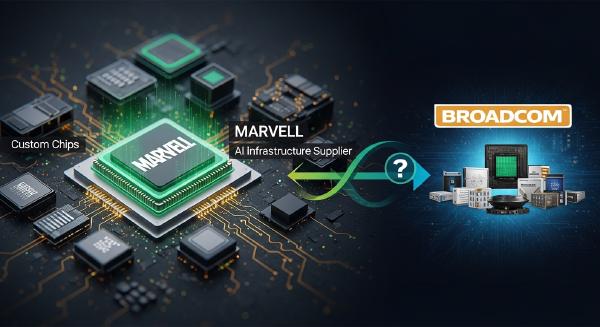
Unlike traditional semiconductor vendors that primarily focus on CPUs or GPUs, Broadcom has established itself as a strategic partner for custom silicon and networking infrastructure, enabling cloud providers to build highly specialized AI platforms.
The company’s growth is being driven by two major trends:
- Rapid adoption of custom AI accelerators.
- Increasing demand for advanced networking technologies capable of connecting massive AI clusters.
As AI systems scale from thousands to hundreds of thousands of accelerators, networking has become just as critical as compute itself.
🏢 Broadcom’s Expanding AI Customer Portfolio #
Broadcom currently serves six major custom silicon customers, including several of the world’s largest AI and cloud computing organizations.
According to CEO Hock Tan, the company has secured long-term engagements spanning multiple generations of AI infrastructure.
Google #
Broadcom continues to deepen its relationship with Google through the development of next-generation TPU platforms and AI networking products.
Key highlights include:
- Long-term co-development agreements.
- Multi-generation TPU roadmap support.
- More than 1 GW of compute deployment planned for 2026.
The partnership builds upon major chip orders placed during the previous year and further strengthens Broadcom’s position within Google’s AI infrastructure stack.
OpenAI #
Broadcom has already begun delivering silicon to OpenAI as the organization expands its infrastructure footprint.
Planned deployments include:
- Initial production ramp throughout 2026.
- Approximately 1.3 GW of compute deployment in 2027.
- Expansion toward a broader 10 GW framework agreement through 2029.
The scale of these commitments highlights the enormous computational requirements associated with next-generation AI models.
Anthropic #
Broadcom is also supporting Anthropic’s infrastructure growth through TPU-related compute solutions.
Current plans include:
- More than 1 GW of compute deployment during 2026.
- Additional expansion exceeding 5 GW beginning in 2027.
These deployments reflect the increasingly competitive race among frontier AI model developers.
Meta #
Meta continues investing heavily in proprietary AI silicon through its MTIA accelerator initiative.
Broadcom’s involvement includes:
- Development support for custom MTIA XPU platforms.
- Approximately 3 GW of compute deployment by 2028.
- Initial large-scale rollout beginning in the second half of 2027.
Additional Strategic Customers #
Broadcom disclosed that two additional major customers have collectively committed approximately $6 billion in upfront orders.
Although the identities remain undisclosed, shipments are expected to scale significantly throughout 2027.
💰 Record Financial Performance Across the Board #
Fiscal Q2 2026 established new company records across multiple categories.
Q2 2026 Financial Highlights #
| Metric | Q2 2026 | Year-over-Year Growth |
|---|---|---|
| Total Revenue | $22.2 Billion | +48% |
| Semiconductor Solutions | $15.0 Billion | +79% |
| Infrastructure Software | $7.2 Billion | +9% |
| AI Semiconductor Revenue | $10.8 Billion | +143% |
Several observations stand out:
- AI represented the primary growth engine.
- Semiconductor revenue significantly outpaced software growth.
- Infrastructure software continued to provide stable recurring revenue.
- AI-related products accounted for roughly 72% of semiconductor sales.
These figures demonstrate how rapidly AI workloads are reshaping the semiconductor industry.
🌐 Networking Becomes a Strategic Advantage #
One of the most important themes from Broadcom’s earnings discussion was the growing significance of networking infrastructure.
According to management, networking products contributed nearly 40% of total AI revenue during the quarter.
This highlights a fundamental shift in AI system architecture.
Why Networking Matters #
Modern AI clusters increasingly face challenges related to:
- Data movement
- Inter-node communication
- Distributed training efficiency
- Memory synchronization
- Latency optimization
As model sizes continue growing, network performance becomes a critical determinant of overall system efficiency.
Broadcom’s networking portfolio includes:
- High-performance Ethernet switches
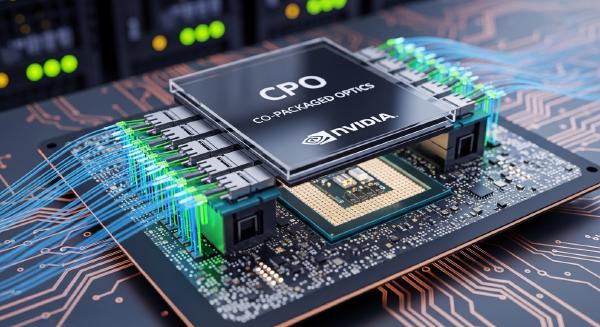
- Co-Packaged Optics (CPO)
- Co-Packaged Copper (CPC)
- High-speed DSP technologies
- Laser components
- Proprietary interconnect fabrics
Management emphasized that networking innovation remains essential for scaling next-generation AI infrastructure.
Maintaining a Merchant Silicon Strategy #
Despite its deep involvement in hyperscale infrastructure projects, Broadcom reiterated that it remains focused on merchant silicon rather than complete systems.
The company does not intend to become a server manufacturer or infrastructure integrator.
Instead, Broadcom continues to focus on:
- Silicon design
- Networking technology
- Platform enablement
- Strategic co-development partnerships
This approach allows customers to maintain flexibility while leveraging Broadcom’s expertise.
📈 Q3 Guidance Signals Further Acceleration #
Broadcom’s outlook suggests that AI demand remains exceptionally strong.
Fiscal Q3 2026 Guidance #
The company forecasts:
- Total revenue of approximately $29.4 billion
- Operating margin of approximately 67%
- Adjusted EBITDA margin of approximately 68%
These figures exceeded prevailing analyst expectations.
Estimated Semiconductor Revenue Mix #
             Fiscal Q3 2026 Semiconductor Revenue
             ┌─────────────────────────────────┐
             │          $20.5 Billion          │
             └──────────────┬──────────────────┘
                            │
        ┌───────────────────┴───────────────────┐
        ▼                                       ▼

 AI Semiconductor Revenue              Non-AI Semiconductor Revenue
       $16.0 Billion                          $4.5 Billion
       (+200% YoY)                            (+12% YoY)
If achieved, AI semiconductor revenue alone would exceed the total quarterly revenue of many major semiconductor companies.
⚖️ Margin Dynamics Reflect Product Mix Changes #
Although revenue growth remains extraordinary, Broadcom expects a modest decline in consolidated gross margins.
The primary reason is product mix.
Understanding the Margin Shift #
Infrastructure software traditionally delivers:
- Very high margins
- Recurring revenue streams
- Lower capital intensity
In contrast, semiconductor revenue generally carries:
- Lower gross margins
- Higher manufacturing costs
- Larger deployment volumes
Because semiconductor growth is currently outpacing software growth, overall margins are expected to normalize slightly despite strong profitability.
Management characterized this as a natural consequence of growth rather than a sign of weakening fundamentals.
🏗️ The Emergence of Gigawatt-Scale AI Infrastructure #
A particularly notable theme from management commentary was the growing use of gigawatts as a measure of AI infrastructure scale.
Historically, AI systems were measured by:
- Number of servers
- Number of accelerators
- FLOPS
- Training cluster size
Today, hyperscalers increasingly discuss deployment plans in terms of electrical power consumption.
Compute Deployment Targets #
Broadcom disclosed plans supporting:
- Approximately 10 GW of compute deployment in 2027
- Significant expansion throughout 2028
- No immediate signs of slowing demand
This reflects the unprecedented scale of current AI infrastructure investments.
🔍 Why Dollar Value per Gigawatt Remains Stable #
One concern frequently raised by investors is whether increasing chip power consumption could reduce overall silicon demand.
Hock Tan addressed this directly.
The Economics of AI Scaling #
Modern AI accelerators consume substantially more power than previous generations.
As a result:
- Fewer chips may be required to reach a specific gigawatt target.
- Individual chip complexity continues increasing.
- Average selling prices rise accordingly.
The net effect is that the dollar value associated with a gigawatt of deployed compute remains relatively consistent.
This creates a useful planning metric for hyperscalers and infrastructure suppliers alike.
🔮 Strategic Implications for the AI Industry #
Broadcom’s results reveal several important trends shaping the next phase of AI infrastructure development.
Custom Silicon Is Becoming Mainstream #
Leading AI companies increasingly prefer custom accelerators designed specifically for their workloads.
Benefits include:
- Improved efficiency
- Lower operating costs
- Better software integration
- Greater control over infrastructure roadmaps
Broadcom has positioned itself as a key enabler of this transition.
Networking Is No Longer Secondary #
The era when compute alone determined AI system performance is ending.
Future competitive advantages will increasingly depend on:
- Interconnect bandwidth
- Network latency
- Cluster scalability
- Distributed system efficiency
Broadcom’s networking leadership places it in a strong strategic position.
AI Infrastructure Spending Remains Robust #
Despite concerns regarding AI investment sustainability, Broadcom’s order book suggests that hyperscalers remain committed to aggressive expansion.
With visibility extending through 2028 and billions of dollars in new commitments arriving each quarter, demand for AI infrastructure continues to exceed supply.
🎯 Conclusion #
Broadcom’s fiscal Q2 2026 results provide one of the clearest indicators yet that the global AI infrastructure buildout remains in its early stages. The company’s record-breaking performance was driven by explosive demand for custom AI accelerators, advanced networking technologies, and large-scale hyperscale deployments.
With AI semiconductor revenue reaching $10.8 billion, more than $30 billion in new orders secured during the quarter, and customer commitments extending through 2028, Broadcom has established itself as a foundational supplier for the next generation of AI infrastructure.
Perhaps most importantly, the company’s results illustrate a broader industry reality: the future of AI is not defined solely by GPUs. Success increasingly depends on the integration of custom silicon, networking architecture, power-efficient scaling, and hyperscale deployment strategies. Broadcom sits at the intersection of all four trends, making it one of the most strategically important companies in the AI ecosystem.