
Forza Horizon 6 Review: Tokyo Streets, Ray Tracing, and DLSS 4.5
Forza Horizon 6 finally delivers what racing fans have wanted for years: a full-scale Horizon Festival set across Japan. From neon-lit Tokyo expressways to fog-covered touge passes, Playground Games has built its most technically ambitious and culturally authentic open world to date.
This is not simply a new map layered on top of an existing formula. The transition from Mexico’s open deserts to Japan’s dense urban environments fundamentally changes how the game feels, drives, and performs. Every district, mountain route, and elevated highway is engineered around speed, precision, and atmosphere.
Combined with native ray tracing support and NVIDIA DLSS 4.5, Forza Horizon 6 also becomes one of the strongest technical showcases currently available on PC hardware.
🗾 Japan Becomes the Ultimate Horizon Playground #
Playground Games dramatically increases environmental density and vertical scale compared to previous Horizon entries. Tokyo alone dwarfs the urban footprint of Forza Horizon 5, delivering layered highways, underground tunnels, rooftop overpasses, and tightly packed city blocks that constantly challenge player awareness.
The map is divided into 10 distinct biomes, each emphasizing a different driving philosophy.
Touge Mountain Passes #
The mountain regions are clearly inspired by legendary Japanese driving roads such as Mount Haruna and Hakone. Tight hairpins, aggressive elevation changes, and narrow lane widths reward precise braking and throttle control rather than raw horsepower.
Drifting finally feels contextual instead of cosmetic. The environment itself encourages technical driving lines and momentum-based cornering.
High-Speed Expressways #
The Shuto Expressway-inspired highway system is easily one of the game’s standout features. Multi-lane roads stretch across massive sections of the map, creating uninterrupted high-speed runs ideal for hypercars and heavily tuned builds.
At night, the atmosphere becomes exceptional. Reflections from wet asphalt, overhead signage, and dense traffic recreate the iconic street-racing energy associated with Tokyo car culture.
Dense Urban Circuits #
City driving introduces a much more technical rhythm than previous Horizon games. Intersections, blind corners, tunnel transitions, and stacked overpasses force players to react quickly at speed.
The tighter layout also improves race pacing. Events feel more focused and less dependent on wide-open terrain.
A particularly smart design decision involves civilian traffic density. Instead of overcrowding roads with large vehicles, Playground Games primarily populates the city with compact Japanese K-Cars. The streets remain visually active without constantly interrupting high-speed driving flow.
🏁 A Better Progression System #
Progression is split into two complementary tracks that reinforce different aspects of the Horizon experience.
Horizon Festival #
This is the traditional competitive ladder focused on race victories, driver ranking, and festival expansion. Performance behind the wheel remains the primary progression mechanic.
Exploration Japan #
The second progression path leans heavily into Japanese automotive culture. Activities include photography challenges, hidden vehicle discoveries, side stories, and environmental exploration.
The structure adds significantly more personality to the open world and prevents progression from becoming a repetitive race checklist.
🚗 Authentic JDM Culture Done Right #
Vehicle selection is one of the strongest areas of Forza Horizon 6. The roster includes more than 550 licensed cars spanning over 80 manufacturers, with a heavy emphasis on Japanese performance legends.
Classic icons such as the Toyota AE86, Mazda RX-7, Nissan Skyline GT-R series, and Subaru Impreza WRX STI naturally fit the environment in ways previous Horizon maps never fully achieved.
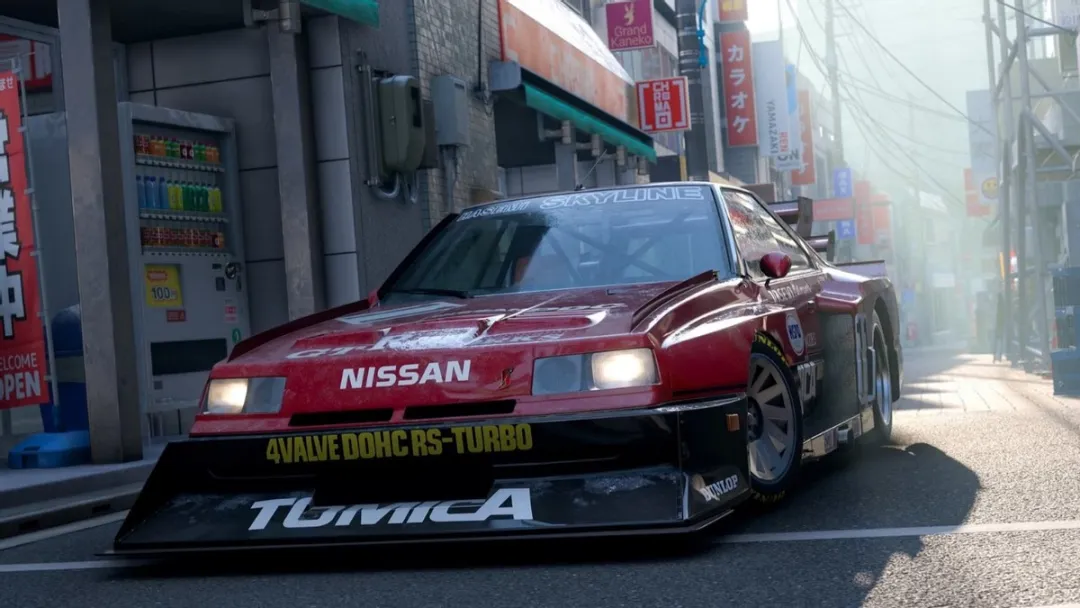
Equally important is the attention given to customization authenticity.
Localized modifications include:
- Period-correct aero kits
- Japanese license plate styling
- Authentic decal culture
- Regional tuning aesthetics
- Touge and street-racing inspired setups
The result feels less like a generic racing sandbox and more like a celebration of real-world JDM culture.
💡 Ray Tracing Completely Changes the Visual Experience #
Forza Horizon 6 is clearly designed around modern lighting technologies from the beginning rather than treating ray tracing as a secondary visual toggle.
The difference between rasterized rendering and full RT lighting is immediately noticeable.
Ray-Traced Global Illumination #
Ray-Traced Global Illumination (RTGI) dramatically improves environmental realism by simulating natural light bounce across surfaces.
Cherry blossom lighting subtly casts pink ambient tones onto nearby vehicles during spring conditions, while winter snowfields reflect colder blue-tinted illumination back into the environment.
These changes create far more believable material interaction compared to traditional baked lighting systems.
Ray-Traced Reflections #
Ray-Traced Reflections (RTR) solve many long-standing issues associated with Screen Space Reflections (SSR).
Reflections remain stable regardless of camera angle or object visibility. Vehicles accurately mirror surrounding skyscrapers, tunnel lighting, signage, and nearby traffic in real time.
Night driving especially benefits from the upgrade. Rain-soaked roads produce physically accurate reflections that significantly improve depth perception and environmental immersion.
⚡ DLSS 4.5 and RTX 50-Series Performance #
Heavy ray tracing workloads traditionally come with severe performance costs, but DLSS 4.5 substantially reduces the rendering burden through AI-assisted reconstruction.
NVIDIA’s second-generation Transformer-based model improves image stability while preserving fine geometric detail at lower render resolutions.
The real breakthrough, however, is Dynamic Multi-Frame Generation.
Dynamic Multi-Frame Generation #
Exclusive to GeForce RTX 50-series GPUs, Dynamic Multi-Frame Generation dynamically adjusts frame interpolation scaling depending on scene complexity.
During highly demanding urban sequences filled with reflections, traffic, and dense geometry, the renderer can scale up aggressively to maximize refresh rates. Simpler rural environments consume fewer GPU resources and automatically scale back frame generation overhead.
NVIDIA Reflex simultaneously minimizes input latency, preventing the sluggish response commonly associated with aggressive frame interpolation systems.
📊 Performance Benchmarks #
With maximum settings enabled alongside full ray tracing, Forza Horizon 6 demonstrates remarkably strong scaling across the RTX 50-series lineup.
| Resolution | DLSS 4.5 Preset | RTX 5060 / 5060 Ti | RTX 5070 / 5070 Ti | RTX 5080 / 5090 D v2 |
|---|---|---|---|---|
| 1080p | Quality Mode | 60+ FPS / 230+ FPS | 300+ FPS / 350+ FPS | 400+ to ~500 FPS |
| 1440p | Quality Mode | Smooth / ~200 FPS | 200+ FPS / 250+ FPS | 350+ FPS / 400+ FPS |
| 2160p (4K) | Performance Mode | N/A | 150+ FPS | 230+ FPS / 330+ FPS |
Fixed 6x Multi-Frame Generation #
For enthusiasts forcing a fixed 6x frame generation multiplier through the NVIDIA App, performance numbers become unusually high even on mid-range hardware.
Key highlights include:
- RTX 5060 exceeding 200 FPS at 1080p
- RTX 5070-class GPUs surpassing 400 FPS
- RTX 5060 Ti maintaining over 150 FPS at 4K with DLSS Performance Mode
While synthetic frame generation numbers should always be evaluated carefully against latency and image consistency, the scalability here is still extremely impressive.
🏆 Final Verdict #
Forza Horizon 6 successfully modernizes the Horizon formula without sacrificing the accessibility that made the franchise popular in the first place.
Japan proves to be the perfect setting for the series. The combination of technical mountain roads, dense city driving, and endless expressway runs creates far more variety than previous maps ever achieved.
On the technical side, Playground Games delivers one of the best implementations of ray tracing currently available in an open-world racing game. Combined with DLSS 4.5 and RTX 50-series frame generation technologies, the game achieves visual fidelity previously reserved for offline rendering demonstrations while still maintaining exceptional performance.
For racing fans, JDM enthusiasts, and PC hardware enthusiasts alike, Forza Horizon 6 sets a new benchmark for the genre.