Penn Expands AI Research with NVIDIA-Powered Supercomputer Betty
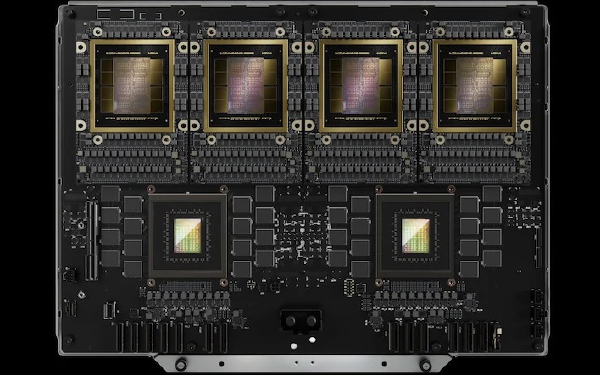
The University of Pennsylvania is significantly expanding its artificial intelligence research capabilities through the deployment of a new NVIDIA-powered supercomputer known as Betty. Designed to support computationally intensive AI workloads across multiple disciplines, the system represents a major investment in shared research infrastructure and reflects a growing trend among universities to centralize access to high-performance computing resources.
Hosted in a specialized data center approximately 30 miles from Penn’s main campus, Betty provides researchers with access to advanced GPU and CPU resources capable of processing massive datasets, training sophisticated AI models, and accelerating scientific discovery across a broad range of fields.
🚀 A Shared Platform for Next-Generation AI Research #
Betty was developed through a collaborative effort involving the University of Pennsylvania’s:
- School of Engineering and Applied Science
- Perelman School of Medicine
- School of Arts and Sciences
- Office of the Vice Provost for Research
According to Kenneth Chaney, Associate Director of AI and Technology at the Penn Advanced Research Computing Center (PARCC), modern AI research has reached a scale that exceeds the capabilities of individual departments or laboratories.
As AI models continue to grow in complexity and computational requirements, maintaining separate infrastructure for each research group becomes increasingly impractical. Betty addresses this challenge by providing a centralized platform that can be shared across the university’s research community.
The result is a computing environment capable of supporting projects that would otherwise be difficult or impossible to run using traditional departmental resources.
🔮 AI as a Cross-Disciplinary Research Tool #
The launch of Betty reflects a broader shift occurring throughout academia as artificial intelligence becomes a foundational tool across nearly every research domain.
Marylyn Ritchie, Vice Dean of Artificial Intelligence and Computing at the Perelman School of Medicine, emphasized that AI is rapidly expanding beyond traditional computer science applications.
While GPU-intensive computing has historically been concentrated in specialized fields such as machine learning, bioinformatics, and computational science, researchers increasingly expect AI-driven methodologies to become commonplace across disciplines ranging from medicine and biology to the humanities and social sciences.
By providing campus-wide access to advanced computing resources, Betty is positioned to serve as both a technological asset and a catalyst for interdisciplinary collaboration.
🏢 Moving Beyond the Traditional Lab Computing Model #
Historically, many university research groups purchased and maintained their own computing clusters.
While effective for smaller workloads, this approach often leads to inefficiencies:
- Hardware remains underutilized during idle periods.
- Individual labs bear significant maintenance costs.
- Scaling resources for larger projects becomes difficult.
- Infrastructure investments are duplicated across departments.
A shared computing model addresses these challenges by pooling resources into a centralized platform that can dynamically allocate capacity where it is needed most.
This approach improves overall utilization rates while enabling researchers to access computing power far beyond what most individual labs could realistically afford.
As AI research increasingly depends on large-scale GPU clusters, centralized infrastructure is becoming a strategic necessity for leading research institutions.
⚡ Why Betty Lives Off Campus #
One of the most notable aspects of the project is its location.
Rather than being housed on Penn’s urban campus in Philadelphia, Betty operates from a dedicated data center in Collegeville, Pennsylvania.
The decision was largely driven by infrastructure requirements.
High-performance AI systems demand:
- Massive electrical capacity
- Advanced cooling systems
- Specialized facility design
- Scalable expansion capabilities
Betty alone requires approximately one megawatt of power, a level of energy consumption that would be difficult to support within existing campus facilities.
By locating the system off campus, Penn gains access to the infrastructure needed to support future expansion while avoiding the physical constraints of a dense urban environment.
Importantly, researchers experience no practical limitations from the remote deployment. Access is provided through Penn’s research network, allowing users to connect to the system as easily as any on-campus resource.
👩💻 Honoring a Computing Pioneer #
The supercomputer’s name pays tribute to one of the most influential figures in computing history.
Betty is named after Frances “Betty” Holberton, one of the six pioneering programmers who worked on the Electronic Numerical Integrator and Computer (ENIAC) during the 1940s.
Developed at the University of Pennsylvania, ENIAC is widely recognized as one of the world’s first general-purpose electronic computers.
Holberton’s contributions helped lay the foundation for modern software engineering and computer programming. Naming the system after her acknowledges both her legacy and Penn’s historic role in the evolution of computing technology.
🔬 Early Research Projects Already Underway #
Although still operating in its pilot phase, Betty is already supporting a growing portfolio of AI-focused research initiatives.
The system currently serves:
- 10 research laboratories
- 47 active researchers
Among the early projects leveraging the platform are:
Project Eureka #
Led by Computer and Information Science Assistant Professor Dinesh Jayaraman, Project Eureka explores advanced machine learning systems and AI-driven reasoning techniques.
Large Models for Biomolecular Research #
Bioengineering and Computer and Information Science Assistant Professor Pranam Chatterjee is utilizing Betty to develop large-scale models aimed at accelerating discoveries in biology and medicine.
NSF AIRFoundry #
Led by Computer and Information Science Department Chair Zack Ives, the National Science Foundation-supported AIRFoundry initiative focuses on advancing AI infrastructure, methodologies, and collaborative research capabilities.
These projects represent only a fraction of the potential research applications expected to emerge as more investigators gain access to the platform.
🌐 The Growing Role of Academic AI Supercomputers #
Universities worldwide are increasingly investing in dedicated AI supercomputing infrastructure as competition for research talent and scientific breakthroughs intensifies.
The rise of foundation models, generative AI systems, and data-intensive scientific workflows has fundamentally altered computing requirements across academia.
Institutions that provide researchers with access to cutting-edge computational resources gain significant advantages in:
- Attracting top faculty and students
- Accelerating scientific discoveries
- Securing competitive research grants
- Building industry partnerships
- Advancing interdisciplinary collaboration
Betty positions Penn to remain competitive in this rapidly evolving research landscape while providing a foundation for future growth in AI-driven science.
🔮 Looking Ahead #
The deployment of Betty marks an important milestone in the University of Pennsylvania’s long-term AI strategy.
More than simply a powerful supercomputer, the system represents a new model for shared research infrastructure—one that emphasizes collaboration, scalability, and broad accessibility.
As demand for AI computing continues to accelerate, platforms like Betty will play an increasingly important role in enabling researchers to tackle challenges that require unprecedented levels of computational power.
For Penn, Betty is not merely a new machine. It is the beginning of a larger effort to build the next generation of research capabilities and foster discoveries that would otherwise remain beyond reach.