Samsung iCube vs CoWoS: Advanced Packaging in Nvidia’s AI Supply Chain
🧭 Overview #
Advanced semiconductor packaging has shifted from a backend manufacturing step to a primary driver of system performance. By 2026, the limiting factor for AI accelerators is no longer transistor density alone, but how efficiently compute and memory can be integrated.
Samsung Electronics has entered this critical layer of the AI supply chain with iCube, positioning itself as an alternative to TSMC’s CoWoS and a secondary partner in Nvidia’s high-performance packaging ecosystem.
🧱 Samsung iCube: 2.5D Integration at Scale #
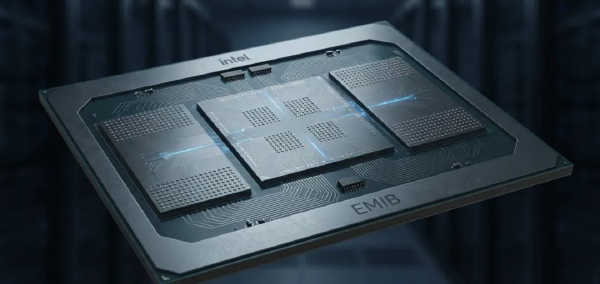
Samsung’s iCube is a 2.5D advanced packaging technology designed for high-bandwidth AI workloads.
Architecture #
- GPU (logic die) and multiple HBM stacks are mounted on a silicon interposer
- High-density interconnects enable near-chip-level communication
- System behaves as a unified compute module
This architecture minimizes signal distance, improving both bandwidth and latency.
Thermal Design Considerations #
AI accelerators operate at increasingly high power densities. iCube addresses this through:
- Optimized die placement across interposer surface
- Improved heat dissipation pathways
- Balanced vertical and lateral thermal distribution
These characteristics are critical for sustaining performance under continuous inference and training workloads.
🔗 Hybrid Bonding and 3D Integration #
To compete with next-generation packaging, Samsung has invested heavily in hybrid bonding technologies.
Key Advantages #
- Direct copper-to-copper interconnects
- Higher I/O density compared to micro-bump approaches
- Reduced interconnect pitch and stack height
- Lower electrical resistance and improved signal integrity
Hybrid bonding is essential for scaling bandwidth in future memory-integrated designs.
Competitive Landscape #
Samsung’s approach competes with:
- TSMC SoIC (System on Integrated Chips)
- Intel Foveros Direct
However, Samsung’s differentiation lies in vertical integration across multiple production layers.
🧩 Vertical Integration Strategy #
Samsung’s packaging strategy is tightly coupled with its memory leadership ambitions.
End-to-End Capability #
Samsung can deliver:
- HBM memory (including next-generation HBM4)
- Logic die manufacturing (foundry services)
- Advanced packaging (iCube)
This one-stop model reduces dependency on external vendors and simplifies supply chains.
Strategic Positioning #
| Capability | TSMC CoWoS | Samsung iCube |
|---|---|---|
| Business Scope | Foundry + Packaging | Foundry + HBM + Packaging |
| Supply Chain | Multi-vendor | Vertically integrated |
| Capacity (2026) | Constrained | Expanding rapidly |
| Nvidia Role | Primary | Secondary / complementary |
Samsung’s model enables tighter coordination between memory and packaging layers, which becomes critical in AI systems.
🚀 Implications for AI Hardware in 2026 #
Supply Chain Diversification #
Nvidia’s reliance on a single packaging provider introduces risk:
- Capacity bottlenecks
- Production delays
- Limited scaling flexibility
By incorporating Samsung iCube, Nvidia gains:
- Redundant packaging capacity
- Improved supply resilience
- Greater negotiation leverage
Turnkey Manufacturing Efficiency #
Samsung’s integrated model enables:
- Reduced logistics complexity
- Fewer cross-border component transfers
- Faster assembly cycles
This is particularly important for large-scale AI deployments where time-to-market is critical.
HBM4 Era Acceleration #
As AI workloads demand higher bandwidth:
- Memory and compute integration becomes tighter
- Packaging complexity increases
- Co-design between HBM and logic becomes essential
Samsung’s internal alignment across these domains allows faster iteration of next-generation AI modules.
⚖️ Industry Shift: Packaging as a Performance Driver #
Traditional performance scaling relied on transistor density improvements. That paradigm is shifting toward:
- Interconnect density
- Memory bandwidth
- Packaging topology
Advanced packaging now determines:
- Effective compute throughput
- Energy efficiency
- System scalability
This makes packaging a first-order design consideration rather than a downstream process.
🔮 Future Outlook #
The competition between iCube and CoWoS signals broader industry changes:
- Multi-sourcing of advanced packaging will become standard
- Hybrid bonding adoption will accelerate
- Memory-centric architectures will dominate AI design
As demand for AI accelerators grows, packaging capacity—not silicon fabrication—may remain the primary constraint.
✅ Conclusion #
Samsung’s iCube represents a strategic entry into the most constrained layer of the AI hardware stack.
By combining:
- Advanced 2.5D integration
- Hybrid bonding innovation
- Vertical integration with HBM
Samsung is positioning itself as a critical enabler of next-generation AI systems.
In the post-Moore era, advanced packaging is emerging as the new performance frontier, and Samsung’s expansion into Nvidia’s ecosystem marks a meaningful shift toward a more diversified and competitive supply chain.