CPU vs GPU vs TPU in 2026: How Google Trillium Redefines AI Compute
🧭 Overview #
By 2026, the computing landscape is defined by specialized silicon architectures optimized for distinct workloads. The rise of generative AI has shifted performance bottlenecks away from general-purpose CPUs toward highly parallel and domain-specific accelerators.
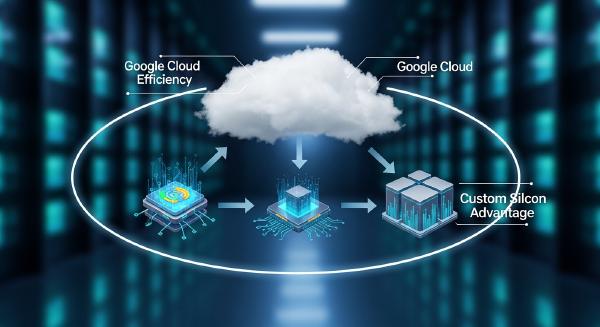
The three dominant compute paradigms—CPU, GPU, and TPU—represent different points along the specialization spectrum. Google’s latest Trillium (TPU v6) pushes this trend further, redefining efficiency and scalability for AI workloads.
🧩 Evolution of Compute Specialization #
Modern processors can be understood by how specialized they are for specific tasks.
CPU: General-Purpose Control Plane #
- Designed for broad compatibility and flexibility
- Handles operating systems, I/O orchestration, and control logic
- Optimized for branching, latency-sensitive tasks
CPUs remain essential for system coordination but are inefficient for large-scale numerical workloads.
GPU: Parallel Compute Engine #
- Thousands of lightweight cores
- Optimized for SIMD-style parallelism
- Highly effective for matrix operations and vector math
Originally built for graphics, GPUs have become the default platform for AI training due to their balance of flexibility and throughput.
TPU: Domain-Specific AI Accelerator #
- Custom ASIC (Application-Specific Integrated Circuit)
- Designed specifically for tensor operations
- Eliminates general-purpose overhead
TPUs maximize efficiency by focusing exclusively on machine learning primitives, trading flexibility for performance and energy efficiency.
⚖️ Architectural Comparison (2026) #
| Feature | CPU | GPU | TPU (Trillium) |
|---|---|---|---|
| Primary Role | System control, general compute | Parallel math, AI training | AI training & inference |
| Design Model | General-purpose | Parallel accelerator | Domain-specific ASIC |
| Flexibility | Highest | Medium | Lowest |
| Efficiency (AI) | Low | High | Very high |
| Deployment | Universal | Consumer + Data center | Cloud (Google only) |
🔮 Why TPUs Exist #
Google’s motivation for building TPUs was driven by scale constraints.
The Problem #
- Rapid growth in AI workloads (search, voice, recommendation systems)
- CPU and GPU infrastructure scaling inefficiently
- Power and space becoming limiting factors
The Solution #
TPUs were designed to:
- Remove unnecessary general-purpose logic
- Optimize for tensor algebra operations
- Deliver maximum performance per watt
This allowed Google to scale AI services without proportionally increasing data center footprint.
🚀 Trillium (TPU v6): Architectural Leap #
Trillium, Google’s TPU v6 generation, represents a major step forward in AI hardware.
Performance Scaling #
- ~4.7× increase in compute performance vs TPU v5e
- Designed for trillion-parameter model training
- Higher throughput per chip and per rack
Energy Efficiency #
- ~67% improvement in performance-per-watt
- Reduced operational cost for large-scale AI workloads
- Critical for sustainable data center expansion
Memory Subsystem #
- Integrated HBM3e (High Bandwidth Memory)
- Significantly higher memory bandwidth
- Reduces data starvation for compute units
Memory bandwidth is now a first-order constraint, and Trillium addresses this directly.
🏗️ Data Center Implications #
The rise of TPU-class accelerators is reshaping infrastructure design.
Workload Partitioning #
Modern data centers increasingly separate:
- CPU → orchestration and control
- GPU/TPU → compute acceleration
Efficiency-Driven Scaling #
Instead of scaling by adding more servers:
- Higher efficiency chips reduce node count
- Improved density increases rack-level throughput
- Power constraints become more manageable
Cloud-Centric Deployment #
Unlike CPUs and GPUs:
- TPUs are not general consumer hardware
- Deployed exclusively within Google Cloud infrastructure
- Accessed via managed AI platforms
🔄 Convergence Trends #
Despite increasing specialization, architectural boundaries are beginning to blur.
GPUs Evolving Toward TPUs #
- Integration of tensor cores
- Improved AI-specific instruction sets
- Greater focus on deep learning workloads
TPUs Expanding Flexibility #
- Support for broader ML model types
- Improved programmability frameworks
- Increased adaptability across workloads
🔮 Future Direction #
The industry is moving toward a hybrid model:
- CPUs remain essential for system control
- GPUs provide flexible acceleration
- TPUs deliver maximum efficiency for large-scale AI
Rather than replacing each other, these architectures form a layered compute stack.
✅ Conclusion #
The emergence of TPU Trillium underscores a fundamental shift in computing: performance is no longer defined solely by general-purpose capability, but by how effectively hardware matches workload characteristics.
In 2026:
- CPUs orchestrate
- GPUs accelerate
- TPUs specialize
This division enables scalable, efficient AI infrastructure, where specialization—not generality—drives the next phase of performance growth.