NPU Explained: How Neural Processing Units Power AI PCs in 2026
🧭 Overview #
By 2026, the rise of AI PCs and AI smartphones has introduced a third core compute engine alongside the CPU and GPU: the Neural Processing Unit (NPU).
Initially dismissed as a marketing feature, the NPU has become a critical component for local AI execution, enabling on-device inference with significantly improved efficiency, privacy, and responsiveness.
🔮 What is an NPU? #
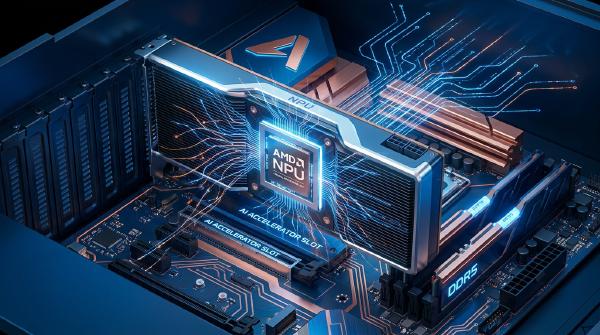
An NPU (Neural Processing Unit) is a specialized processor designed for deep learning inference workloads.
Architectural Focus #
- Optimized for matrix and tensor operations
- Tailored for neural network models (e.g., Transformers, CNNs)
- Eliminates general-purpose instruction overhead
Near-Memory Computing Advantage #
Unlike traditional processors:
- Data movement is minimized
- Compute units are placed closer to memory
- Reduces latency and energy consumption
This design addresses the memory bandwidth bottleneck, a major constraint in AI workloads.
⚖️ NPU vs GPU: Efficiency vs Flexibility #
While GPUs are powerful AI accelerators, they are not optimized for always-on, low-power inference.
| Feature | GPU | NPU |
|---|---|---|
| Versatility | High (graphics, compute) | Low (AI inference only) |
| Power Consumption | High | Ultra-low |
| Use Case | Training, rendering | Local inference |
| Design Goal | Maximum throughput | Performance-per-watt |
Key Insight #
- GPUs excel at large-scale training and heavy workloads
- NPUs excel at continuous, low-power inference
This makes NPUs ideal for real-time, on-device AI features.
📏 AI Performance Metric: TOPS #
In the AI PC era, performance is increasingly measured using TOPS (Trillions of Operations Per Second).
Why TOPS Matters #
- Reflects real AI workload throughput
- Accounts for lower-precision operations (INT8, FP16)
- Better suited than TFLOPS for inference workloads
AI PC Baseline (2026) #
To qualify as an AI-capable system:
- Minimum requirement: ~40+ NPU TOPS
- Enables:
- Local LLM inference
- Real-time AI assistants
- Advanced media processing
This threshold defines the modern AI PC category.
💻 NPU Integration in Modern SoCs #
All major silicon vendors now integrate NPUs into their flagship processors.
Intel Platforms #
- Core Ultra (Lunar Lake / Arrow Lake)
- ~45–50+ NPU TOPS
- Focus: real-time AI workloads (translation, video enhancement)
AMD Platforms #
- Ryzen AI (Strix Point / Medusa)
- XDNA architecture (latest generation scaling toward ~60 TOPS)
- Strong early investment in NPU acceleration
Apple Silicon #
- M-series Neural Engine
- Industry-leading efficiency
- Deep integration across macOS and iOS ecosystems
🔐 Why Local AI Matters #
The NPU enables a fundamental shift from cloud-based AI to edge (local) AI.
Privacy Benefits #
- Data remains on-device
- No need to transmit sensitive information to cloud servers
- Reduced exposure to data breaches and tracking
Power Efficiency #
- AI tasks consume significantly less energy
- Example: noise suppression or background blur
- ~10× more efficient on NPU vs CPU/GPU
Latency Improvements #
- Instant response without network dependency
- Consistent performance regardless of connectivity
🔄 Industry Shift: Edge + Cloud Hybrid #
Despite the rise of NPUs, cloud AI remains essential.
Local AI Strengths #
- Real-time inference
- Personalization
- Offline capability
Cloud AI Strengths #
- Massive model training
- Large-scale inference
- Continuous model updates
Emerging Model #
Future systems will combine:
- NPU (edge) → lightweight, real-time tasks
- Cloud → heavy computation and model scaling
This hybrid approach balances efficiency and capability.
🔮 Future Outlook #
The role of NPUs is expected to expand rapidly:
- Higher TOPS performance in mobile and desktop SoCs
- Better software frameworks for local AI deployment
- Increased adoption in consumer and enterprise devices
As models become more optimized for edge execution, NPUs will handle a larger share of AI workloads.
✅ Conclusion #
The Neural Processing Unit has become a foundational component of modern computing.
By delivering:
- High efficiency
- Low latency
- Enhanced privacy
NPUs enable the transition toward local-first AI computing.
In 2026, the computing stack is evolving into:
- CPU → system control
- GPU → high-performance compute
- NPU → efficient AI inference
This architecture defines the next generation of intelligent devices, where AI is not just cloud-powered—but built directly into the hardware.