
AAEON UP Xtreme PTL Edge Air Pairs Panther Lake with AirJet
AAEON, an industrial computing vendor within the ASUS family and an Intel Partner Alliance member, is expanding its edge AI portfolio with the UP Xtreme PTL Edge Air.

The system is based on Intel’s Core Ultra 300-series processors, codenamed Panther Lake, but its most notable feature is the thermal architecture. Instead of relying on a conventional heatsink and fan assembly, AAEON integrates Frore Systems’ AirJet solid-state active cooling technology.
The combination is designed to reduce system thickness, weight, acoustic output, and dust exposure while maintaining enough thermal capacity for demanding edge AI workloads.
🌡️ AirJet Cooling Shrinks the System #
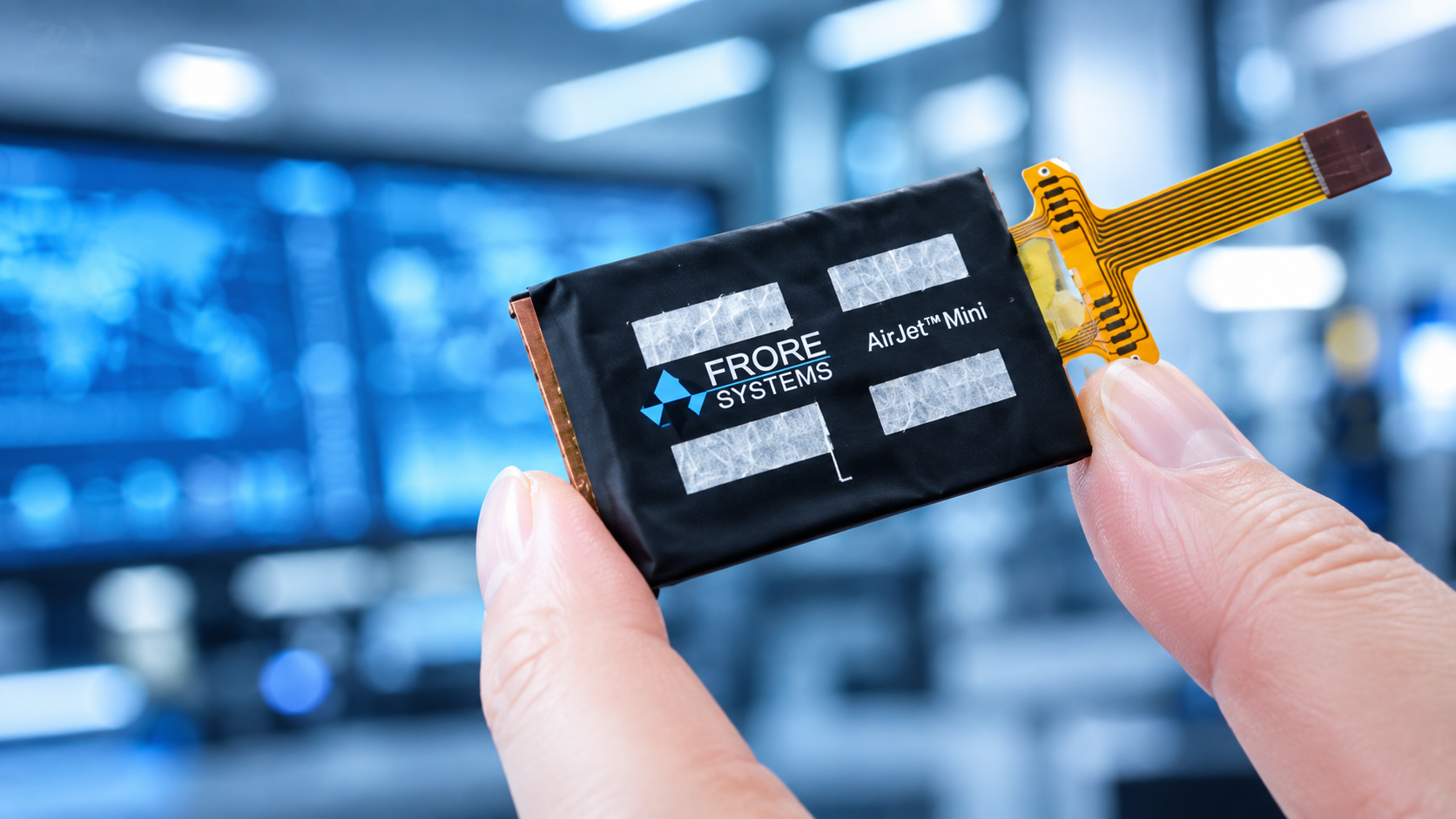
AirJet is a solid-state active cooling technology that uses vibrating membranes operating at ultrasonic frequencies to generate high-velocity pulsed airflow.
Unlike conventional cooling systems, the design does not require a large rotating fan and bulky heatsink assembly.
35% Thinner and 43% Lighter #
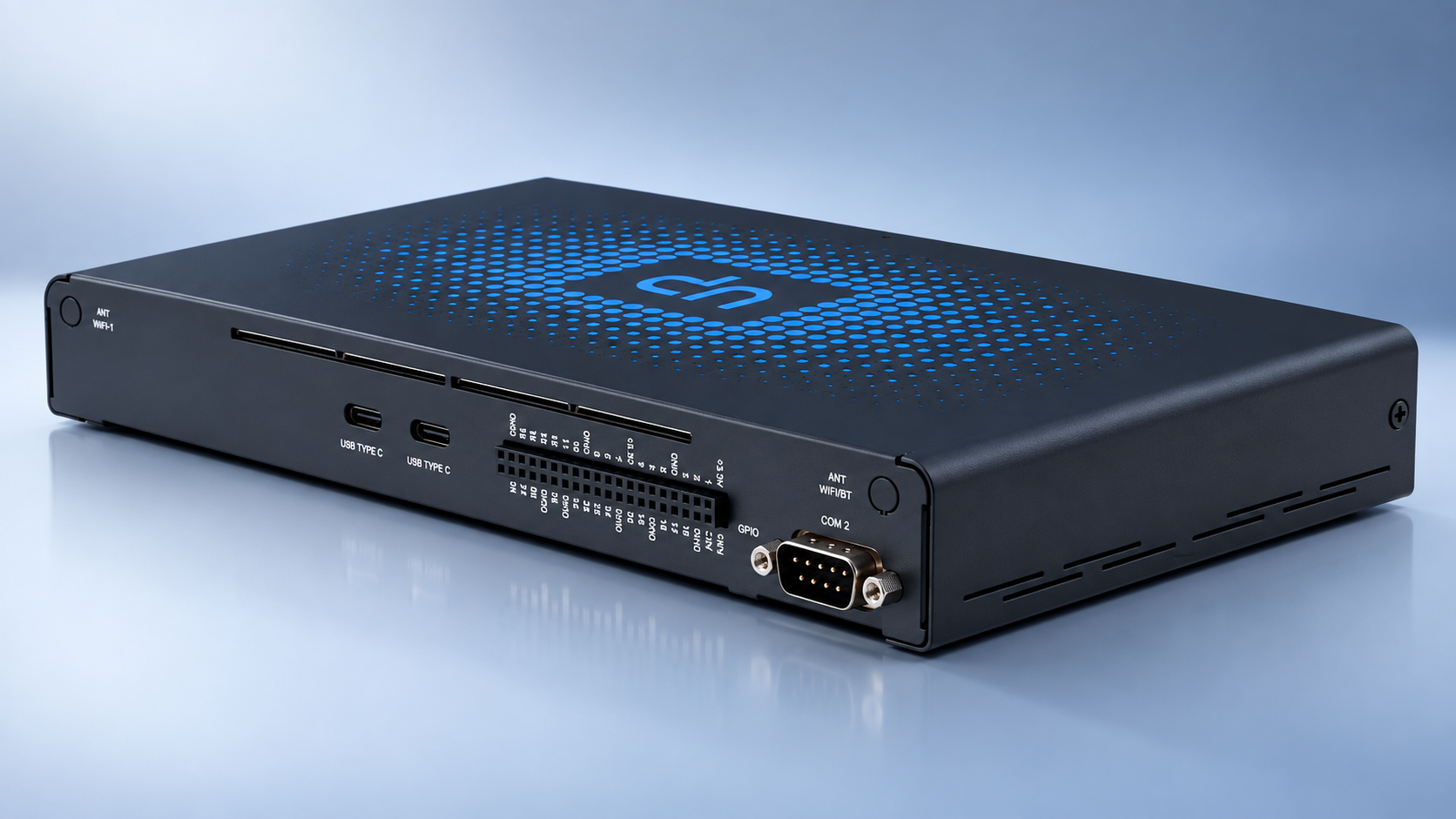
According to AAEON, the AirJet-cooled UP Xtreme PTL Edge Air achieves substantial reductions compared with the conventionally cooled UP Xtreme PTL Edge:
- 35% thinner
- 43% lighter
- Chassis thickness reduced to approximately 35.8 mm
- Acoustic output below 21 dBA
The reduction in mechanical cooling hardware also contributes to a cleaner physical design and helps support higher levels of dust protection.
Fanless and Vibration-Free Operation #
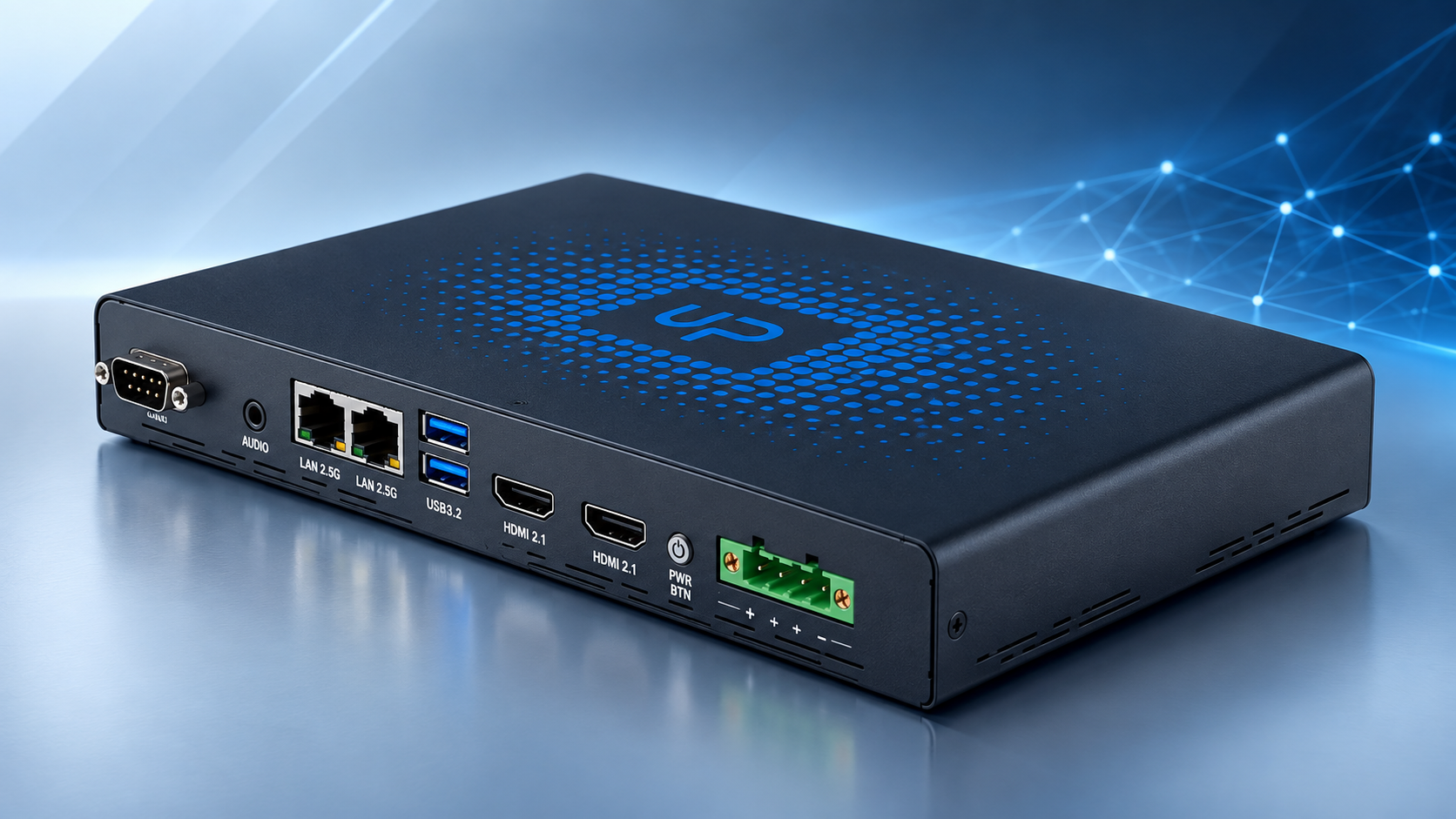
Traditional fans introduce both acoustic noise and mechanical vibration. AirJet’s solid-state architecture removes the rotating fan from the cooling system.
This makes the approach particularly relevant to equipment where vibration can affect sensors, imaging systems, robotic mechanisms, or precision measurements.
The smaller cooling assembly also gives system designers more flexibility when integrating the computer into space-constrained equipment.
🤖 Designed for Edge AI and Robotics #
AAEON is positioning the UP Xtreme PTL Edge Air for industrial edge AI applications rather than conventional desktop computing.
Potential workloads include:
- AI-based machine vision.
- 3D LiDAR processing.
- VSLAM for autonomous navigation.
- Autonomous Mobile Robots (AMRs).
- Industrial robotics.
- Precision sensing.
- Compact medical devices.
- Low-profile self-service kiosks.
Reduced Weight for Robotic Platforms #
The 43% weight reduction can be particularly useful in robotic applications.
For robotic arms and mobile platforms, reducing computer weight can lower mechanical loads and potentially simplify system integration.
In an AMR, the thinner chassis can also make it easier to fit computing hardware into restricted internal spaces without sacrificing the processing capability required for perception and navigation workloads.
Quiet Operation in Space-Constrained Environments #
With reported noise levels below 21 dBA, the system is also suited to environments where conventional fan noise is undesirable.
Potential applications include:
- Indoor autonomous robots.
- Medical equipment.
- Retail kiosks.
- Industrial inspection systems.
- Compact mobile platforms.
The lack of a conventional fan can additionally reduce the amount of airborne dust drawn into the system.
⚡ Panther Lake Provides the Compute Platform #
The UP Xtreme PTL Edge Air combines its compact cooling architecture with Intel’s Core Ultra 300-series Panther Lake platform.
AAEON states that the product family can scale to the Core Ultra X7 358H, which features an Intel Arc B390 integrated GPU with 12 Xe cores and a 5th-generation NPU.
The configuration is specified at up to 180 TOPS of total AI compute, giving the platform substantially more capability for local AI inference than conventional low-power industrial computers.
AI Workloads Without a Large Cooling Assembly #
The combination is important because edge AI systems increasingly need to perform compute-intensive tasks locally.
Computer vision, 3D perception, LiDAR analysis, and VSLAM can generate sustained workloads that place significant demands on the CPU, GPU, and NPU.
The AirJet implementation attempts to address that thermal requirement without returning to the large heatsinks and fan assemblies traditionally associated with higher-performance industrial computers.
🔋 Cooling Efficiency Comes With a Power Trade-Off #
The AirJet implementation is not completely free from an energy perspective.
AAEON reports that integrating the solid-state cooling system increases overall system power consumption by approximately 5% on average, bringing total system power consumption to around 100W.
This creates a straightforward trade-off:
- Slightly higher system power consumption.
- Significantly reduced thickness.
- Lower overall weight.
- Reduced acoustic output.
- No conventional cooling fan.
- Improved resistance to dust ingress through fan elimination.
For fixed industrial installations, the additional cooling power may be less significant than the mechanical and environmental benefits.
🧩 A New Cooling Option for Industrial Edge AI #
The UP Xtreme PTL Edge Air demonstrates how solid-state active cooling can be paired with a relatively powerful edge AI processor without relying on a conventional fan-and-heatsink configuration.
The combination of Intel Panther Lake, AirJet cooling, and AAEON’s industrial computing platform targets a specific class of systems where size, weight, vibration, noise, and dust protection can be as important as raw compute performance.
If the reported specifications translate into sustained real-world workloads, the platform could provide a useful alternative for compact robotics, machine vision, autonomous systems, and other industrial edge AI deployments.
More broadly, the design represents an early example of solid-state active cooling being integrated with Intel’s Panther Lake platform, highlighting how emerging thermal technologies can help reduce the physical footprint of increasingly powerful edge AI hardware.