Entry-Level GPU Prices Could Surge in H2 2026
Entry-level graphics cards may soon become the most difficult GPU segment for budget PC builders to purchase. PC Partner Group, the parent company of ZOTAC, INNO3D, and Manli, expects severe supply shortages across entry-level GPUs during the second half of 2026, with higher average selling prices (ASPs) likely to follow.
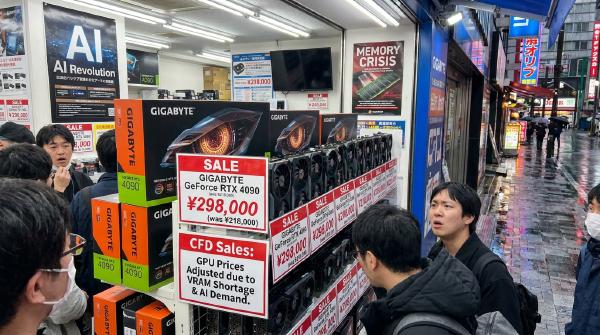
The projected squeeze comes as graphics memory costs continue to rise. While high-end and mid-range GPUs have already experienced price increases, escalating memory expenses could now place disproportionate pressure on lower-cost models, where manufacturers have significantly less pricing headroom.
⚠️ Entry-Level GPU Shortages Could Intensify #
PC Partner Group expects supply conditions for entry-level graphics cards to deteriorate throughout H2 2026. The company anticipates that tighter availability will be accompanied by a substantial increase in average selling prices.
For budget-oriented PC builders, the impact could be significant. Entry-level GPUs already occupy a narrow price band, leaving manufacturers with fewer options to absorb increases in component and memory costs without raising retail prices.
If PC Partner’s forecast materializes, consumers could face both higher prices and a reduced selection of affordable graphics cards during the second half of the year.
💰 Entry-Level GPUs Are Already Above MSRP #
Several entry-level graphics cards are already selling above their official manufacturer suggested retail prices (MSRP). Current examples include the GeForce RTX 3050, GeForce RTX 5050, and the recently introduced Radeon RX 9050.
Although these GPUs remain substantially more affordable than many 60- and 70-series alternatives, their relatively low price points make them particularly sensitive to component-cost increases.
For budget-conscious gamers, this segment remains important because it can provide the minimum GPU performance required for a modern gaming system without pushing the overall PC build cost into the mid-range or high-end category.
Higher street prices therefore have a direct effect on the viability of inexpensive gaming PCs.
📈 Rising Memory Costs Are the Primary Pressure Point #
The central factor behind the expected GPU price increases is the continued escalation of memory costs.
Growing demand from AI infrastructure has placed substantial pressure on the broader DRAM market. As memory manufacturers prioritize capacity for high-demand applications, conventional memory products used throughout the PC ecosystem can also become more expensive.
GPU manufacturers have already been forced to revise pricing as memory and related component costs rise. The persistence of these increases has made the price stability previously expected by the industry increasingly difficult to maintain.
Why Entry-Level GPUs Are Especially Vulnerable #
Memory represents only one component of a graphics card, but rising costs can have an outsized impact on entry-level products because their margins are typically tighter than those of higher-priced models.
A comparable increase in component costs can therefore represent a much larger percentage of the final retail price of a budget GPU. Manufacturers may have limited flexibility to offset the increase without reducing margins or raising ASPs.
This creates a difficult environment for inexpensive graphics cards: higher memory costs increase production expenses at the same time that consumers remain highly sensitive to retail price changes.
🔍 What This Means for Budget PC Builders #
PC Partner’s forecast suggests that the entry-level GPU market could become increasingly volatile in H2 2026. Buyers who were previously relying on inexpensive graphics cards as the foundation of budget gaming systems may encounter fewer models at MSRP and greater price fluctuations.
The situation also highlights how developments in the memory market can propagate through the broader PC hardware supply chain. AI-driven demand does not only affect accelerator hardware; its impact on memory pricing can eventually reach mainstream consumer components as well.
If memory costs remain elevated through the second half of 2026, entry-level GPUs could lose their position as the stable, low-cost option for new gaming PCs, putting additional pressure on already constrained budget-build economics.