Intel Panther Lake Handheld Chip Targets Sub-$1,000 Gaming PCs
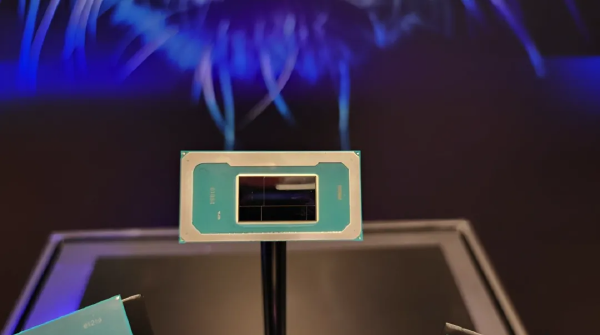
Intel may be preparing to expand its gaming handheld processor lineup with a lower-cost SoC based on its Panther Lake architecture. The reported chip would sit below the company’s existing Arc G3 and G3 Extreme solutions, targeting more affordable gaming handhelds.
The new SoC is expected to feature an 8-core CPU configuration alongside four Xe3 GPU cores. If Intel prices the platform aggressively, it could significantly lower the entry point for Intel-powered gaming handhelds and expand the company’s presence beyond the current premium segment.
🎮 Intel’s Handheld Lineup Could Split Into Multiple Tiers #
Intel’s Arc G3 family currently represents the company’s high-end SoC offering for gaming handhelds, with the lineup including the Arc G3 and G3 Extreme variants.
Both solutions reportedly use a 14-core CPU configuration, paired with integrated graphics featuring either 10 or 12 Xe3 GPU cores. These configurations correspond to the Arc B370 and Arc B390 graphics implementations, respectively.
Several handheld manufacturers have already adopted the G3-series platform in their latest devices, positioning Intel’s current solutions primarily within the premium end of the handheld gaming market.
A lower-end Panther Lake SoC would allow Intel to address a substantially broader range of price points.
🧩 Leaked Panther Lake SoC Uses 4+0+4+4 Configuration #
The newly reported handheld chip is also part of the Panther Lake family and is expected to use a “4+0+4+4” configuration.
The reported architecture consists of:
- 4 Performance cores
- 0 conventional Efficient cores
- 4 Low-Power Efficient (LP-E) cores
- 4 Xe3 GPU cores
The CPU configuration closely resembles that of Intel’s existing Core Ultra 5 325/335 and Core Ultra 7 355/365 processors, suggesting that Intel could be adapting an established Panther Lake design for a lower-power handheld implementation.
The most significant reduction appears to be on the GPU side. With four Xe3 cores instead of the 10 or 12 cores found in the higher-end G3-series solutions, the new chip would occupy a distinctly lower performance tier.
A Smaller GPU Configuration Could Improve Platform Economics #
Reducing the integrated GPU resources can lower silicon complexity and potentially improve power efficiency, thermals, and manufacturing economics.
For handheld systems, these factors are particularly important because the processor must operate within strict power and cooling constraints while sharing a limited battery capacity.
Intel could therefore use the smaller Xe3 configuration to create a platform optimized around affordable handheld designs rather than attempting to scale down its flagship solution through aggressive power limits alone.
💵 Intel Handhelds Could Fall Below $1,000 #
Current handheld systems based on Intel’s Arc G3 and G3 Extreme platforms generally sell for more than $1,000. Memory and storage configurations are among the major contributors to the overall system cost.
A lower-cost 8-core Panther Lake SoC could give manufacturers significantly more flexibility when designing mainstream and entry-level systems.
If the platform reaches the market at an appropriately low price, Intel-powered gaming handhelds could move below the $1,000 threshold, with some configurations potentially approaching or falling below $800.
That would put Intel’s handheld platform into direct competition for a much larger portion of the portable gaming market.
🔎 Intel Could Broaden Its Handheld Strategy #
The reported Panther Lake chip suggests Intel may be moving toward a broader tiered strategy for gaming handheld processors rather than concentrating exclusively on premium devices.
A four-Xe3-core solution would not compete directly with the company’s highest-end handheld SoCs on graphics performance. Instead, its value would come from balancing CPU capability, integrated graphics, power efficiency, and platform cost.
If Intel and its partners can deliver competitive performance at sub-$1,000 and potentially sub-$800 price points, the new SoC could make Intel hardware considerably more accessible to mainstream handheld buyers.
The key factors will ultimately be real-world gaming performance, power efficiency, memory configuration, and the retail pricing of the resulting devices.