Microsoft and NVIDIA’s N1X Platform Could Redefine the Future of PCs
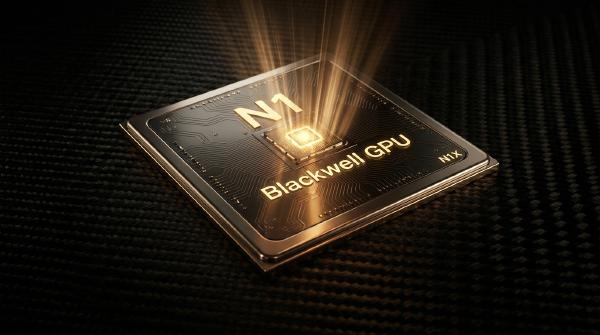
Microsoft and NVIDIA have jointly begun teasing a new PC platform known as N1X, describing it as the beginning of a “new era for the PC.” While technical details remain limited, the messaging surrounding the platform suggests a significant shift away from the traditional PC model that has dominated the industry for decades.
Rather than focusing solely on faster processors or more powerful graphics cards, N1X appears to emphasize deep integration between hardware, software, and AI acceleration. If successful, the initiative could fundamentally alter how PCs are designed, optimized, and used in the years ahead.
For consumers considering a new computer purchase in the near future, N1X is a development worth monitoring closely, as it may represent one of the most substantial platform-level transitions since the rise of modern Windows PCs.
🖥️ A PC Industry Searching for Its Next Breakthrough #
For more than twenty years, the consumer PC market has largely revolved around a familiar formula:
- Microsoft Windows
- Intel x86 processors
- Standardized hardware compatibility
- Broad software support
This long-standing partnership, often referred to as the “Wintel” ecosystem, helped establish the modern PC industry. While AMD has become a major competitor and Arm-based Windows devices have gained traction, the underlying architecture has remained largely unchanged.
In recent years, however, the industry has faced a growing challenge: users are upgrading less frequently.
Many consumers now keep their computers for:
- Four years
- Five years
- Sometimes even longer
The reason is simple. Modern PCs have become sufficiently powerful for everyday workloads, making annual performance improvements less noticeable in real-world use.
As a result, traditional hardware refresh cycles are no longer generating the excitement they once did.
📉 Why Incremental Upgrades Are No Longer Enough #
The slowdown in upgrade demand reflects a broader industry reality.
Under the traditional PC model, each generation typically focuses on improving one component:
- Faster CPUs
- More GPU cores
- Higher clock speeds
- Improved battery efficiency
While these upgrades provide measurable benchmark gains, they often deliver only modest improvements to daily user experiences.
For many consumers, web browsing, office productivity, video streaming, and communication applications already run smoothly on existing hardware.
Consequently, the value proposition of upgrading has weakened.
The industry increasingly needs a new category-defining capability—one that delivers visible, tangible benefits rather than incremental performance increases.
🚀 Understanding the Core Vision Behind N1X #
According to current information, N1X is not simply a new processor or graphics card.
Instead, it appears to be a fully integrated computing platform that tightly combines:
- NVIDIA GPU technology
- Dedicated AI acceleration hardware
- Microsoft Windows
- Unified system-level optimization
This approach differs significantly from today’s traditional PC ecosystem, where hardware and software components are designed to support a wide variety of configurations.
The N1X philosophy appears to prioritize optimization over universality.
By reducing the need to accommodate countless hardware combinations, Microsoft and NVIDIA may be able to achieve substantially higher efficiency across performance, power management, and AI workloads.
⚙️ Deep Hardware and Software Integration #
One of the most notable aspects of N1X is the possibility of unprecedented coordination between Windows and NVIDIA hardware.
Potential areas of optimization include:
Computing Resource Scheduling #
The operating system could dynamically allocate workloads between:
- CPU cores
- GPU cores
- Dedicated NPUs
- Specialized AI accelerators
This would allow each task to execute on the hardware best suited for it.
Power Management #
Instead of treating performance and battery life as competing priorities, the platform could intelligently shift resources based on workload demands.
For example:
- AI inference could utilize NPUs
- Gaming workloads could leverage GPUs
- Background tasks could remain on low-power cores
This level of workload awareness could significantly improve overall efficiency.
Software Optimization #
Applications specifically designed for the N1X platform may gain direct access to optimized hardware pathways, reducing overhead and improving responsiveness.
🤖 AI as the Centerpiece of the New Platform #
The strongest theme surrounding N1X is artificial intelligence.
Rather than treating AI as an optional feature, the platform appears designed around AI-first computing principles.
This aligns with broader industry trends, where AI is becoming increasingly integrated into:
- Productivity applications
- Content creation workflows
- Software development tools
- Search experiences
- Personal assistants
- Local inference systems
N1X could potentially serve as a foundation for a new generation of AI-native Windows experiences.
📸 Enhanced Performance for Content Creators #
One area likely to benefit immediately from deeper integration is professional content creation.
Tasks that traditionally require significant processing power could see substantial acceleration, including:
- AI-assisted photo editing
- RAW image processing
- Video enhancement
- Automated masking
- Background removal
- AI-generated visual effects
By combining GPU acceleration with dedicated AI hardware, workflows that currently take minutes could potentially be completed in seconds.
For creators working with increasingly large media files, these improvements could translate directly into higher productivity.
🎮 Gaming Could Receive Major Optimizations #
Gaming remains one of NVIDIA’s core strengths, making it a natural focus for the platform.
Future optimizations may include:
- Improved frame generation
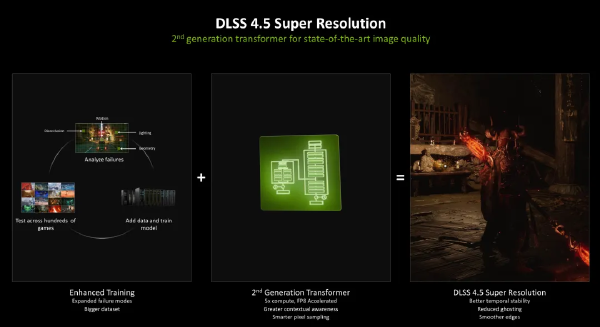
- Enhanced AI upscaling
- Lower latency rendering
- Smarter resource scheduling
- Better power efficiency during gaming sessions
Deep integration with Windows could also reduce software overhead and improve how games access hardware resources.
While exact performance figures remain speculative, the platform’s architecture appears designed to maximize the effectiveness of NVIDIA’s AI-driven gaming technologies.
🔋 Pursuing Laptop-Class Efficiency #
Battery life has become one of the key battlegrounds in modern computing.
Apple Silicon demonstrated that tight hardware-software integration can dramatically improve efficiency without sacrificing performance.
N1X appears positioned to pursue a similar objective within the Windows ecosystem.
Potential benefits could include:
- Lower idle power consumption
- Longer battery life
- Improved thermal behavior
- Faster transitions between performance states
If successful, Windows laptops could narrow the efficiency gap that has traditionally favored highly integrated systems.
🔮 Local AI Computing Without the Cloud #
Perhaps the most transformative capability of N1X may be its emphasis on local AI execution.
Today, many AI services rely heavily on cloud infrastructure.
While convenient, cloud-based AI introduces concerns regarding:
- Privacy
- Latency
- Subscription costs
- Internet dependency
A sufficiently powerful local AI platform could allow users to run advanced models directly on their PCs.
Potential use cases include:
- Personal AI assistants
- Code generation
- Document summarization
- Image generation
- Voice processing
- Knowledge management
Running these workloads locally provides greater control over personal data while reducing reliance on external services.
🏗️ Could N1X Create a More Closed Ecosystem? #
One of the more controversial implications of the N1X strategy is the possibility of a more tightly controlled ecosystem.
Traditional PCs thrive on openness:
- Multiple CPU vendors
- Multiple GPU vendors
- Broad hardware compatibility
- Extensive customization options
A deeply integrated platform could move in a different direction.
By optimizing specifically for NVIDIA hardware and Windows, Microsoft may be able to unlock performance advantages unavailable to generic configurations.
However, such benefits could potentially come at the cost of broader hardware neutrality.
This raises important questions about how future PC ecosystems will balance openness, optimization, and user choice.
📅 What We Know About Launch Timing #
Microsoft and NVIDIA have not yet disclosed detailed specifications or official release schedules.
Industry speculation currently points toward a potential debut during the second half of 2026.
Until additional technical information becomes available, many questions remain unanswered, including:
- Processor architecture
- AI hardware specifications
- Target market segments
- Device form factors
- Software requirements
- Compatibility policies
Nevertheless, the strategic direction is becoming increasingly clear.
🔮 More Than a Hardware Refresh #
The significance of N1X extends beyond raw performance numbers.
The platform appears to represent a broader attempt to redefine the role of the personal computer in the AI era.
For decades, PCs have primarily functioned as productivity and entertainment devices. The next phase of computing may position them as personal AI platforms capable of performing sophisticated reasoning, generation, and automation tasks directly on local hardware.
If Microsoft and NVIDIA successfully execute this vision, N1X could become one of the most influential platform transitions in the PC industry’s modern history.
Whether it ultimately reshapes the market or becomes another experimental branch of Windows computing remains to be seen. What is clear, however, is that both companies are signaling a future in which AI is no longer merely an application running on the PC—it becomes a foundational component of the PC itself.