NVIDIA RTX Spark CPU Benchmarks Leak: Strong Single-Core, Weak Multi-Core Performance
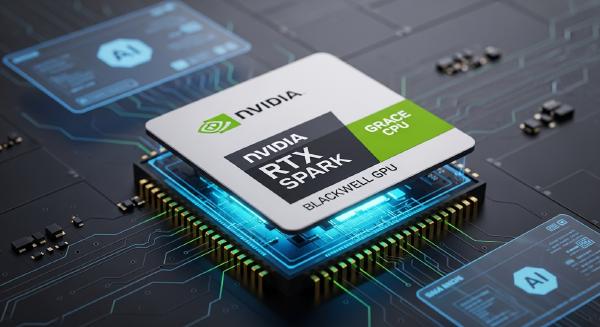
Leaked Cinebench 2026 benchmark results provide one of the clearest looks yet at the CPU capabilities of NVIDIA’s first laptop-focused system-on-chip (SoC), the RTX Spark. While the processor demonstrates competitive single-core performance—roughly matching Apple’s M3 Max—it falls noticeably behind in multi-core workloads, even when tested using an unlocked high-performance mode.
Although the CPU results may disappoint those expecting a new high-performance ARM competitor, the RTX Spark’s overall platform strategy remains centered on its integrated Blackwell GPU and high-bandwidth unified memory architecture, positioning it primarily as a mobile AI and graphics powerhouse rather than a CPU-centric design.
📊 Cinebench 2026 Reveals Mixed CPU Performance #
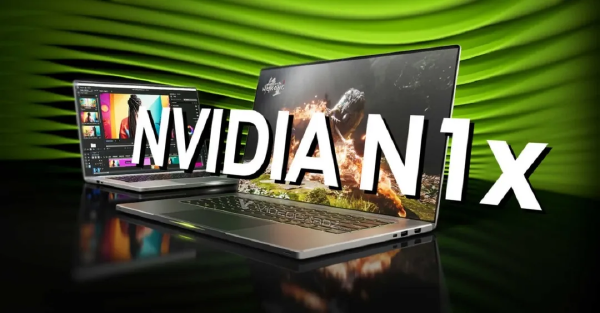
The benchmark originates from testing performed on a Microsoft Surface Laptop Ultra engineering sample, where reviewers reportedly enabled an undocumented high-performance operating mode before running Cinebench 2026.
The leaked scores are:
Cinebench 2026

Single-Core : 540
Multi-Core  : 5,771
These numbers paint a mixed picture.
Single-Core Performance #
A score of 540 places the RTX Spark approximately on par with Apple’s M3 Max in lightly threaded workloads.
Strong single-core performance remains valuable for:
- Interactive applications
- Software development
- General desktop responsiveness
- Many productivity workloads
- Portions of game engines
This suggests NVIDIA’s customized ARM cores are capable of delivering competitive per-core performance.
Multi-Core Performance #
The multi-core score of 5,771 is considerably less impressive.
Compared with Apple’s latest high-end silicon, the RTX Spark reportedly trails the M4 Max by approximately 35.6% in Cinebench’s multi-threaded workload.
For heavily parallel applications such as:
- Video rendering
- Software compilation
- Scientific computing
- 3D content creation
- Large simulation workloads
this performance gap could become readily apparent.
Perhaps more concerning is that these findings align closely with earlier leaked Geekbench 6 results, suggesting the behavior is representative of the processor rather than an isolated benchmark anomaly.
⚙️ High-Performance Mode Still Leaves Headroom Untapped #
One noteworthy aspect of the benchmark is that it was not conducted under the system’s default power profile.
Instead, reviewers reportedly unlocked a hidden performance mode unavailable to standard users.
Under this configuration:
- CPU package power approached 50 W
- Sustained operating frequency reached approximately 2.8 GHz
- Total laptop system power remained within an 80–95 W envelope
This means the CPU alone consumed well over half of the available system power budget.
Despite this aggressive configuration, overall CPU scaling remained lower than many industry observers expected.
For retail systems operating under default firmware settings, real-world CPU performance may prove even more conservative.
🏗️ Why Isn’t CPU Performance Scaling Higher? #
The exact cause of the observed performance limitations remains uncertain.
The RTX Spark reportedly uses a heterogeneous ARM architecture combining:
- Cortex-X925 performance cores
- Cortex-A725 efficiency cores
The Cortex-X925 cores have been customized for PC-class workloads and were expected to sustain considerably higher operating frequencies.
According to publicly available architectural specifications, Cortex-X925 designs are theoretically capable of reaching approximately 4.0 GHz under favorable thermal conditions.
During the leaked benchmark, however, the processor sustained only around 2.8 GHz.
Several explanations are possible.
Software Power Management #
Microsoft may be enforcing conservative firmware or operating system limits on the engineering hardware.
Such restrictions are common during early hardware validation.
Thermal Constraints #
Alternatively, the laptop’s cooling solution may simply be unable to sustain higher frequencies while maintaining acceptable temperatures.
Maintaining a 50 W CPU workload inside a thin-and-light chassis presents significant thermal engineering challenges.
Immature Platform Optimization #
Engineering samples rarely reflect final production firmware.
Future BIOS updates, scheduler improvements, and power management optimizations could improve sustained clock frequencies before commercial release.
At this stage, additional testing on retail hardware will be required before drawing definitive conclusions.
🎮 Blackwell GPU Remains the Platform’s Greatest Strength #
Although the CPU results have attracted considerable attention, they represent only one component of NVIDIA’s broader SoC strategy.
The defining feature of the RTX Spark platform remains its integrated Blackwell GPU.
Unlike competing ARM laptop processors that prioritize CPU efficiency, NVIDIA is leveraging decades of graphics expertise to create a highly capable integrated compute platform.
Potential advantages include:
- Desktop-class ray tracing
- AI acceleration
- CUDA software compatibility
- Tensor Core acceleration
- Advanced graphics rendering
For GPU-intensive workloads, these capabilities could substantially outweigh the processor’s CPU shortcomings.
🔮 Unified Memory Targets AI Workloads #
Another distinguishing characteristic is the platform’s unified memory architecture.
Rather than maintaining separate CPU and GPU memory pools, the RTX Spark enables both processors to access a common high-bandwidth memory subsystem.
This architecture offers several advantages:
- Reduced memory duplication
- Lower latency between CPU and GPU
- Faster AI inference
- More efficient large-model execution
- Improved GPU compute utilization
NVIDIA is positioning the platform for demanding local AI workloads, including inference on large language models containing up to 120 billion parameters, depending on quantization strategy and available memory capacity.
Unified memory is becoming an increasingly important design trend as AI workloads continue shifting toward client devices.
🎯 Gaming and Content Creation #
Beyond AI applications, the Blackwell GPU is expected to provide excellent gaming performance.
According to current demonstrations, the integrated GPU is capable of handling modern AAA titles featuring advanced rendering techniques such as:
- Path tracing
- Ray tracing
- AI upscaling
- Frame generation
Titles highlighted during early demonstrations include:
- PRAGMATA
- Alan Wake 2
These workloads benefit primarily from GPU horsepower rather than raw CPU throughput.
Consequently, users focused on gaming or GPU-accelerated creative software may find the CPU limitations less significant than benchmark numbers initially suggest.
📈 Competitive Positioning #
The RTX Spark enters an increasingly competitive ARM laptop ecosystem.
Its primary competitors include:
- Apple M-series processors
- Qualcomm Snapdragon X Elite family
- Future AMD ARM-based designs
- Emerging Windows-on-ARM platforms
Rather than attempting to outperform Apple purely in CPU benchmarks, NVIDIA appears to be emphasizing a different value proposition centered on:
- Superior GPU performance
- AI acceleration
- CUDA compatibility
- Unified memory
- Professional compute capabilities
This strategy aligns closely with NVIDIA’s broader focus on AI computing across desktop, workstation, and data center markets.
🔮 Looking Ahead #
As NVIDIA’s first laptop SoC, the RTX Spark represents an important first-generation platform rather than a finished endpoint.
CPU performance will likely remain an area of active optimization.
Potential improvements in future generations may include:
- Higher sustained clock frequencies
- Improved thermal efficiency
- Enhanced ARM core implementations
- Larger cache configurations
- Refined power management
- Better operating system scheduling
If these CPU improvements arrive while preserving Blackwell’s graphics leadership, future RTX Spark platforms could become much stronger competitors across both productivity and gaming markets.
📌 Conclusion #
The leaked Cinebench 2026 results indicate that NVIDIA’s RTX Spark delivers respectable single-core CPU performance but falls short of expectations in heavily threaded workloads. Even with an unlocked high-performance mode, sustained clock speeds remain well below the theoretical capabilities of its Cortex-X925 cores, leaving the processor noticeably behind Apple’s latest flagship silicon in multi-core performance.
However, evaluating the RTX Spark solely through CPU benchmarks risks overlooking its broader platform strengths. NVIDIA’s strategy clearly prioritizes GPU computing, AI acceleration, and unified memory—areas where the integrated Blackwell architecture is expected to outperform competing mobile solutions.
For prospective buyers, the platform’s overall value will ultimately depend on workload characteristics. CPU-intensive applications may expose its current limitations, while AI development, GPU-accelerated content creation, and modern gaming stand to benefit far more from the capabilities that define NVIDIA’s first-generation laptop SoC.