NVIDIA RTX Spark Redefines the AI PC Era
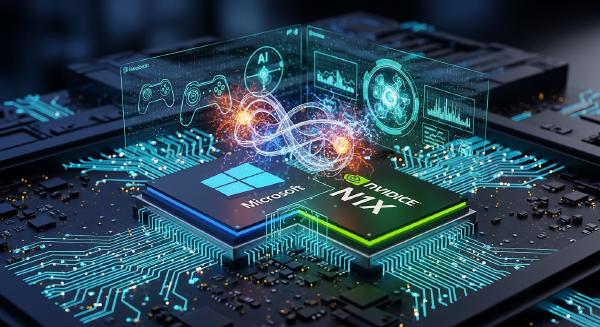
NVIDIA has officially unveiled RTX Spark, its first Windows-focused AI superchip and a product designed to fundamentally reshape the future of personal computing. Introduced by NVIDIA CEO Jensen Huang during GTC Taipei, RTX Spark represents far more than a conventional system-on-chip (SoC). It combines three decades of NVIDIA innovation—including CUDA, RTX, AI acceleration, and high-performance computing technologies—into a single platform aimed at powering the next generation of AI-native PCs.
According to NVIDIA, the traditional model of launching applications, clicking menus, and manually orchestrating workflows is approaching a turning point. RTX Spark introduces a vision where intelligent local AI agents become the primary interface between users and their computers, transforming PCs from passive tools into active digital collaborators.
🚀 A Unified Superchip Designed for AI-Native Computing #
RTX Spark abandons the conventional separation between CPU and GPU resources by integrating both into a tightly coupled architecture.
Built using TSMC’s advanced 3nm manufacturing process, the chip contains approximately 70 billion transistors and combines:
- A NVIDIA Blackwell RTX GPU
- A 20-core NVIDIA Grace CPU
- NVLink-C2C chip-to-chip interconnect technology
- Up to 128GB of unified memory
This architecture creates a unified computing platform where CPU and GPU resources share memory directly, eliminating many of the bottlenecks associated with traditional discrete architectures.
Key Hardware Specifications #
The Blackwell GPU integrated within RTX Spark features:
- 6,144 CUDA cores
- Fifth-generation Tensor Cores
- FP4 precision support
- Up to 1 petaflop of AI computing performance
To put this into perspective, achieving one petaflop of AI performance traditionally required multiple high-end accelerator cards or even small GPU clusters. RTX Spark brings this capability into a single workstation-class laptop platform.
The Grace CPU was reportedly co-developed with MediaTek, emphasizing exceptional performance-per-watt while maintaining the computational density required for large-scale AI workloads.
🔒 Building a Secure Foundation for Local AI Agents #
One of the most significant barriers preventing widespread deployment of personal AI agents has been security.
While open-source agent frameworks have rapidly advanced, concerns surrounding privacy, permissions, data access, and system control have limited adoption on primary personal devices.
NVIDIA and Microsoft aim to solve these challenges through a collaborative architecture built specifically for Windows.
Microsoft’s Security Layer #
The first layer of protection comes from new Windows security primitives designed to provide:
- Identity management
- Application isolation
- Policy enforcement
- End-to-end security controls
These capabilities allow AI agents to operate within clearly defined boundaries while maintaining access to the resources required for complex tasks.
NVIDIA OpenShell Runtime #
The second layer is NVIDIA’s OpenShell runtime environment.
OpenShell enables users and organizations to define:
- Which actions an agent can perform
- Which resources it can access
- Which applications it can interact with
- What data can be shared externally
The platform can also intelligently determine whether requests should be processed by local models or cloud-hosted models. When cloud inference is required, sensitive information can be anonymized automatically according to user-defined privacy policies.
This security architecture has already attracted support from several agent platform developers, paving the way for local AI assistants capable of:
- Cross-application task execution
- Complex reasoning workflows
- Software development assistance
- Image and video generation
- Enterprise search
- Semantic indexing of local files
The vision is clear: future PCs will include AI agents that function as persistent digital assistants operating directly on users’ personal devices.
🔮 AI Performance That Rivals Workstations #
RTX Spark is designed to deliver a complete AI development and inference platform rather than merely accelerating consumer applications.
The platform inherits NVIDIA’s entire software ecosystem, including:
- CUDA
- RTX
- DLSS
- TensorRT
- OptiX
- NVIDIA Reflex
- G-SYNC
This allows developers, creators, and researchers to leverage familiar workflows without significant software migration.
Large Language Models on Local Hardware #
One of RTX Spark’s most impressive capabilities is local AI inference.
NVIDIA claims the platform can run:
- Up to 120-billion-parameter language models
- Context windows reaching one million tokens
- Advanced multimodal AI workloads directly on-device
These capabilities dramatically reduce dependence on cloud infrastructure while improving privacy, responsiveness, and operational cost.
🎨 Accelerating Content Creation Workflows #
Content creators stand to benefit significantly from the new architecture.
According to NVIDIA, RTX Spark enables:
- Rendering of 90GB+ 3D scenes using OptiX and DLSS
- Native editing of 12K 4:2:2 video content
- Real-time AI-assisted creative workflows
- Unified memory utilization across CPU and GPU workloads
Next-Generation RTX Technologies #
The platform will introduce several new RTX innovations, including:
- DLSS 4.5 Ray Reconstruction
- Second-generation Transformer-based rendering enhancements
- RTX Video frame generation with up to 4x interpolation
- Expanded AI-assisted graphics workflows
These technologies are expected to arrive in major creative and gaming applications, including Blender and ComfyUI.
🎮 Gaming Without Compromise #
Although RTX Spark is heavily focused on AI, gaming remains a core pillar of the platform.
NVIDIA states that the integrated Blackwell GPU can deliver:
- Hardware-accelerated ray tracing
- DLSS frame generation
- NVIDIA Reflex latency reduction
- More than 100 FPS in many AAA titles at 1440p resolution
With over 1,000 games and applications already supporting RTX technologies, the company aims to create a unified platform where AI acceleration and gaming performance coexist without tradeoffs.
🏢 Adobe and the Software Ecosystem Rally Behind RTX Spark #
Hardware alone cannot redefine computing. Software support is equally important.
More than 100 Windows software vendors and game developers have announced support for RTX Spark.
Adobe’s Deep Integration Strategy #
Perhaps the most significant partnership is Adobe’s collaboration with NVIDIA.
Adobe is reportedly redesigning major portions of:
- Photoshop
- Premiere Pro
Rather than simply applying performance optimizations, Adobe is rebuilding critical components to fully leverage:
- Unified memory architecture
- Blackwell GPU acceleration
- TensorRT AI inference
- AI-native workflows
Expected improvements include:
- Up to 2× performance gains
- GPU-accelerated compositing
- Real-time filters
- Enhanced AI-assisted editing
- More efficient video processing pipelines
Future releases are also expected to integrate Windows AI agents directly into Adobe workflows, allowing users to interact with creative software through natural language commands.
Expanding Industry Support #
Early ecosystem partners include:
- Blackmagic Design
- Blender
- CapCut
- ComfyUI
- OTOY
Gaming support includes contributions from:
- KRAFTON
- NetEase
- Remedy Entertainment
- Riot Games
- Xbox
This broad industry participation suggests that RTX Spark is being positioned as an entirely new computing category rather than a niche hardware product.
💻 A New Generation of Thin and Light AI PCs #
Despite its computational capabilities, RTX Spark is not limited to bulky workstation-class devices.
NVIDIA’s hardware partners are introducing systems that prioritize portability while retaining AI performance.
Expected device characteristics include:
- Thickness as low as 14 mm
- Weight around 3 pounds (1.36 kg)
- 14-inch to 16-inch display options
- Precision-machined aluminum chassis
- Tandem OLED displays
- NVIDIA G-SYNC support
Desktop variants are also planned, targeting creators, AI developers, gamers, and professional users.
Launch Partners #
The first wave of RTX Spark systems will be delivered by:
- ASUS
- Dell
- HP
- Lenovo
- Microsoft Surface
- MSI
Additional products from Acer and GIGABYTE are expected shortly afterward.
Each manufacturer plans to tailor the platform to specific audiences ranging from content creators and software developers to AI researchers and gamers.
🔮 NVIDIA’s Long-Term RTX Spark Roadmap #
NVIDIA has already outlined an ambitious roadmap extending through 2030.
The current generation combines:
- Grace CPU
- Blackwell GPU
Future generations are expected to introduce:
2027 Generation #
- Vera CPU
- Rubin GPU
- LPDDR6 memory
- ConnectX-9 networking
- Up to 1600G networking bandwidth
2029–2030 Generation #
- Rosa CPU architecture
- Feynman GPU architecture
- ConnectX-10 networking
- Further memory and AI acceleration improvements
This roadmap suggests a refresh cycle of roughly two years, mirroring the cadence traditionally associated with data center and enterprise hardware.
📈 Why RTX Spark Matters #
The significance of RTX Spark extends beyond raw specifications.
For decades, personal computers have relied on the same fundamental interaction model: users manually operate software applications through keyboards, mice, and touch interfaces.
RTX Spark introduces a future where AI agents become the primary operating layer. Instead of learning software, users describe outcomes. The computer then determines how to achieve them.
Whether this vision becomes mainstream remains to be seen. Real-world performance, pricing, software maturity, and developer adoption will ultimately determine success. Early speculation suggests premium RTX Spark systems may command workstation-level pricing, placing them above conventional consumer laptops.
However, if NVIDIA can successfully deliver local AI capabilities at the scale it promises today—and continue advancing toward even larger local models in future generations—RTX Spark may be remembered as the platform that transformed the PC from a tool into an intelligent computing partner.
🏁 Conclusion #
RTX Spark represents NVIDIA’s most ambitious attempt yet to redefine personal computing. By combining Grace CPUs, Blackwell GPUs, unified memory, advanced AI acceleration, and deep integration with Windows, NVIDIA is positioning the PC for an era dominated by AI agents and local intelligence.
The technology promises to blur the boundaries between workstations, gaming systems, AI development platforms, and personal computers. If the ecosystem support materializes as expected and the hardware delivers on its performance claims, RTX Spark could mark the beginning of a new category: the Personal AI Computer.
The PC industry has experienced countless performance improvements over the past four decades. RTX Spark suggests that the next revolution may not be about speed alone—it may be about changing how humans interact with computers altogether.