How AMD Overtook Intel: The Architecture and Strategy Behind Its Rise
🧭 Overview #
AMD’s rise from a low-cost alternative to a market leader is one of the most remarkable transformations in the semiconductor industry.
By 2026, AMD is no longer competing from behind. In desktop processors, data center platforms, and adaptive computing, AMD has become a pace-setter—forcing Intel to react.
This transformation was driven by architectural innovation, disciplined execution, and long-term strategic investments under Dr. Lisa Su, turning AMD into a dominant force across the x86 ecosystem.
🏗️ The Zen Architecture Reset #
AMD’s recovery began with a complete architectural reset.
Bulldozer Failure #
Before Zen, AMD’s Bulldozer architecture struggled with:
- Weak single-threaded performance
- High power consumption
- Inefficient shared execution resources
- Poor competitiveness against Intel Core processors
The design prioritized core count over efficiency, resulting in poor IPC and thermal inefficiency.
Zen Rebuild Strategy #
The Zen architecture, launched in 2017, reversed these priorities by focusing on:
- Higher Instructions Per Cycle (IPC)
- Lower power consumption
- Stronger single-thread performance
- Scalable modular design
This strategy rapidly improved competitiveness, culminating in Zen 3, where AMD surpassed Intel in single-threaded performance for the first time in over a decade.
Chiplet-Based Innovation #
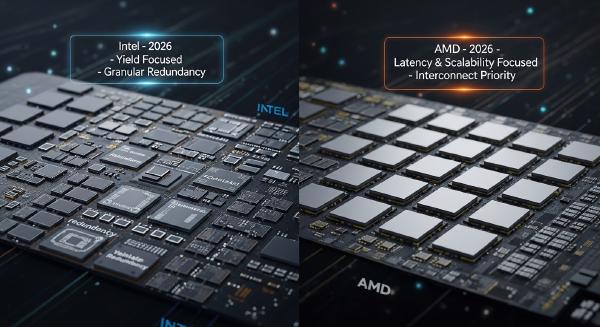
One of AMD’s most important breakthroughs was chiplet packaging.
Instead of building one large monolithic die, AMD split processors into smaller functional dies:
- Better manufacturing yields
- Lower production cost
- Greater scalability
- Faster product iteration
This enabled high-core-count processors at competitive prices, allowing AMD to deliver 64-core and later 96-core CPUs long before Intel could respond effectively.
🖥️ EPYC and the Data Center Breakthrough #
AMD’s most significant strategic victory came in the server market.
Re-entering the Data Center #
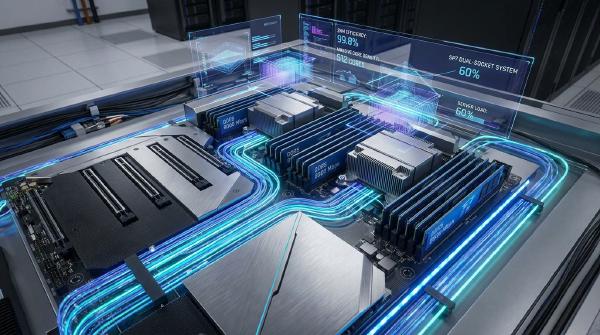
In 2017, AMD had virtually no presence in enterprise servers. The EPYC platform changed that by offering:
- Higher core density
- More PCIe lanes per socket
- Superior performance per watt
- Competitive acquisition cost
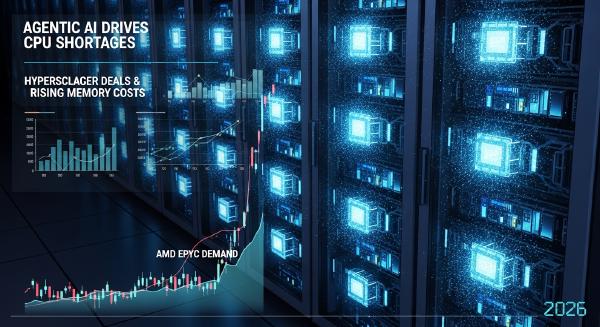
This made EPYC highly attractive to hyperscalers and enterprise buyers.
TCO Advantage #
The most decisive factor was Total Cost of Ownership (TCO).
EPYC systems reduced infrastructure costs by:
- Consolidating more workloads per server
- Lowering power consumption
- Reducing rack footprint
- Improving I/O scalability
These advantages translated directly into lower operational costs at scale.
The Turin Generation #
With the EPYC Turin series, AMD extended this lead by offering:
- Up to 128 full-performance cores
- Up to 192 dense cores for cloud workloads
- Improved efficiency with Zen 5 architecture
- Greater memory and PCIe bandwidth density
This positioned AMD as the preferred option for cloud-native and AI infrastructure workloads.
📈 Market Share Transformation #
AMD’s strategic gains are visible in market share growth across major segments.
| Segment | 2014 | 2024 | 2026 |
|---|---|---|---|
| Desktop | ~20% | ~29% | ~32% |
| Server | <1% | ~24% | ~30%+ |
| Mobile | ~10% | ~22% | ~25% |
This shift demonstrates that AMD’s momentum is no longer cyclical—it reflects structural competitiveness.
🔗 Strategic Expansion Through Xilinx #
The acquisition of Xilinx expanded AMD beyond CPUs.
Why Xilinx Mattered #
By acquiring Xilinx, AMD gained:
- FPGA technology
- Adaptive compute platforms
- Embedded AI acceleration
- New industrial and edge markets
This broadened AMD’s addressable market and reduced reliance on the traditional CPU business.
AI and Embedded Integration #
Xilinx technology enabled AMD to accelerate deployment of:
- Ryzen AI NPUs for client systems
- Adaptive edge processors
- Automotive compute platforms
- Telecommunications acceleration
This positioned AMD more effectively for the AI-driven hardware cycle.
🚧 Remaining Challenges #
Despite strong gains, AMD still faces critical strategic challenges.
GPU Ecosystem Gap #
In AI acceleration, AMD competes against an entrenched ecosystem.
Although AMD’s Instinct accelerators are improving, NVIDIA retains advantages in:
- CUDA ecosystem maturity
- Framework optimization
- Developer adoption
- Software compatibility
This software moat remains AMD’s largest barrier in AI infrastructure.
OEM and Enterprise Preference #
Intel maintains strong relationships with OEMs, especially in premium enterprise systems.
Advantages include:
- Preferred enterprise procurement channels
- Brand familiarity in business markets
- Mature laptop platform certification programs
- Deep integration with OEM product lines
This creates resistance even where AMD offers superior hardware.
🎯 Strategic Lessons from AMD’s Rise #
AMD’s success illustrates several important strategic principles:
Architectural Focus Wins #
Prioritizing efficiency, IPC, and scalability produced sustainable competitive gains.
Packaging Innovation Matters #
Chiplet design proved to be both an engineering and business advantage.
Ecosystem Expansion Creates Resilience #
The Xilinx acquisition diversified AMD into:
- AI
- Embedded systems
- Adaptive computing
Operational Discipline Beats Scale Alone #
Intel’s manufacturing scale was not enough to offset AMD’s focused execution.
✅ Conclusion #
AMD’s transformation was not driven by pricing strategy alone—it was the result of architectural reinvention and strategic precision.
Through:
- Zen architecture
- Chiplet-based scaling
- EPYC server leadership
- Xilinx integration
AMD has evolved from a secondary competitor into one of the defining forces in modern computing.
By 2026, the question is no longer whether AMD can compete with Intel—the question is how Intel will respond to AMD’s leadership in the markets that matter most.