Intel Stock Surge 2026: What’s Driving the Historic Rally?
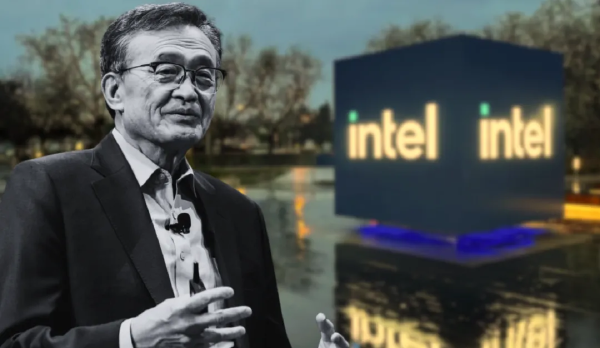
Intel’s stock performance in April 2026 has been nothing short of historic. Following a nine-day winning streak, the company added over $120 billion in market capitalization, marking its most explosive rally since going public in 1971.
This surge reflects a convergence of strategic wins that have shifted investor sentiment. After years of skepticism, Wall Street is beginning to believe that Intel’s long-term turnaround is not only real—but accelerating.
🚀 The Ireland Buyback: A Signal of Financial Strength #
On April 1, 2026, Intel announced a $14.2 billion deal to repurchase the 49% stake in its Fab 34 facility in Leixlip, Ireland from Apollo Global Management.
In 2024, Intel sold this stake for $11.2 billion to raise cash during a period of financial pressure. Buying it back at a higher valuation now sends a clear message:
- Balance sheet recovery: Intel is no longer capital-constrained
- Confidence in margins: The company expects strong future profitability
- Strategic control: Fab 34 is central to advanced node production
This facility plays a critical role in manufacturing chips based on Intel 3 and Intel 4 processes, both essential for AI server workloads.
Market interpretation: Intel is transitioning from defensive survival to aggressive expansion.
🤖 Enter “Terafab”: A High-Stakes AI Bet #
Intel’s rally accelerated further after confirming participation in Elon Musk’s “Terafab” initiative.
What is Terafab? #
A joint venture involving:
- Tesla
- SpaceX
- xAI
- Intel
Ambition: #
Build a vertically integrated AI manufacturing ecosystem capable of delivering 1 terawatt of compute annually.
Intel’s Role: #
- Lead semiconductor manufacturing
- Deploy its cutting-edge 18A process node (2nm-class)
- Produce high-performance chips for:
- Tesla’s Optimus robots
- SpaceX satellite systems
- xAI data centers
This positions Intel not just as a supplier—but as a core infrastructure enabler of next-generation AI systems.
☁️ Strategic Alliance with Google Cloud #
On April 9, 2026, Intel formalized a multi-generation partnership with Google to co-develop AI infrastructure.
Key Components: #
1. Xeon Expansion
- Google commits to future Intel Xeon processors
- Strengthens Intel’s position in hyperscale data centers
2. Custom IPUs (Infrastructure Processing Units)
- Joint development of specialized chips
- Offload networking, security, and I/O tasks from CPUs
- Improve efficiency and scalability of AI workloads
This collaboration reinforces Intel’s relevance in cloud computing—an area where it has faced increasing competition.
📊 Performance vs. AMD and NVIDIA #
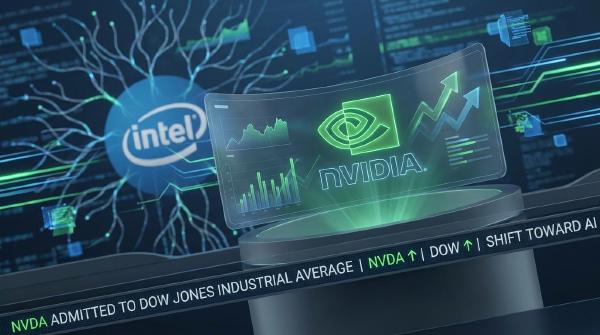
Despite years of trailing its competitors in the AI narrative, Intel is now outperforming both in short-term stock momentum:
| Company | 9-Day Surge (April 2026) | Year-to-Date Gain |
|---|---|---|
| Intel (INTC) | +58% | +76% |
| AMD | +2% | +15% |
| NVIDIA | +0.8% | +1.5% |
What’s driving this divergence? #
- Valuation gap: Intel remains relatively undervalued
- Turnaround leverage: Improvements have outsized impact
- Investor rotation: Capital shifting toward “laggards with upside”
📈 Analyst View: The Earnings Upside Story #
According to analysts, Intel’s biggest advantage may not be its technology—but its low expectations baseline.
After several challenging years, Intel is now positioned to:
- Exceed earnings forecasts (“beat consensus”)
- Scale revenue as 18A nodes ramp up
- Capture AI-driven demand across cloud and edge
In contrast, competitors like NVIDIA face pressure from already elevated valuations.
🔮 Financial Outlook for 2026 #
Intel projects Q1 2026 revenue between:
$11.7 billion and $12.7 billion
While the stock still sits roughly 6% below its 2020 peak, current momentum suggests a major sentiment shift:
- The “Foundry + AI” strategy is gaining credibility
- Execution—not vision—is now the key investor focus
- CEO Pat Gelsinger’s long-term plan is beginning to materialize
🔮 Final Take: What Matters More? #
Intel’s rally is built on two distinct pillars:
1. Terafab (Growth Catalyst) #
- High upside
- Strong AI alignment
- Dependent on ecosystem execution
2. Ireland Buyback (Fundamental Signal) #
- Demonstrates financial recovery
- Reinforces operational confidence
- Lower risk, long-term impact
Bottom line:
The Terafab project may define Intel’s future growth ceiling, but the Ireland buyback is what convinces investors that Intel has a stable foundation to reach it.