RTX Spark Challenges x86: Nvidia’s Bold Windows Compatibility Promise
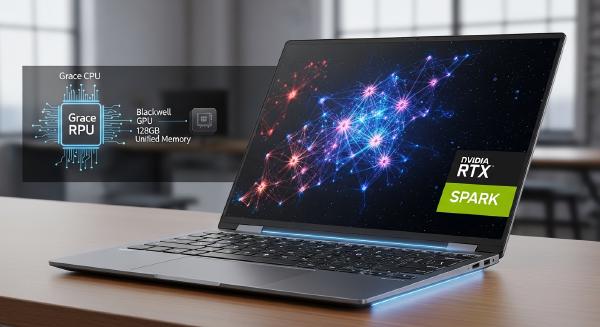
At COMPUTEX 2026, NVIDIA made one of its most ambitious PC-related announcements in years. Beyond introducing the RTX Spark platform and its new N1X processors, CEO Jensen Huang made a striking claim: RTX Spark systems will run virtually every Windows application and game.
The statement immediately reignited a long-running debate surrounding Windows on Arm. While Microsoft’s Arm ecosystem has made tremendous progress in recent years, application compatibility remains one of the biggest concerns among enterprise buyers, creators, gamers, and developers.
NVIDIA’s confidence suggests the company believes those concerns are finally becoming irrelevant. Competitors, however, appear less convinced.
🚀 Nvidia’s Biggest Challenge Isn’t Performance—It’s Compatibility #
For years, Arm-based Windows devices have faced a common question:
“Will my software actually work?”
Performance has steadily improved, battery life has become exceptional, and AI acceleration capabilities have matured rapidly. Yet software compatibility has remained the primary obstacle preventing broader adoption.
Today’s Windows on Arm ecosystem relies heavily on Microsoft’s Prism translation layer, which allows x86 applications to run on Arm processors. For most mainstream software, the experience is already surprisingly good. However, edge cases still exist:
- Legacy enterprise applications
- Specialized engineering software
- Older games
- Proprietary business tools
- Certain anti-cheat systems
These limitations have caused many buyers to remain cautious despite significant advances in Arm hardware.
During his keynote, Huang attempted to directly address this concern.
According to NVIDIA, RTX Spark has been extensively optimized to support the entire Windows software ecosystem. Huang went as far as suggesting that every Windows application ever created can run on the platform.
That is an extraordinary promise—and one that will ultimately require real-world validation once products ship.
💻 Windows on Arm Has Come a Long Way #
To understand the significance of NVIDIA’s announcement, it helps to appreciate how much Windows on Arm has evolved.
Early generations of Arm-based Windows devices suffered from:
- Limited native applications
- Poor x86 emulation performance
- Driver compatibility issues
- Missing peripheral support
The situation today is dramatically different.
Microsoft’s investments in Prism translation, combined with growing native Arm support from major software vendors, have transformed the platform into a viable alternative for many users.
Large software developers have already released native Arm versions of:
- Microsoft Office
- Adobe Creative Cloud applications
- Chrome
- Edge
- Visual Studio
- Numerous productivity and development tools
As a result, the proportion of workloads requiring emulation continues to decline.
NVIDIA appears to be betting that the remaining compatibility gaps can be closed—or at least become small enough that users stop noticing them.
🎮 Gaming Compatibility Becomes a Critical Test #
Perhaps the most surprising aspect of NVIDIA’s announcement concerns gaming.
Historically, gaming has represented one of the toughest challenges for Windows on Arm systems.
Beyond raw graphics performance, modern PC games often depend on:
- Anti-cheat software
- Low-level drivers
- Middleware libraries
- Legacy x86 components
NVIDIA claims it has worked directly with game developers to ensure compatibility with major competitive titles.
Examples highlighted include:
- PUBG
- Valorant
- Fortnite
If these claims hold true, RTX Spark could become the first Arm-based Windows platform capable of delivering a genuinely mainstream gaming experience.
That would represent a major milestone for the broader Arm PC ecosystem.
💰 Premium Pricing Signals a Different Audience #
Despite the excitement surrounding gaming capabilities, RTX Spark is not positioned as a traditional gaming platform.
Leaked pricing for Lenovo’s first RTX Spark-powered systems suggests an entirely different target audience.
The upcoming Yoga Pro 7 configurations are expected to occupy the ultra-premium segment:
| Model | Key Configuration | Approximate Price |
|---|---|---|
| N1X 650 | 18-core CPU, 5120 CUDA cores, 64GB RAM | €3,199 |
| N1X 675 | 20-core CPU, 6144 CUDA cores, 64GB RAM | €4,049 |
At these price levels, RTX Spark systems are clearly aimed at:
- AI developers
- Professional creators
- Researchers
- Engineers
- Power users
Gaming may be a useful demonstration of capability, but it is not the primary value proposition.
The real selling point is local AI computing.
🟠 AMD’s Response: “We Don’t Need Translation” #
Among NVIDIA’s competitors, AMD delivered perhaps the most direct counterargument.
Rather than attacking Spark’s AI capabilities, AMD focused on architecture.
The company emphasized that its Ryzen AI Max+ platform provides similar AI-focused capabilities while remaining fully native to x86.
AMD’s argument is straightforward:
- No translation layer
- No emulation overhead
- No compatibility uncertainty
- No workflow interruptions
The implication is clear.
Even if Prism continues to improve, native execution remains inherently preferable whenever possible.
This messaging targets one of the largest concerns among enterprise buyers, who often prioritize predictability and compatibility over theoretical advantages.
Ultimately, AMD is betting that many customers will continue viewing x86 as the safest choice.
🔵 Intel Takes the Diplomatic Route #
Intel’s public response was notably more restrained.
Company executives welcomed NVIDIA’s entrance into the PC processor market, framing it as validation of the importance of the PC industry as a whole.
The message largely followed a familiar pattern:
- Competition is healthy.
- Innovation benefits everyone.
- Intel remains confident in its roadmap.
The measured tone is not surprising.
Intel and NVIDIA occupy a complex relationship that includes both competition and cooperation.
Historically, many Intel systems have relied on NVIDIA GPUs, and the companies continue to collaborate in multiple areas of the AI ecosystem.
At the same time, NVIDIA’s move into PC CPUs places it in direct competition with Intel’s core business.
The result is a classic example of modern “co-opetition”—simultaneous collaboration and rivalry.
🟣 Qualcomm’s Mixed Reaction #
Qualcomm’s response was arguably the most fascinating.
On one hand, Qualcomm openly welcomed NVIDIA into the Windows on Arm ecosystem.
After years of investing in Arm-based Windows devices, Qualcomm understands that every major participant helps strengthen the platform.
A larger ecosystem means:
- More developer attention
- More software optimization
- More hardware support
- Faster market growth
From that perspective, NVIDIA’s arrival benefits everyone involved.
However, Qualcomm also appeared somewhat puzzled by NVIDIA’s confidence regarding compatibility.
The company has spent years working alongside Microsoft to improve Arm application support through Prism and ecosystem development.
As a result, Qualcomm executives naturally want to understand what additional techniques NVIDIA may be employing to justify such sweeping compatibility claims.
The answer remains unclear.
Until shipping hardware reaches reviewers and users, much of NVIDIA’s implementation remains a black box.
🤖 RTX Spark Is Really About AI PCs #
The most important takeaway is that RTX Spark should not be viewed solely as another laptop processor.
NVIDIA’s larger objective is much broader.
The company envisions a future where local AI agents become a standard part of personal computing.
In that world, users need:
- Massive unified memory pools
- Powerful NPUs
- High-performance GPUs
- Efficient CPUs
- Strong security isolation
RTX Spark was designed specifically around those requirements.
Gaming support and application compatibility are necessary components, but they are not the ultimate goal.
The real objective is to create a platform capable of hosting next-generation AI assistants locally.
🔮 The Real Test Arrives This Fall #
NVIDIA’s promise is undeniably bold.
If RTX Spark delivers:
- Near-universal Windows compatibility
- Strong gaming support
- Excellent AI performance
- Competitive battery life
- Reliable developer workflows
then it could become one of the most important milestones in the evolution of Windows on Arm.
If compatibility issues remain visible, AMD and Intel’s arguments about native x86 execution will continue to resonate with many buyers.
For now, the industry has entered a fascinating new phase. Qualcomm helped establish the modern Windows on Arm foundation. NVIDIA is now attempting to push that ecosystem into the high-performance AI era. AMD and Intel are defending the strengths of x86 while rapidly expanding their own AI capabilities.
The result is the most competitive PC architecture battle the industry has seen in decades—and consumers stand to benefit from every company involved trying to prove its vision of the future.