NVIDIA Rubin CPX GPU: 128GB VRAM for AI Inference
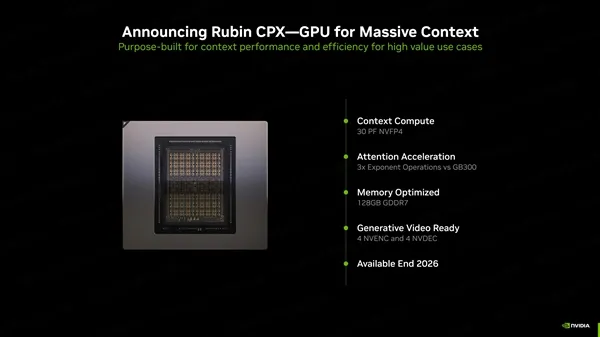
NVIDIA has unveiled the Rubin CPX GPU, a next-generation AI accelerator featuring a massive 128GB of GDDR7 VRAM. Built on the upcoming Rubin architecture, this GPU is purpose-built for long-context inference and agent-based AI workloads, marking a shift away from traditional GPU design priorities.
Although currently a paper launch, the Rubin CPX is expected to debut commercially in late 2026.
🚀 Key Specs of the Rubin CPX GPU #
The Rubin CPX introduces several notable advancements tailored for AI inference:
- 128GB GDDR7 VRAM for ultra-large model support
- NVFP4 precision delivering up to 30 PFlops of compute
- Support for millions of tokens in long-context inference
- 3× faster attention performance vs. GB300 NVL72
- 4 NVENC + 4 NVDEC engines for media acceleration
Unlike previous generations, the Rubin CPX is optimized specifically for AI inference at scale, rather than general-purpose compute or gaming.
🔮 Rubin Architecture and Vera CPU Platform #
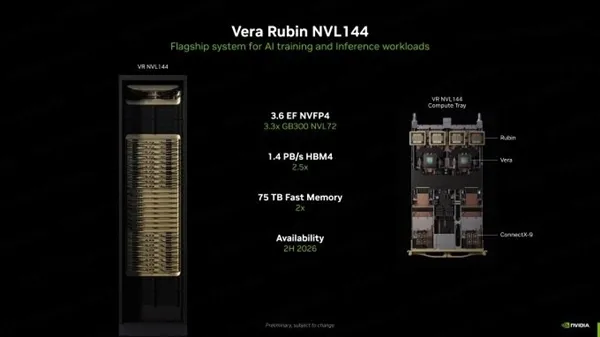
NVIDIA confirmed that both the Rubin GPU and its companion Vera CPU have successfully taped out at TSMC, signaling strong progress toward production readiness.
The Rubin platform includes:
- Rubin GPU (successor to Blackwell)
- Vera CPU (next-gen data center processor)
- CX9 Super NIC for ultra-fast networking
- NVLink144 / Spectrum-X switches
- Silicon photonics integration
Key architectural highlights:
- Built on TSMC 3nm EUV process
- Uses HBM4 (8-stack) memory in standard variants
- Future Rubin Ultra (12-stack HBM4) planned for 2027
- 6th-gen NVLink delivering 3.6 TB/s bandwidth
- Up to 1.6 Tbps networking throughput
Together, Rubin and Vera form a tightly integrated AI superchip ecosystem designed for hyperscale deployments.
🏢 Next-Gen AI Servers: Vera Rubin NVL144 #
NVIDIA also introduced a new class of AI infrastructure designed to scale Rubin GPUs across entire data center racks.
Vera Rubin NVL144 #
- 36 Vera CPUs + 144 Rubin GPUs
- 1.4 PB/s HBM4 bandwidth
- Up to 75TB storage capacity
- Delivers 3.5 EFlops (NVFP4)
- ~3.3× faster than GB300 NVL72
Vera Rubin NVL144 CPX #
- Adds 72 Rubin CPX GPUs
- Total: 144 GPUs + 36 CPUs per rack
- 1.7 PB/s memory bandwidth
- 100TB high-speed storage
- Supports InfiniBand (Quantum-X800) or Spectrum-X Ethernet
- Peak performance: 8 EFlops (~7.5× boost)
NVIDIA estimates that deployments of these systems could yield massive ROI, potentially turning $100M investments into $5B returns in AI-driven enterprises.
⚔️ AMD’s Response: The MI450 GPU #
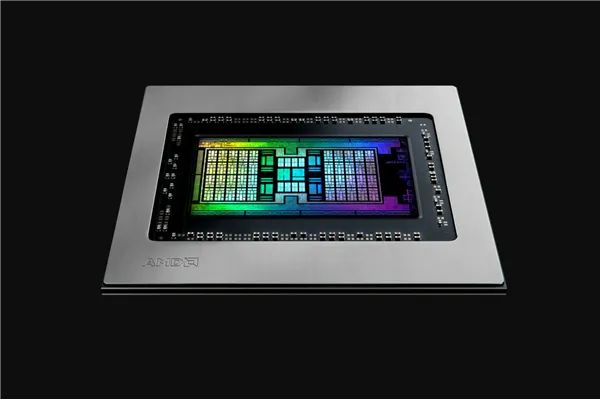
NVIDIA’s dominance is being challenged by AMD’s upcoming MI450 GPU, which aims to compete directly with both Blackwell and Rubin architectures.
Key highlights of the MI450:
- Designed for training, inference, and distributed AI workloads
- Built on a unified UDNA architecture
- Positioned as AMD’s “EPYC moment” for AI
- Promises industry-leading performance claims
If AMD delivers on these ambitions, the MI450 could significantly reshape the competitive landscape in AI accelerators.
🧩 Final Thoughts #
The next wave of AI hardware is clearly focused on inference scalability and efficiency:
- Rubin CPX introduces massive VRAM and long-context capabilities
- Rubin + Vera redefine tightly integrated AI platforms
- NVL144 servers push performance into multi-EFlop territory
- AMD MI450 sets the stage for serious competition
With Rubin launching in 2026, Rubin Ultra in 2027, and further architectures beyond, the AI hardware race is entering a new era—one defined by scale, memory, and inference efficiency.