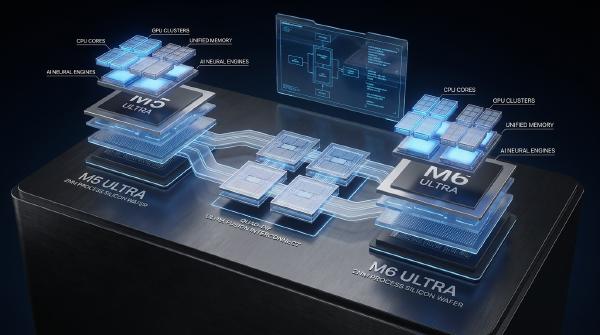
Why OpenAI and Anthropic Are Buying Thousands of Macs for AI
Reports from The Information indicate that OpenAI has acquired tens of thousands of Mac mini and Mac Studio systems, while Anthropic has reportedly leased large fleets of Mac minis through AWS.
The significance is not that Apple Silicon is replacing NVIDIA GPUs for large-scale foundation-model training. It is not.
Instead, these systems are being used for a different class of AI workload: reinforcement learning, computer-use agents, software interaction, and large-scale desktop simulation.
This distinction matters because training an agent that operates a computer introduces requirements that differ substantially from conventional LLM pre-training. The system needs access to real operating-system environments, graphical interfaces, applications, filesystems, browsers, terminals, and development tools.
For these workloads, a fleet of relatively compact desktop computers can function as a massive collection of parallel agent environments rather than as a conventional GPU training cluster.
🔮 Why Agent RL Needs Different Compute Infrastructure #
Traditional foundation-model pre-training is dominated by dense matrix computation.
A simplified training architecture looks like:
                    FOUNDATION MODEL TRAINING

        ┌─────────────────────────────────────┐
        │         NVIDIA GPU Cluster          │
        │                                     │
        │ Tensor Cores + HBM + NVLink/NVSwitch│
        └────────────────┬────────────────────┘
                         │
                         ▼
                 Model Parameters
                         │
                         ▼
                Distributed Training
Computer-use reinforcement learning introduces a different execution loop:
                 AGENT REINFORCEMENT LEARNING

┌──────────────────────┐       ┌────────────────────────┐
│   NVIDIA GPU Cluster │       │    Mac mini / Studio   │
│ Foundation Model     │       │ Agent Execution        │
│ Inference / Training │       │ Environment            │
└──────────┬───────────┘       └────────────┬───────────┘
           │                                │
           │ Actions / Tokens               │ Local OS
           ▼                                ▼
┌────────────────────────────────────────────────────────┐
│     Parallel Desktop / Software Environments           │
│                                                        │
│  macOS / Linux • Browser • Terminal • IDE • UI • Apps  │
└──────────────────────────┬─────────────────────────────┘
                           │
                           ▼
                    Agent Feedback
                           │
                           └──────────────► RL Loop
The model may still run on NVIDIA infrastructure, while the agent’s actual interaction environment runs on CPU/GPU-equipped desktop nodes.
This creates a heterogeneous architecture in which model computation and environment execution are separate resources.
Computer-Use Agents Are Environment-Heavy #
A computer-use agent must do more than generate tokens.
A typical interaction can involve:
- Receiving an objective.
- Inspecting the current desktop state.
- Identifying UI elements.
- Clicking or typing.
- Launching an application.
- Executing code.
- Reading the resulting state.
- Recovering from errors.
- Repeating the interaction.
- Returning a reward or evaluation signal.
A reinforcement-learning system may need to run thousands or millions of these trajectories.
The bottleneck therefore shifts from pure model FLOPS toward environment throughput.
A fast model is of limited value if the operating-system sandbox takes too long to reset, launch applications, execute commands, or produce observations.
🧩 Why Apple Silicon Is Attractive for Agent Sandboxes #
Apple’s M-series systems offer several characteristics that make them interesting for this specific workload.
Unified Memory Architecture #
Apple Silicon uses a unified memory architecture in which the CPU and GPU share a common memory pool.
This differs from the conventional discrete-GPU model:
Discrete GPU Architecture

CPU
 │
 │ PCIe
 ▼
GPU
 │
 ▼
VRAM
Compared with:
Apple Silicon

        ┌──────────────┐
        │ Unified RAM  │
        └──────┬───────┘
               │
      ┌────────┼────────┐
      ▼        ▼        ▼
     CPU      GPU    Neural Engine
For workloads that repeatedly move data between CPU-side application processes and GPU-accelerated processing, unified memory can simplify data movement and reduce explicit CPU/VRAM transfers.
This can be useful when an agent simultaneously interacts with operating-system processes, graphical interfaces, screenshots, and local inference workloads.
Headless Desktop Economics #
A Mac mini or Mac Studio can operate as a headless compute node, without the display, keyboard, battery, and other components associated with mobile systems.
This allows organizations to deploy dense racks of desktop systems while using each machine as an independent execution environment.
The result is closer to a conventional server fleet than a collection of personal computers:
┌──────────────────┐
│ Mac Node #001  │
├──────────────────┤
│ Mac Node #002  │
├──────────────────┤
│ Mac Node #003  │
├──────────────────┤
│     ...          │
├──────────────────┤
│ Mac Node #N      │
└──────────────────┘
Each node can host one or more agent environments depending on the workload and isolation requirements.
Sustained Thermal Operation #
Desktop Apple Silicon systems also have an advantage over thin-and-light laptops for continuous workloads.
Active cooling provides a more appropriate thermal envelope for workloads that repeatedly execute inference, application processes, compilation, browser automation, and other tasks over long periods.
The relevant metric is therefore not short-duration peak performance but sustained throughput per node.
Native Desktop Environment #
For computer-use agents, the operating system itself is part of the training environment.
The agent needs to interact with real software rather than an abstract API.
A desktop node can provide:
Operating System
      │
      ├── Browser
      ├── Terminal
      ├── IDE
      ├── Office Applications
      ├── File System
      ├── GUI
      └── Development Tools
This makes desktop hardware particularly useful for generating realistic agent trajectories.
🔄 The Economics of Parallel Agent Execution #
The economics become clearer when the workload is viewed as a large-scale simulation problem.
Suppose an RL system needs to evaluate thousands of independent trajectories.
A conventional GPU cluster can provide enormous neural-network throughput, but it is not necessarily the ideal environment for executing thousands of complete desktop sessions.
Instead, the infrastructure can be divided into two layers:
┌─────────────────────────────────────────────┐
│              AI Model Layer                 │
│                                             │
│ NVIDIA GPUs                                 │
│ Inference / Training / Policy Evaluation    │
└──────────────────────┬──────────────────────┘
                       │
                  Actions / Tokens
                       │
                       ▼
┌─────────────────────────────────────────────┐
│            Environment Layer                │
│                                             │
│ Mac mini / Mac Studio Fleet                 │
│ OS + Browser + Apps + Code + UI             │
└──────────────────────┬──────────────────────┘
                       │
                  Observations
                       │
                       └──────────► Model
This architecture makes Apple Silicon complementary to NVIDIA rather than directly substitutive.
The GPU cluster provides model intelligence.
The Mac fleet provides the world in which that intelligence acts.
📈 Commercial Impact and Supply-Chain Effects #
The reported enterprise demand has also had broader implications for Apple’s hardware business.
| Metric / Event | Reported Detail / Impact |
|---|---|
| Mac Revenue | Quarterly Mac revenue reportedly increased 29% year over year to $10.3 billion. |
| Enterprise Demand | High-spec Mac mini and Mac Studio configurations reportedly experienced extended availability constraints. |
| Apple Enterprise Event | Apple hosted an enterprise-focused event at Apple Park involving executives from Apple, Anthropic, Ford, and Disney. |
| Mac Clustering | Projects such as EXO Labs and Apple’s multi-node interconnect efforts target distributed AI execution across multiple Apple Silicon systems. |
| AI Infrastructure Startups | Former OpenAI infrastructure engineer Peter Voell reportedly founded Mount Thor, a stealth infrastructure company focused on Apple-based AI execution environments. |
The important economic signal is that Apple hardware is increasingly being evaluated not only as a consumer device but also as a compute infrastructure component.
🏗️ Mac Clusters and Local AI #
One Mac has limited usefulness for the largest foundation models, but multiple systems can potentially be combined into a distributed inference or experimentation environment.
Projects such as EXO Labs have explored distributed execution across consumer and workstation-class hardware.
The basic concept is:
                 Distributed Apple Silicon Cluster

        ┌────────────┐
        │ Mac Studio │
        │  Node #1   │
        └─────┬──────┘
              │
        High-Speed Network
              │
   ┌──────────┼──────────┐
   ▼          ▼          ▼
┌──────┐   ┌──────┐   ┌──────┐
│Node 2│   │Node 3│   │Node N│
└──────┘   └──────┘   └──────┘
The primary attraction is the ability to aggregate large amounts of unified memory across nodes.
However, distributed inference does not eliminate communication overhead. Model partitioning requires data movement between nodes, and network bandwidth and latency become critical constraints.
Therefore, the claim that Mac clusters can run very large models should not be interpreted as equivalent to the performance or efficiency of a purpose-built NVIDIA multi-GPU system.
🥊 NVIDIA’s Response and the Local AI Competition #
Apple’s increasing visibility in local AI compute has also created competitive pressure around the desktop AI workstation market.
NVIDIA has responded with products such as DGX Spark, a compact AI computing platform designed to bring substantial AI compute capabilities to desktop environments.
The competitive landscape can be summarized as:
| Dimension | Apple Silicon | NVIDIA GPU Platform |
|---|---|---|
| Single-System Memory Architecture | Unified memory | Discrete CPU/GPU memory |
| AI Software Ecosystem | Apple-specific frameworks and APIs | CUDA and mature AI software stack |
| AI Acceleration | Neural Engine + GPU | Tensor Cores |
| Large-Scale Training | Limited compared with GPU clusters | Industry-leading ecosystem |
| Desktop AI Execution | Strong fit for compact systems | Strong and increasingly targeted |
| Multi-Node Scaling | Possible, but networking is critical | Mature high-speed interconnect ecosystem |
| OS-Level Agent Environments | Strong native desktop environment | Broad Linux/Windows options |
NVIDIA retains a substantial advantage for large-scale model training because of CUDA, Tensor Core acceleration, high-bandwidth memory, and high-speed cluster interconnects.
Apple’s opportunity is different: high-density, relatively low-power execution of local AI workloads and agent environments.
⚡ Apple Silicon’s Emerging AI Niche #
The most interesting aspect of the trend is that it does not require Apple Silicon to outperform NVIDIA GPUs at conventional LLM training.
Instead, Apple can occupy a complementary part of the AI infrastructure stack.
A modern agent-training platform could therefore look like:
                    AI INFRASTRUCTURE STACK

┌─────────────────────────────────────────────┐
│            Foundation Model Layer           │
│                                             │
│ NVIDIA GPU Cluster                          │
│ Training / Fine-Tuning / High-Throughput RL │
└──────────────────────┬──────────────────────┘
                       │
                       │ Policy / Actions
                       ▼
┌─────────────────────────────────────────────┐
│             Agent Environment Layer         │
│                                             │
│ Mac mini / Mac Studio Fleet                 │
│ Desktop OS / Browser / Apps / Code          │
└──────────────────────┬──────────────────────┘
                       │
                       │ Observations / Rewards
                       ▼
┌─────────────────────────────────────────────┐
│             Evaluation / RL Loop            │
│                                             │
│ Trajectory Collection / Reward Computation  │
└─────────────────────────────────────────────┘
This architecture treats compute as a heterogeneous resource.
The fastest processor is not necessarily the best processor for every component of an AI system.
🔬 Why This Matters for Agentic AI #
The rise of computer-use agents changes the infrastructure requirements of AI development.
Traditional LLM infrastructure primarily optimizes for:
Tokens per second
↓
Training throughput
↓
GPU utilization
↓
Cluster efficiency
Agentic infrastructure adds another set of metrics:
Environment throughput
↓
Trajectory generation rate
↓
Sandbox startup latency
↓
State-reset efficiency
↓
Agent interaction cost
↓
Reward collection throughput
This creates an infrastructure category in which desktop computers can become valuable because they represent complete, reproducible software environments rather than simply sources of FLOPS.
The optimal system may therefore combine high-performance accelerators with large numbers of comparatively inexpensive environment nodes.
📌 Conclusion #
The reported Mac purchases by OpenAI and Anthropic do not signal a wholesale replacement of NVIDIA GPUs.
Instead, they highlight a more nuanced evolution in AI infrastructure.
NVIDIA GPUs remain critical for foundation-model training, high-throughput inference, and large-scale tensor computation. Apple Silicon, meanwhile, can provide an attractive platform for running the operating systems, applications, and software environments in which computer-use agents learn and operate.
This division of labor is particularly relevant for reinforcement learning, where the cost of generating high-quality trajectories can become as important as the cost of training the model itself.
Apple’s unified memory architecture, compact desktop form factors, sustained cooling, and native operating-system environment make Mac mini and Mac Studio systems interesting candidates for this role.
The larger trend is even more significant: as AI evolves from models that merely generate text into agents that operate computers and complete real-world workflows, AI infrastructure will increasingly need both accelerator clusters for intelligence and large-scale environment fleets for interaction.
Apple Silicon’s emerging role is therefore not necessarily to replace NVIDIA at the top of the AI compute hierarchy, but to become an important component of the environment layer surrounding agentic AI systems.