
📖 Background #
Intel’s upcoming Panther Lake SoC, expected in the second half of 2025, represents a major step in its mobile processor roadmap.
Built on the 18A process node, Panther Lake targets:
- High-performance laptops
- Thin-and-light ultrabooks
- Emerging AI PC platforms
Beyond being a product launch, Panther Lake is also a critical milestone for Intel’s process technology and foundry ambitions.
⚙️ CPU Architecture: Cougar Cove and Darkmont #
Panther Lake introduces a hybrid architecture combining:
- Cougar Cove (Performance cores)
- Darkmont (Efficiency cores)
- Low-power efficiency (LPE) cores
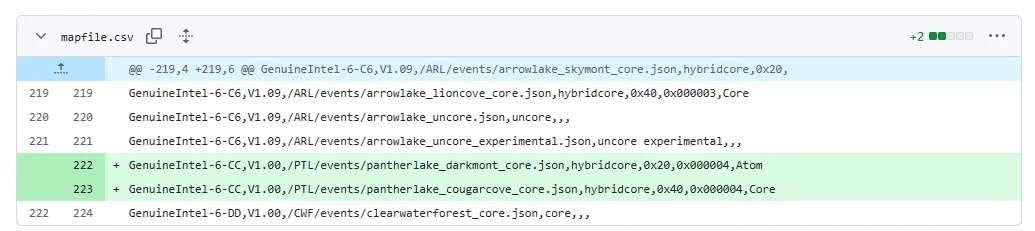
The shift to Darkmont (instead of earlier Skymont plans) suggests a stronger emphasis on:
- Power efficiency
- Multi-threaded workload balance
- Scalable performance across device classes
This design enables Panther Lake to serve a wide spectrum—from ultra-portables to performance laptops.
💻 Integrated Graphics: Xe3 (Celestial) #
Panther Lake integrates Xe3 (Celestial) graphics, with configurations of up to 12 GPU cores.
Expected improvements include:
- ~20% higher performance vs previous-generation Xe2
- Better efficiency for gaming and content creation
- Improved media and rendering capabilities
This positions Xe3 as a meaningful upgrade for:
- Casual gaming
- Video editing
- GPU-accelerated workflows
📊 Product Segmentation: PTL-H and PTL-U #
Panther Lake will be split into two primary product families:
PTL-H (High Performance) #
- TDP: 25W–45W
- Example configuration:
- 4P + 8E + 4 LPE
- Up to 12 Xe3 cores
- Peak PL2 up to ~80W
These are designed for:
- Gaming laptops
- Mobile workstations
PTL-U (Ultra-Low Power) #
- TDP: ~15W
- Configuration:
- 4P + 4 LPE
- 4 Xe3 cores
- Peak PL2 ~54W
Target devices include:
- Ultrabooks
- 2-in-1 systems
Interestingly, higher GPU core configurations may run at lower clocks to optimize efficiency, trading peak performance for better thermals.
🤖 AI Performance: Up to 180 TOPS #
AI capability is one of Panther Lake’s most significant highlights.
Platform Compute Breakdown (INT8) #
- NPU: ~50 TOPS
- GPU: ~120 TOPS
- CPU: ~10 TOPS
- Total: ~180 TOPS
This is a substantial increase over previous generations (~120 TOPS).
Real-World Use Cases #
- Real-time image and video processing
- Speech recognition
- Local AI inference
- Generative AI workloads
However, a key limitation remains:
- Software ecosystem maturity
Compared to competing platforms, Intel still needs stronger developer adoption to fully utilize this hardware capability.
🔌 Memory, I/O, and Packaging #
Panther Lake brings modern platform capabilities:
Memory Support #
- LPDDR5X up to 8533 MT/s
- DDR5 up to 7200 MT/s
- Optional LPCAMM2 modular memory
Connectivity #
- Up to 4× Thunderbolt 4 ports
- Optional Thunderbolt 5 (up to 80Gbps)
Packaging #
- Foveros (3D stacking)
- EMIB (advanced interconnect)
These technologies improve:
- Integration density
- Power efficiency
- Interconnect bandwidth
But they also increase cost and design complexity.
🧪 18A Process: Promise and Risk #
The 18A node is central to Panther Lake’s positioning.
Key innovations:
- RibbonFET (GAA transistors)
- PowerVia (backside power delivery)
Expected benefits:
- Higher transistor density
- Improved power efficiency
- Competitive positioning vs leading-edge nodes
However, risks remain:
- Yield maturity is still uncertain
- Past delays (10nm, 7nm) highlight execution challenges
- Foundry competitiveness depends on stable production
Mass production success will be critical for both product supply and Intel’s broader strategy.
🚗 Beyond PCs: Expanding Use Cases #
Panther Lake architecture extends into other domains:
Automotive (Frisco Lake) #
- Multi-4K video stream support
- In-vehicle infotainment systems
High-Performance Automotive (Grizzly Lake) #
- Up to 32 efficiency cores
- ~7 TFLOPS GPU
- Real-time processing for autonomous systems
Entry AI PCs (Wildcat Lake) #
- Lower-cost configurations (~40 TOPS)
- Designed for budget devices
These expansions highlight Intel’s push into diversified compute markets.
⚠️ Challenges and Tradeoffs #
Despite strong specifications, Panther Lake faces several challenges:
- Core count limitations vs high-core competitors
- AI ecosystem gaps limiting real-world performance gains
- 18A production risks affecting timelines and supply
- Thermal constraints, especially for 45W-class devices
- Cost pressures from advanced packaging
These factors may impact adoption across different segments.
🔮 Outlook #
Panther Lake represents a critical test for Intel across multiple fronts:
- Mobile CPU competitiveness
- AI PC positioning
- Advanced node execution
It will face strong competition in 2025 from:
- AMD’s next-generation mobile CPUs
- Apple’s custom silicon
Success will depend not just on specifications, but on execution, ecosystem support, and real-world performance.
🧾 Summary #
- Architecture: Cougar Cove + Darkmont + LPE cores
- GPU: Xe3 (Celestial), up to 12 cores
- AI Performance: Up to ~180 TOPS
- Process Node: 18A with RibbonFET and PowerVia
- Segments: PTL-H (performance) and PTL-U (ultra-low power)
- Key Risks: Yield maturity, ecosystem gaps, thermals
Panther Lake showcases Intel’s ambition to lead in AI-driven mobile computing, but its ultimate success will hinge on how effectively these innovations translate into real-world performance and market adoption.