AMD at IFA 2025: Does ARM Really Have an Advantage Over x86?
For years, ARM-based processors have challenged the traditional dominance of x86 in personal computers. Apple’s M-series chips demonstrated that high performance and strong energy efficiency could coexist in thin laptops, while Qualcomm’s Snapdragon X series brought renewed attention to Windows on ARM.
At IFA 2025, AMD pushed back against the idea that ARM inherently holds an advantage over x86. The company’s Ryzen AI processors, including the Strix Point and Strix Halo families, illustrate how modern x86 designs can combine competitive CPU performance, integrated graphics, and dedicated AI acceleration.
However, the debate is more nuanced than one architecture defeating another. Efficiency depends on the processor design, power limits, workload, manufacturing process, and software ecosystem—not simply whether a chip uses ARM or x86 instructions.
🔮 AMD’s Argument: Modern x86 Can Compete on Efficiency #
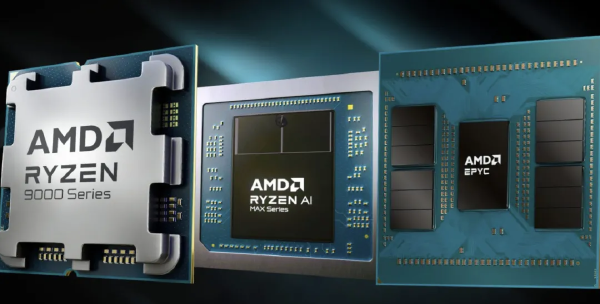
AMD’s recent mobile processors demonstrate how far x86 laptop designs have evolved. The Ryzen AI 300 family, based on Strix Point, targets mainstream and premium laptops, while Ryzen AI Max, known as Strix Halo, focuses on systems that need much stronger integrated graphics and substantial local computing capacity.
These platforms address several important areas:
- CPU performance: Zen 5 cores provide strong general-purpose computing performance for productivity, development, and multitasking.
- Integrated graphics: Radeon graphics can deliver substantial performance without requiring a separate discrete GPU.
- AI acceleration: Dedicated neural processing units handle supported AI workloads, reducing the need to run every task on the CPU.
- Flexible power configurations: Manufacturers can tune processor power limits to balance performance, heat, noise, and battery life.
These capabilities challenge the assumption that x86 processors must always consume more power than ARM-based alternatives. Nevertheless, individual products need to be compared under equivalent conditions before making conclusions about efficiency.
🚀 Strix Point and Strix Halo: Two Different Approaches #
Strix Point: Balanced Laptop Performance #
Strix Point powers Ryzen AI 300-series processors designed for premium notebooks and mobile workstations. Its combination of Zen 5 and Zen 5c CPU cores, Radeon integrated graphics, and an XDNA 2 NPU supports a broad range of workloads.
For everyday computing, this means users can handle productivity applications, development environments, media processing, and supported AI features without necessarily relying on a discrete GPU.
The main challenge is balancing sustained performance with laptop cooling and battery capacity. A processor’s maximum benchmark score does not reveal how fast it will run during a long workload or how long a notebook will last on battery.
Strix Halo: More Integrated Graphics and Memory Capacity #
The Ryzen AI Max family takes a different approach. The flagship Ryzen AI Max+ 395 features 16 Zen 5 CPU cores, 32 threads, Radeon 8060S integrated graphics with 40 compute units, and an NPU rated at up to 50 TOPS.
Selected systems support up to 128GB of unified LPDDR5X memory. This large memory pool can be particularly useful for graphics-heavy applications and local AI inference, where model weights and other data need to fit in accessible memory.
AMD has also advertised up to 126 TOPS of combined AI compute across the processor’s CPU, GPU, and NPU resources. This figure should not be confused with NPU performance alone: the dedicated NPU is rated at up to 50 TOPS.
The distinction matters because total theoretical compute does not translate directly into application speed. Actual AI performance depends on the model, numerical precision, software framework, memory bandwidth, and which compute units the application can use.
For detailed specifications, see AMD’s official Ryzen AI Max+ 395 overview.
⚡ ARM vs. x86: Efficiency Depends on the Whole System #
ARM has a strong reputation for power-efficient computing, but the instruction-set architecture alone does not determine a processor’s energy consumption.
Both ARM and x86 processors can use sophisticated power management, performance cores, efficiency cores, cache hierarchies, and specialized accelerators. Their real-world behavior depends on how these components are designed and configured.
| Comparison area | What matters in practice |
|---|---|
| CPU performance | Single-threaded speed, multicore throughput, and sustained performance |
| Energy efficiency | Performance per watt under comparable workloads |
| Battery life | Processor power, display, memory, firmware, and system-level power management |
| AI performance | NPU and GPU capability, supported data types, memory capacity, and software |
| Compatibility | Native applications, drivers, emulation, and peripheral support |
| Graphics | Integrated GPU architecture, memory bandwidth, and thermal limits |
A low-power ARM laptop may outperform an x86 competitor in battery life, while a high-performance x86 system may provide stronger graphics or application performance. Neither outcome proves that one instruction set is inherently superior in every scenario.
The meaningful comparison is between complete products running the same workloads under comparable test conditions.
💻 Intel’s Response: Lunar Lake and Panther Lake #
AMD is not the only x86 vendor addressing power efficiency. Intel’s Core Ultra mobile processors have also focused on performance per watt, integrated graphics, and AI acceleration.
Lunar Lake #
Intel’s Core Ultra 200V family, codenamed Lunar Lake, targets thin-and-light laptops. Its design emphasizes low power consumption, integrated graphics, and an NPU for supported on-device AI tasks.
These processors demonstrate that x86 laptops can compete in designs where battery life and portability are major priorities. Results still vary by laptop implementation, workload, and power profile.
Panther Lake #
Panther Lake represents Intel’s next planned mobile platform in the period covered by the original report. It was expected to build on Intel’s efforts in CPU performance, graphics, manufacturing, and power efficiency.
At the time of IFA 2025, its future performance claims needed to be assessed against shipping products and independent benchmarks rather than treated as established results.
Together, AMD’s Ryzen AI lineup and Intel’s mobile roadmap show that x86 vendors are responding to the same market pressures that helped ARM-based PCs gain attention.
🍎 ARM’s Position: Apple and Qualcomm Remain Important Competitors #
ARM is far from losing its relevance in personal computing. Apple has built a strong ecosystem around its M-series processors, combining custom silicon, macOS, and tightly integrated hardware and software.
Qualcomm is pursuing a different strategy with Snapdragon X processors and Windows on ARM. These chips aim to combine laptop-class performance with low power consumption and support for modern AI features.
Windows on ARM has improved, but compatibility remains an important consideration. Native ARM applications generally avoid the overhead associated with translating x86 software, while emulation can introduce performance or compatibility limitations depending on the application.
The practical advantages of ARM-based PCs include:
- Strong performance-per-watt potential in suitable workloads.
- Opportunities for tightly integrated CPU, GPU, and AI hardware.
- Competitive battery life in well-designed systems.
- A growing ecosystem of native applications and development tools.
At the same time, x86 benefits from a mature PC software ecosystem, broad compatibility with existing applications, and extensive support for legacy workloads.
For more background on how Intel and AMD are working to strengthen the x86 ecosystem, see Intel and AMD Mark One Year of the x86 Ecosystem Advisory Group. Their collaboration highlights efforts to improve consistency and support for future x86 platforms as competition from ARM continues.
🤖 AI PCs: TOPS Is Only Part of the Story #
AI acceleration has become a major selling point for modern processors, but comparing chips by TOPS alone can be misleading.
A processor may advertise high combined CPU, GPU, and NPU throughput, yet perform differently depending on the AI application. Some workloads run efficiently on an NPU, while others rely more heavily on GPU compute or general-purpose CPU instructions.
Other factors also matter:
- Memory capacity: Larger models may not fit into systems with limited RAM.
- Memory bandwidth: Moving model weights and intermediate data can become a bottleneck.
- Software support: Frameworks and drivers determine which hardware units can be used effectively.
- Numerical precision: Performance figures can differ significantly across INT8, FP16, and other data formats.
- Power limits: Sustained performance depends on the system’s cooling and configured power budget.
Strix Halo’s large unified-memory configurations are particularly interesting for local AI workloads because they can make larger models accessible without a separate graphics card. However, the model’s quantization, context length, runtime, and available memory all affect whether a workload runs comfortably.
For developers and creators, testing the actual applications they use is more informative than choosing a system solely by its advertised TOPS rating.
🔮 What Comes Next for ARM and x86? #
The next stage of PC competition will be shaped by more than instruction-set architecture. CPU design, integrated graphics, dedicated AI accelerators, manufacturing technology, memory systems, and software optimization will all contribute to product differentiation.
AMD’s future Ryzen generations and Intel’s mobile roadmap will continue to determine how competitive x86 remains in thin laptops and AI PCs. Meanwhile, Qualcomm and Apple will keep pushing ARM-based systems toward higher performance and broader application support.
Rumors about AMD potentially exploring an ARM-based processor should be treated separately from confirmed product plans. Even if a company adopts another instruction-set architecture for a particular product, that would not automatically indicate that its existing x86 strategy is ending.
The more likely long-term picture is a diverse market in which different architectures and system designs compete across price, battery life, performance, and compatibility.
🏁 Conclusion #
AMD’s message at IFA 2025 challenges the idea that ARM has an automatic efficiency advantage over x86. Processors such as Strix Point and Strix Halo show that modern x86 designs can combine strong CPU performance, capable integrated graphics, and dedicated AI acceleration.
That does not mean ARM has lost its advantages. Apple’s M-series and Qualcomm’s Snapdragon X platforms remain important competitors, particularly for systems that prioritize efficiency and tightly integrated hardware and software.
For buyers, the best choice depends on the complete laptop or PC: performance under sustained workloads, battery life, application compatibility, graphics capability, and price. For developers, native software support and the available AI and compute frameworks are equally important.
The future of AI PCs will not be decided by ARM or x86 alone. It will depend on which platforms deliver the strongest balance of performance, efficiency, compatibility, and software support for the workloads people actually run.