Intel Launches 1.8nm Xeon 6+ and AI Infrastructure Stack at Computex 2026
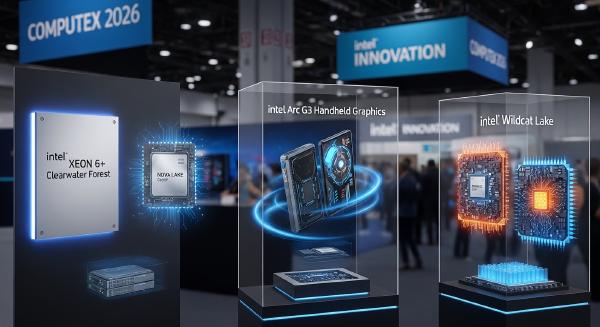
At Computex 2026, Intel unveiled a major expansion of its datacenter portfolio, introducing the Xeon 6+ processor family (codenamed Clearwater Forest), the E835 Ethernet networking platform, and a preview of the upcoming Crescent Island datacenter GPU.
Together, these products form a comprehensive infrastructure strategy targeting the rapidly growing AI and Agentic AI markets. Rather than focusing solely on processors, Intel is building an end-to-end platform that spans compute, networking, memory, and AI acceleration.
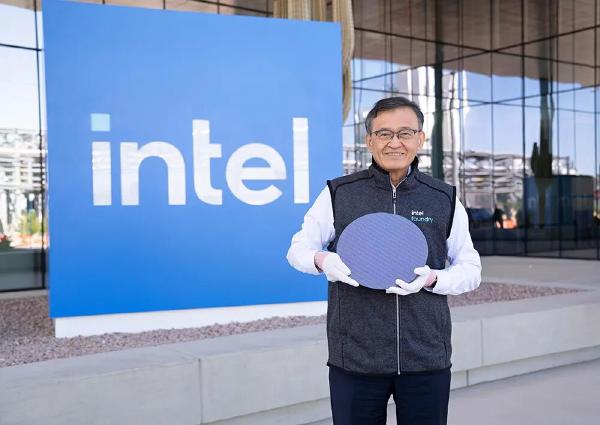
The centerpiece of the announcement is Clearwater Forest, the world’s first datacenter processor built on Intel’s 18A process technology, often referred to as a 1.8nm-class manufacturing node.
🚀 Xeon 6+ Brings Intel 18A to the Datacenter #
Clearwater Forest marks a significant milestone in Intel’s manufacturing roadmap. It is the first datacenter CPU built using the Intel 18A process and leverages several of Intel’s most advanced packaging technologies.
Advanced Multi-Tile Architecture #
The processor combines multiple manufacturing technologies within a single package:
+-------------------------------------------------------+
|  Compute Tiles (Intel 18A)                            |
+-------------------------------------------------------+
|  Base Tiles (Intel 3) - Mesh, LLC, Memory Subsystem   |
+-------------------------------------------------------+
|  Interconnect (EMIB) & I/O Tiles (Intel 7)            |
+-------------------------------------------------------+
The design utilizes:
- Intel 18A compute tiles
- Intel 3 base tiles
- Intel 7 I/O tiles
- EMIB interconnect technology
- Foveros Direct 3D packaging
This heterogeneous packaging approach allows Intel to optimize different components for performance, cost, and power efficiency while maintaining high-density integration.
Key Specifications #
Clearwater Forest is engineered for large-scale cloud and enterprise deployments.
Core Configuration #
- Up to 288 Efficiency cores (E-cores) per socket
- Support for single-socket and dual-socket platforms
Cache and Memory #
- 576MB Last Level Cache (LLC)
- More than 5x cache increase versus the previous generation
- 12-channel DDR5 memory subsystem
- Memory speeds up to 8000 MT/s
I/O Capabilities #
- 96 PCIe Gen 5 lanes
- High-bandwidth connectivity for accelerators and storage
Power Envelope #
- TDP ranging from 330W to 450W
- Designed for hyperscale and enterprise deployments
📈 Performance and Efficiency Improvements #
Intel highlighted several performance gains across traditional datacenter and cloud workloads.
Generational Improvements #
Compared with Sierra Forest, Intel reports:
- Up to 2.26x overall performance improvement
- Up to 1.55x better performance per watt
Single-Threaded Performance #
Against competing platforms, Intel claims:
- 1.3x higher single-thread performance
- 1.3x higher single-thread performance per watt
While modern cloud workloads increasingly favor parallelism, strong single-thread performance remains important for databases, infrastructure services, and latency-sensitive applications.
Cryptography Acceleration #
A newly enhanced cryptographic instruction set delivers substantial gains for encryption-heavy workloads.
Intel reports:
- Up to 15x performance improvement for certain cryptographic operations compared with previous generations
This enhancement is particularly relevant for:
- VPN gateways
- Secure cloud services
- Financial platforms
- Zero-trust infrastructure
Datacenter Consolidation Benefits #
For organizations operating older infrastructure, Intel positions Xeon 6+ as a major consolidation platform.
According to Intel’s projections, replacing systems based on 2nd Generation Xeon processors can deliver:
- Up to a 9:1 server consolidation ratio
- Approximately 79% reduction in physical rack footprint
- Lower power consumption
- Reduced operational costs
🔮 Diamond Rapids Already on the Horizon #
Intel also provided a glimpse into its future roadmap.
The next-generation Diamond Rapids Xeon platform is scheduled for 2027 and will be manufactured using the enhanced Intel 18A-P process technology.
Expected improvements include:
- Higher core counts
- Increased performance
- Double the memory bandwidth
- Further platform efficiency gains
This positions Diamond Rapids as the successor to Clearwater Forest for high-performance datacenter deployments.
🌐 E835 Ethernet Delivers High-Density Networking #
As AI clusters continue to scale, networking increasingly becomes a critical bottleneck.
To address this challenge, Intel introduced the E835 Ethernet solution.
High-Speed Connectivity #
Key capabilities include:
- Up to 200GbE throughput
- Native RDMA support
- Dynamic Device Personalization (DDP)
The platform supports multiple deployment formats:
- Standalone controllers
- OCP 3.0 modules
- PCIe network adapters
Flexible Port Configuration #
Using Intel’s Ethernet Port Configuration Tool (EPCT), administrators can dynamically configure ports into multiple layouts:
- 2 × 25GbE
- 4 × 25GbE
- 2 × 100GbE
- 1 × 200GbE
This flexibility allows organizations to optimize networking resources for specific workloads without replacing hardware.
Improved Energy Efficiency #
Intel claims substantial efficiency gains versus competing solutions.
Reported benefits include:
- 28% to 47% lower power consumption
- 1.4x to 1.9x better performance per watt under full load
Enterprise Security Features #
The E835 platform also includes:
- Silicon Root of Trust
- Signed SPDM attestation
- Enterprise lifecycle support exceeding 10 years
These capabilities are particularly important for government, telecommunications, and critical infrastructure deployments.
🤖 Crescent Island Targets Agentic AI Inference #
Perhaps the most intriguing announcement was Crescent Island, Intel’s upcoming datacenter GPU designed specifically for AI inference and Agentic AI workloads.
Rather than focusing solely on AI training, Intel is targeting the rapidly growing inference market, where long-context reasoning and multi-agent workloads are becoming increasingly important.
Xe3P Architecture #
Crescent Island is built entirely around Intel’s new Xe3P architecture.
Notable enhancements include:
- Expanded AI compute arrays
- Improved inference acceleration
- Native FP64 support
- Enhanced scalability
Massive 480GB Memory Capacity #
One of the platform’s standout specifications is its memory subsystem.
Crescent Island features:
- 480GB LPDDR memory
- High-density backside routing architecture
- Optimized KV Cache handling
Large memory capacity is increasingly important for:
- Long-context language models
- Multi-agent systems
- Retrieval-augmented generation (RAG)
- Enterprise AI deployments
Air-Cooled AI Infrastructure #
Unlike many modern AI accelerators that require liquid cooling, Crescent Island is designed around efficiency.
Key characteristics include:
- 350W TDP
- LPDDR-based memory architecture
- Air-cooling compatibility
This enables organizations to deploy AI infrastructure within existing datacenter environments without major cooling upgrades.
Unified CPU-GPU Software Ecosystem #
Intel is also emphasizing software integration.
The Xe software stack enables:
- Shared workload orchestration
- Dynamic state management
- CPU-GPU resource balancing
- Simplified deployment workflows
This unified approach aims to reduce operational complexity for enterprise AI deployments.
Collaboration with SambaNova #
Intel also announced collaboration with AI hardware company SambaNova.
The partnership focuses on:
- Open software frameworks
- Alternative dataflow architectures
- Expanded AI ecosystem support
This reflects Intel’s broader strategy of building an open AI infrastructure ecosystem rather than relying solely on proprietary technologies.
📊 Product Portfolio Overview #
| Category | Xeon 6+ (Clearwater Forest) | Crescent Island GPU | E835 Ethernet |
|---|---|---|---|
| Primary Role | Host Compute | AI Inference & Agentic AI | Network Fabric |
| Process / Architecture | Intel 18A | Xe3P | Custom Ethernet Architecture |
| Key Specifications | 288 E-cores, 12-channel DDR5 | 480GB LPDDR | 200GbE Throughput |
| Power Profile | 330W–450W | 350W | Up to 47% lower power consumption |
| Major Innovation | Foveros Direct 3D, 576MB LLC | Large-memory AI acceleration | Dynamic port reconfiguration |
🏁 Conclusion #
Intel’s Computex 2026 announcements reveal a comprehensive strategy for next-generation datacenter infrastructure. Clearwater Forest brings Intel’s 18A process technology into production servers, E835 addresses the growing networking demands of AI clusters, and Crescent Island targets emerging Agentic AI inference workloads with an unusually large memory footprint and air-cooled deployment model.
Rather than competing in a single layer of the stack, Intel is positioning itself as a full-platform provider for the AI era. Whether this strategy translates into significant market share gains will depend on real-world performance, software maturity, and customer adoption. However, the combination of advanced process technology, high-density compute, scalable networking, and AI-focused acceleration demonstrates Intel’s determination to remain a major force in the future of enterprise computing.