MSI Claw 8 Leak: Intel Arc G3 May Challenge AMD in Handheld Gaming
The Windows gaming handheld market has become increasingly crowded, with most manufacturers relying on similar AMD-based hardware platforms. According to recent leaks, however, MSI may be preparing a different strategy for its next-generation handheld.
The upcoming MSI Claw 8 is rumored to feature Intel’s latest Arc G3 integrated GPU, marking a significant departure from industry expectations that MSI would eventually migrate to AMD silicon following the mixed reception of its first-generation Claw handheld.
If the leaked specifications prove accurate, the Claw 8 could become one of the first Windows handhelds to demonstrate that Intel’s latest integrated graphics architecture is capable of competing directly with AMD’s dominant position in the portable gaming market.
🎮 Why the Claw 8 Is Drawing Attention #
When MSI launched the original Claw, it faced an uphill battle.
Although the device offered competitive hardware and reasonable power efficiency, Intel’s integrated graphics performance and driver maturity lagged behind AMD’s leading handheld solutions. At equivalent power levels, gaming performance often fell noticeably short of devices powered by AMD’s Ryzen Z-series and 7840U-based platforms.
As a result, many industry observers assumed MSI’s next-generation handheld would follow the path taken by much of the market and adopt an AMD processor.
The latest leaks suggest otherwise.
Instead of switching platforms, MSI appears to be doubling down on Intel’s latest graphics technology, betting that recent improvements in both hardware and software are sufficient to close the gap.
🚀 Arc G3 Represents a Major Generational Leap #
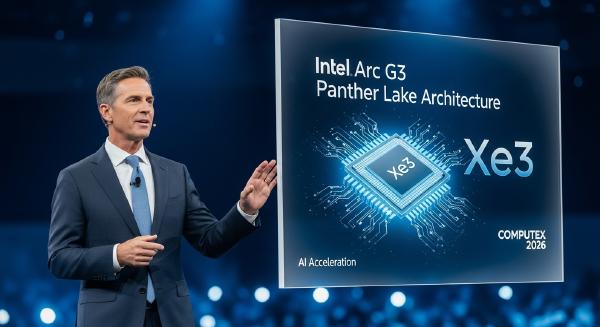
The most significant upgrade comes from Intel’s new Arc G3 integrated GPU architecture, which is expected to be part of the company’s Lunar Lake mobile processor family.
According to leaked specifications, Arc G3 dramatically increases graphics resources compared to previous Intel integrated GPUs.
Key improvements reportedly include:
- Up to 192 Execution Units (EUs)
- Nearly double the theoretical compute performance of the previous generation
- Enhanced ray tracing capabilities
- Improved XeSS upscaling support
- Better power efficiency at handheld-friendly power levels
For gaming handhelds, these improvements are particularly important because devices typically operate within a constrained power envelope ranging from approximately 15W to 28W.
Unlike desktop gaming systems, handhelds cannot simply increase power consumption to achieve higher performance. Architectural efficiency and graphics capability per watt become critical factors.
The Arc G3 architecture appears designed specifically to improve performance within these power limitations.
🔧 Driver Maturity May Be Equally Important #
Hardware specifications tell only part of the story.
One of the biggest criticisms of Intel’s earlier gaming solutions was inconsistent driver support. Even when raw compute performance appeared competitive on paper, real-world gaming results often suffered due to optimization shortcomings.
Over the past year, Intel has invested heavily in Arc graphics drivers, focusing on:
- AAA game compatibility
- Performance optimization
- Stability improvements
- Faster day-one game support
- Expanded XeSS integration
As a result, Intel’s gaming ecosystem has matured significantly.
Many previously problematic titles now perform much more consistently, reducing one of the major disadvantages that affected the original Claw.
For handheld buyers, this may ultimately prove as important as the hardware improvements themselves.
🎯 Gaming Performance Approaches AMD Territory #
If the leaked benchmarks are accurate, the Claw 8 could deliver gaming performance comparable to current AMD-powered competitors operating at similar power levels.
Reported gaming scenarios include:
Modern AAA Titles #
Games such as Black Myth: Wukong are reportedly capable of maintaining approximately 60 FPS at 1080p using medium graphics settings with XeSS Balanced mode enabled.
For a handheld device, this level of performance represents a strong gaming experience and aligns with expectations for premium portable gaming systems.
Demanding Open-World Games #
More demanding titles such as Starfield are reportedly able to maintain frame rates above 40 FPS.
While not matching desktop gaming performance, these results would place the Claw 8 firmly within the range of mainstream gaming handhelds currently available.
Improved Upscaling Technologies #
Intel’s XeSS technology continues to evolve and has become one of the company’s strongest competitive advantages.
Compared with traditional rendering, XeSS can:
- Increase frame rates
- Preserve image quality
- Reduce GPU workload
- Improve battery efficiency
In certain scenarios, users report image quality advantages over competing upscaling technologies, particularly at lower rendering resolutions.
🤖 AI Performance Expands Beyond Gaming #
Gaming remains the primary use case for handheld PCs, but the market is gradually expanding toward broader mobile computing workloads.
One notable advantage of Intel’s latest architecture is the integration of dedicated AI acceleration hardware.
The upgraded AI processing capabilities can benefit workloads such as:
- Local AI inference
- Image generation
- Content creation
- Video editing
- Productivity applications
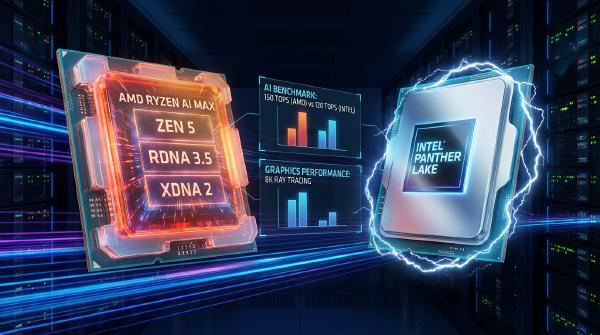
According to leaked information, tasks such as lightweight local AI model execution and 4K video editing may outperform similarly priced AMD-based handhelds.
This positions the Claw 8 as more than a gaming device.
Users interested in mobile productivity, AI experimentation, and creative workloads could find additional value in Intel’s platform.
📈 A Different Strategy in a Homogeneous Market #
The broader significance of the Claw 8 extends beyond its technical specifications.
Today’s Windows handheld market is largely dominated by similar hardware configurations built around AMD processors. Popular devices often share comparable architectures, resulting in increasingly similar performance profiles.
This has created a growing challenge for manufacturers:
How do you differentiate your product when everyone uses nearly identical silicon?
MSI’s apparent decision to embrace Intel’s latest Arc graphics provides a potential answer.
The strategy offers several benefits:
- Hardware differentiation
- Unique AI capabilities
- Alternative graphics technologies
- Reduced dependence on a single supplier
- Greater market diversity
If successful, the Claw 8 could encourage additional manufacturers to consider alternative hardware approaches, increasing competition throughout the handheld gaming ecosystem.
💰 Pricing Will Ultimately Determine Success #
Performance alone rarely determines the success of a gaming handheld.
Pricing remains one of the most important factors influencing consumer adoption.
The Claw 8’s market potential will largely depend on how MSI positions it relative to competing products such as:
- ASUS ROG Ally series
- Lenovo Legion Go
- GPD handhelds
- Other Ryzen Z-series devices
If MSI can offer competitive pricing while delivering comparable gaming performance and stronger AI capabilities, the Claw 8 could emerge as a compelling alternative in the premium handheld segment.
🔮 Conclusion #
The leaked MSI Claw 8 suggests that Intel may finally be ready to compete seriously in the Windows handheld gaming market.
By combining the new Arc G3 integrated GPU, improved driver maturity, XeSS upscaling technology, and enhanced AI acceleration capabilities, MSI appears to be pursuing a differentiated strategy in a market increasingly dominated by similar AMD-based designs.
While final specifications, pricing, and launch details remain unconfirmed, the Claw 8 has already become one of the most interesting upcoming handhelds to watch. If Intel’s latest graphics architecture performs as expected in real-world devices, the next generation of Windows handheld competition may become significantly more diverse—and much more interesting for consumers.