Intel Moon Lake and Wildcat Lake Refresh: 6W CPUs and vPro
Intel reportedly has two new low-power mobile processor families in development: Moon Lake and Wildcat Lake Refresh. According to hardware leaker Jaykihn, these processors will target different segments of the entry-level and ultra-low-power computing markets.
Moon Lake is expected to take an efficiency-first approach, eliminating conventional Performance cores entirely and relying on up to four Low-Power Efficiency (LP-E) cores. Its reported processor base power starts at just 6W, making it a potential successor to Intel’s ultra-low-power N-series processors.
Wildcat Lake Refresh takes the opposite direction. It reportedly doubles the maximum Performance-core count from two to four, retains four LP-E cores, and introduces Intel vPro enterprise management capabilities.
Both products are reportedly based on Intel 18A and use the BGA1516 package associated with the current Wildcat Lake platform.
Neither processor family has been officially announced by Intel. Their specifications, branding, and release schedules remain unconfirmed. Nevertheless, the leaks suggest that Intel is preparing two distinct upgrade paths: one prioritizing minimum power consumption and another improving CPU performance and enterprise manageability.
🧩 Wildcat Lake: The Foundation for Intel’s New Low-Power Processors #
To understand the significance of these leaks, it is useful to look at Intel’s existing Core Processor Series 3, formerly known by the codename Wildcat Lake.
Intel’s official documentation confirms that the platform combines Performance cores with Low-Power Efficiency cores, using a compact BGA1516 package.
The reference configuration supports up to two P-cores and four LP-E cores, with a processor base power of 15W and integrated graphics featuring up to two Xe3 cores.
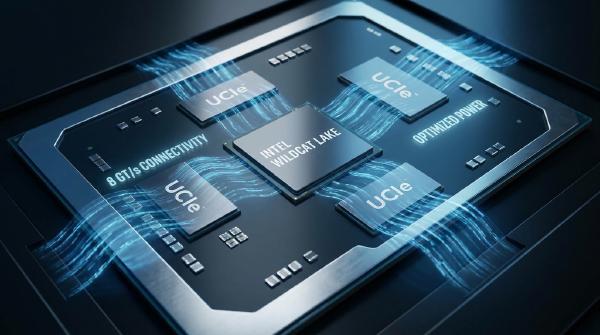
An important architectural detail is that Wildcat Lake uses a multi-tile design within a single package. Intel’s platform documentation identifies a Compute tile and a Platform Controller Die (PCD) tile.
Existing Wildcat Lake specifications #
| Specification | Intel Core Processor Series 3 |
|---|---|
| Former codename | Wildcat Lake |
| CPU configuration | Up to 2 P-cores + 4 LP-E cores |
| Maximum core count | 6 |
| P-core architecture | Cougar Cove |
| LP-E architecture | Darkmont |
| Processor base power | 15W |
| Maximum turbo power | Up to 35W on documented models |
| Integrated graphics | Up to 2 Xe3 cores |
| Package | BGA1516 |
| Manufacturing technology | Intel 18A, with additional platform tiles using other processes |
The Core 3 305 is one example of this configuration, offering two P-cores and four LP-E cores, with a maximum turbo frequency of 4.3 GHz.
This design is intended for cost-sensitive laptops and compact systems rather than high-performance mobile workstations. Its combination of performance and low-power cores provides a balance between foreground application responsiveness and background efficiency.
For additional background, see KAD’s overview of Intel Wildcat Lake and its 18A architecture.
🔋 Moon Lake: Four LP-E Cores and a 6W Power Target #
Moon Lake represents the more unusual of the two rumored designs.
According to Jaykihn’s October 28, 2026 leak, Moon Lake will reportedly eliminate conventional P-cores entirely and use up to four Darkmont LP-E cores.
The reported processor base power starts at 6W, with the configuration positioned below the existing Wildcat Lake products in terms of power requirements.
Rumored Moon Lake specifications #
| Specification | Moon Lake |
|---|---|
| CPU architecture | Darkmont LP-E |
| P-cores | 0 |
| LP-E cores | Up to 4 |
| Total CPU cores | Up to 4 |
| Processor base power | 6W (reported) |
| Configurable power | Up to 15W (reported in preliminary information) |
| Manufacturing technology | Intel 18A (reported) |
| Package | BGA1516 (reported) |
| Integrated graphics | Unconfirmed |
The most important feature is not the core count but the decision to remove P-cores altogether.
Rather than allocating silicon area and power budget to high-performance CPU cores, Moon Lake reportedly concentrates on low-power execution.
This makes it a potential successor to Intel’s N-series products, which traditionally target inexpensive laptops, compact desktops, education systems, and embedded devices.
Why eliminate P-cores? #
Performance cores are designed to deliver higher peak processing throughput, but they generally require more power and thermal headroom than low-power efficiency cores.
For devices that spend most of their operating time handling lightweight applications, background tasks, web browsing, and basic office work, a P-core-heavy configuration may not always be necessary.
A four-LP-E-core design could offer several advantages:
- Lower power requirements: A reduced processor power budget can simplify thermal management.
- Fanless system potential: Compact heatsinks or passive cooling become more practical.
- Improved battery efficiency: Lightweight workloads can be handled without activating higher-power CPU cores.
- Smaller system designs: Lower thermal demands can give manufacturers more flexibility when designing thin laptops and compact computers.
- Lower-cost positioning: A simplified processor configuration could help Intel address the entry-level PC market.
However, a 6W processor base power rating does not mean an entire laptop or mini PC consumes only 6W. Memory, storage, displays, wireless connectivity, and power-conversion losses all contribute to total system consumption.
Real-world battery life and cooling requirements will need to be evaluated using finished devices.
Is Moon Lake really a multi-tile design? #
The leak suggests that Moon Lake retains the multi-tile architecture associated with Wildcat Lake rather than switching to a completely monolithic design.
This is an interesting choice for an ultra-low-power processor.
Intel’s current Wildcat Lake platform combines the Compute tile and PCD tile within a single BGA1516 package. Reusing a similar packaging strategy could allow Intel to maintain consistency across related products.
However, identical package dimensions do not automatically establish motherboard compatibility. Pin assignments, electrical requirements, firmware, and platform validation must also match.
The actual Moon Lake tile configuration and internal connectivity have not yet been disclosed.
What about integrated graphics? #
The integrated GPU configuration remains one of the biggest unknowns.
Current Wildcat Lake products offer up to two Xe3 graphics cores. Some speculation suggests that Moon Lake could retain a similarly small GPU configuration, but there is no confirmed specification.
It would be premature to assume that Moon Lake will offer the same graphics performance as Core Series 3.
GPU clock speeds, memory bandwidth, power allocation, and supported media engines will all influence its capabilities. Intel has also not disclosed a confirmed NPU configuration for the rumored processor.
For now, Moon Lake’s most clearly defined characteristic is its low-power CPU architecture, not its graphics or AI performance.
⚙️ Wildcat Lake Refresh: Double the P-Cores #
While Moon Lake emphasizes efficiency, Wildcat Lake Refresh is reportedly designed to improve CPU performance without abandoning the existing low-power architecture.
The most significant change is the increase from two to four P-cores.
The refreshed processor reportedly retains four LP-E cores, creating a maximum configuration of 4P + 4LP-E, or eight CPU cores in total.
Rumored Wildcat Lake Refresh specifications #
| Specification | Wildcat Lake Refresh |
|---|---|
| P-core architecture | Cougar Cove (reported) |
| P-cores | Up to 4 |
| LP-E architecture | Darkmont (reported) |
| LP-E cores | Up to 4 |
| Total CPU cores | Up to 8 |
| Processor base power | 15W (preliminary report) |
| Configurable TDP | Up to 35W |
| Integrated graphics | Up to 2 Xe3 cores |
| Manufacturing technology | Intel 18A (reported) |
| Package | BGA1516 (reported) |
| Enterprise management | Intel vPro support (rumored) |
The reported four-P-core configuration would represent a substantial increase in performance-oriented CPU resources compared with the current Core Series 3 platform.
However, this does not mean the processor will deliver twice the CPU performance. Real-world gains depend on clock frequencies, cache configuration, power limits, memory bandwidth, and software scaling.
The exact base-power specification also needs clarification. Some preliminary reports list 15W, while more detailed coverage of the latest leak confirms a configurable power ceiling of 35W without establishing a final base-power rating.
Why four P-cores matter #
Increasing the number of P-cores from two to four could improve performance in applications that benefit from multiple high-performance threads.
Potential beneficiaries include:
- Office applications with heavier multitasking requirements.
- Software development and compilation.
- Web applications with multiple active processes.
- Light content creation and media processing.
- Enterprise productivity software running alongside background services.
The four LP-E cores would continue handling suitable background and lower-priority tasks.
This creates a more balanced configuration than Moon Lake’s all-LP-E design, allowing Intel to address users who need stronger foreground performance while retaining the efficiency advantages of low-power cores.
Integrated graphics may remain unchanged #
Unlike the CPU configuration, the integrated graphics reportedly remain at up to two Xe3 cores.
If this information proves accurate, the refresh’s most significant performance improvement will come from CPU resources rather than a substantial increase in graphics hardware.
That could make the platform attractive for business laptops and compact desktops where CPU responsiveness, application compatibility, and enterprise management matter more than gaming performance.
Nevertheless, graphics performance will still depend on clock speeds, memory configuration, and the processor’s available power budget.
🏢 Intel vPro: A Major Addition for Business PCs #
Perhaps the most commercially important feature of Wildcat Lake Refresh is its rumored support for Intel vPro.
The existing Core Series 3 family provides some enterprise-oriented manageability features, but it does not offer the complete set of capabilities associated with Intel’s vPro platform.
Adding vPro support could make the refreshed processors more attractive to business laptop manufacturers, system integrators, and corporate IT departments.
Why vPro matters #
Intel vPro is a platform-level collection of hardware and software technologies designed to support enterprise security, deployment, and remote management.
Depending on the processor, platform configuration, and vPro tier, capabilities can include:
- Remote system management.
- Hardware-assisted security features.
- Out-of-band management on supported configurations.
- Remote diagnostics and maintenance.
- Enterprise deployment and platform stability features.
For organizations managing hundreds or thousands of computers, these functions can reduce the need for physical access to individual machines.
For example, IT administrators may be able to diagnose certain system problems or manage supported devices remotely, even when the operating system is unavailable.
However, vPro support is not determined by the CPU alone. Motherboard design, firmware, networking hardware, platform validation, and the specific product tier all influence which capabilities are available.
Intel has not confirmed which vPro features Wildcat Lake Refresh would support or whether the entire processor lineup would qualify.
A stronger commercial positioning #
If the rumored specifications are accurate, the combination of four P-cores, four LP-E cores, and vPro could help Intel compete more effectively in the commercial laptop market.
The current Wildcat Lake family is primarily positioned around affordable and low-power computing. Adding enterprise management capabilities would expand the refresh’s potential customer base.
It could also give OEMs an opportunity to develop compact business laptops with stronger application performance without moving to a higher-power processor family.
For more background on Intel’s broader mobile processor strategy, see KAD’s coverage of Intel’s next-generation mobile CPU roadmap.
🖥️ Moon Lake vs. Wildcat Lake Refresh: Two Different Product Strategies #
Although both rumored processors reportedly share Intel 18A technology and BGA1516 packaging, their intended roles are quite different.
Moon Lake prioritizes minimum power consumption and a simplified CPU configuration. Wildcat Lake Refresh increases the number of high-performance cores and adds enterprise management capabilities.
Side-by-side comparison #
| Feature | Moon Lake | Wildcat Lake Refresh | Existing Wildcat Lake |
|---|---|---|---|
| P-cores | 0 | Up to 4 | Up to 2 |
| LP-E cores | Up to 4 | Up to 4 | Up to 4 |
| Maximum core count | 4 | 8 | 6 |
| P-core architecture | None | Cougar Cove (reported) | Cougar Cove |
| LP-E architecture | Darkmont (reported) | Darkmont (reported) | Darkmont |
| Processor base power | 6W (reported) | 15W (preliminary) | 15W |
| Configurable power | Up to 15W (reported) | Up to 35W | Up to 35W |
| Integrated GPU | Unconfirmed | Up to 2 Xe3 | Up to 2 Xe3 |
| Package | BGA1516 (reported) | BGA1516 (reported) | BGA1516 |
| vPro | Unconfirmed | Reported support | Not confirmed for current Core Series 3 |
The table combines official information for existing Wildcat Lake with leaked specifications for the two rumored products. The unannounced processors should not be treated as finalized commercial products.
Potential market segmentation #
The two designs could address different types of systems.
Moon Lake:
- Entry-level laptops.
- Fanless mini PCs.
- Education computers.
- Embedded systems.
- Compact industrial devices.
Wildcat Lake Refresh:
- Business laptops.
- Enterprise desktops and mini PCs.
- Commercial productivity systems.
- Small-form-factor workstations for lightweight workloads.
This segmentation would give Intel more flexibility in the low-power market without forcing every product to use the same CPU configuration.
🔬 Intel 18A and BGA1516: Platform Reuse and Manufacturing Strategy #
Both rumored processors are associated with Intel’s 18A manufacturing technology and the BGA1516 package used by existing Wildcat Lake products.
Intel 18A is an important part of the company’s foundry roadmap, incorporating RibbonFET gate-all-around transistor technology and PowerVia backside power delivery.
Using the same advanced process for multiple low-power product categories could give Intel more flexibility when designing processors with different core configurations and power targets.
However, an advanced manufacturing node also introduces cost considerations. For processors targeting inexpensive laptops and mini PCs, silicon area, packaging expenses, manufacturing yields, and OEM pricing will all affect commercial viability.
The shared BGA1516 package could simplify some aspects of platform development, but it does not guarantee that Moon Lake or Wildcat Lake Refresh will work on existing Wildcat Lake motherboards.
OEMs would still need to validate the electrical interface, firmware, power delivery, memory compatibility, and cooling requirements.
The ability to reuse parts of an existing platform could nevertheless help Intel and its partners control development costs and shorten product qualification cycles.
🔮 Release Timeline and Product Naming Remain Unconfirmed #
The Moon Lake and Wildcat Lake Refresh information originates from third-party leaks, primarily Jaykihn’s posts on X.
Intel has not announced either processor family, provided official product specifications, or confirmed a launch schedule.
Some reports suggest that Wildcat Lake Refresh could eventually be marketed under a Core Series 4 designation, potentially expanding the existing Core 3 family into higher-performance low-power configurations.
Moon Lake’s final commercial branding is even less clear.
It is also important not to confuse the rumored Moon Lake with Intel’s earlier Lunar Lake platform. The two names refer to different reported product generations and should not be treated as interchangeable.
Before these products can be evaluated properly, several details still need confirmation:
- Final CPU core configurations and clock speeds.
- Cache capacity and memory support.
- Integrated graphics configuration.
- NPU availability and AI acceleration capabilities.
- Exact processor base and configurable power limits.
- vPro feature set and supported SKUs.
- Retail branding, pricing, and launch schedule.
Until Intel publishes official documentation, all leaked specifications remain provisional.
🏁 Conclusion: Intel Is Preparing Two New Directions for Low-Power Computing #
The Moon Lake and Wildcat Lake Refresh leaks suggest that Intel is preparing a more clearly differentiated low-power mobile processor portfolio.
Moon Lake reportedly removes P-cores entirely, relying on four Darkmont LP-E cores and a 6W base-power target. If accurate, this could give Intel a compelling platform for ultra-low-power laptops, fanless mini PCs, and embedded devices.
Wildcat Lake Refresh takes a more performance-oriented approach, doubling the maximum P-core count from two to four while retaining four LP-E cores. Its rumored vPro support could also make it significantly more attractive to enterprise customers.
The shared Intel 18A foundation and BGA1516 package suggest that Intel may be able to extend its existing platform strategy across multiple power and performance segments.
The most interesting question is whether Intel can turn these architectural differences into meaningful improvements in real-world battery life, application responsiveness, and enterprise manageability.
For mini PC manufacturers, Moon Lake could open the door to even lower-power designs. For commercial laptop vendors, Wildcat Lake Refresh could offer a more capable and manageable entry-level platform.
Both products remain unconfirmed, but the leaks point toward a clear strategy: Intel wants to cover more of the low-power computing market with processors tailored to different workloads rather than relying on one configuration for every device category.