Intel Nova Lake CPUs May Adopt Unified Core Ultra 4000 Naming
Intel’s next-generation Nova Lake processors may use a unified four-digit Core Ultra 4000 naming scheme across desktop and mobile product lines, according to a revised leak from hardware leaker Jaykihn.
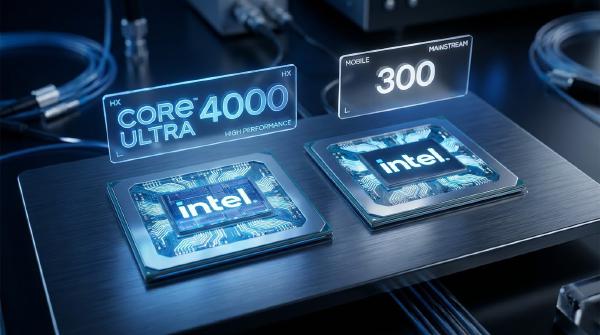
Earlier reports suggested that Intel would divide the lineup between the three-digit Core Ultra 400 series and the four-digit Core Ultra 4000 series. The latest information reverses that expectation, indicating that even mainstream mobile processors may adopt four-digit model numbers.
The reported change would cover five major product families: Nova Lake-S, Nova Lake-HX, Nova Lake-H, Nova Lake-U, and Nova Lake-UL. However, Intel has not officially confirmed the final naming scheme, model numbers, or complete Nova Lake lineup.
🔢 1. Intel Reportedly Revises the Nova Lake Naming Scheme #
The original naming rumors suggested that Intel would use two numbering conventions within the same processor generation.
Under the earlier proposal, desktop Nova Lake-S processors and high-performance mobile Nova Lake-HX chips would adopt four-digit Core Ultra 4000 designations. Mainstream mobile processors, meanwhile, were expected to retain three-digit Core Ultra 400 names.
The distinction appeared to reflect the different market positions of the processor families. Nova Lake-HX chips target high-performance laptops, including gaming notebooks and mobile workstations, and traditionally occupy a segment closely related to desktop-class processors.
However, the latest report from VideoCardz says Jaykihn subsequently retracted the earlier claim that mainstream mobile products would retain three-digit naming. In a post published on October 16, the leaker indicated that the four-digit convention would apply across the Nova Lake family.
Five Nova Lake product families affected #
| Processor family | Market segment | Reported naming convention |
|---|---|---|
| Nova Lake-S | Desktop PCs | Core Ultra 4000 |
| Nova Lake-HX | High-performance laptops | Core Ultra 4000 |
| Nova Lake-H | Mainstream performance laptops | Core Ultra 4000 |
| Nova Lake-U | Low-power laptops | Core Ultra 4000 |
| Nova Lake-UL | Ultra-low-power mobile systems | Core Ultra 4000 |
These designations remain based on leaks rather than an official Intel product announcement. Some reports use alternative classifications for mainstream mobile variants, including references to Nova Lake-P or suffix-less mobile products, so the final product segmentation remains uncertain.
If the revised information proves accurate, the entire Nova Lake generation would use a consistent four-digit model-numbering convention across desktop and mobile platforms.
🖥️ 2. Leaked Desktop Models Provide Early Evidence #
Four-digit model numbers have already appeared in leaks involving Nova Lake-S desktop processors.
Reported examples include:
- Core Ultra 9 4970K BFC
- Core Ultra 9 4950K
- Core Ultra 7 4870K BFC
These names suggest that Intel intends to use the Core Ultra 4000 designation for its upcoming desktop generation, although the company has not confirmed the individual retail SKUs.
The earlier Core Ultra 9 4950K naming leak provided an early indication that Intel might move beyond the three-digit model numbers associated with its recent Core Ultra processors.
Subsequent reports added more model names, including the Core Ultra 9 4970K BFC and Core Ultra 7 4870K BFC. The BFC suffix has been associated in leaks with Intel’s rumored big last-level cache (bLLC) configurations, which are intended to increase cache capacity for selected processors.
The broader leaked Nova Lake-S SKU lineup also points toward product differentiation through core configurations, cache technology, and power tiers.
These details should be treated as preliminary. Engineering-sample information can change before retail launch, and leaked model names do not establish the final specifications or official product segmentation.
Why four-digit naming matters #
Intel’s recent client processor generations have used different numerical ranges, including Core Ultra 200 and the expected Core Ultra 300 family. A four-digit Core Ultra 4000 series would provide a more visibly distinct model-number range for Nova Lake.
If applied consistently, the naming system could make it easier for consumers to recognize processors as belonging to the same broad generation, even when comparing desktop CPUs with mobile variants.
The numerical prefix alone would not identify every architectural or performance difference. Product tiers, suffixes, power limits, and platform characteristics would remain important when comparing individual processors.
📱 3. What Unified Naming Could Mean for Mobile CPUs #
The most significant aspect of the latest rumor is its reported extension to mainstream mobile processors.
Under the earlier proposal, Nova Lake-HX would use four-digit model numbers, while H-series and lower-power mobile variants would remain in the three-digit Core Ultra 400 range. That would have created two numerical systems within one generation.
The revised report suggests that Intel may instead align Nova Lake-H, Nova Lake-U, and Nova Lake-UL with the same Core Ultra 4000 designation used by desktop Nova Lake-S and high-performance Nova Lake-HX.
Such a structure would provide greater consistency across the product family, although the actual model numbers and suffixes would still distinguish individual products.
Naming consistency does not mean identical hardware #
A unified naming convention would not imply that desktop and mobile processors share the same power characteristics, package designs, or performance levels.
Desktop processors generally operate within different thermal and power limits from low-power mobile chips. The individual platform designation and product suffix would therefore remain important when evaluating the intended use of each CPU.
Until Intel publishes its official product list, it is also unclear precisely how the four-digit model numbers will be distributed among the various Core Ultra tiers and mobile categories.
📅 4. Nova Lake Launch Timeline and LGA 1954 Platform #
Beyond naming, current leaks suggest that Intel’s Nova Lake-S desktop processors will use the new LGA 1954 socket and begin arriving in 2027.
The reported release schedule points to a staggered rollout rather than a single launch covering every desktop SKU.
| Expected period | Reported product activity |
|---|---|
| Q1 2027 | Initial Nova Lake-S desktop models, including high-end configurations |
| Q2 2027 | Additional K-series and mainstream desktop processors |
| Q2–Q3 2027 | Potential arrival of the 52-core flagship configuration |
These windows come from leaked roadmap and embargo information, not an official Intel launch announcement. The exact availability dates and the order in which individual models will reach the market may change.
The reported 52-core model is particularly notable because it is expected to arrive later than some of the initial desktop processors. Its final model name, specifications, and retail timing remain unconfirmed.
For laptop processors, the timing and availability of individual Nova Lake-HX, H, U, and UL models are also not fully established by the naming leak.
⚠️ 5. Intel Has Yet to Confirm the Final Naming Structure #
Although the revised leak provides a clearer picture of the proposed naming convention, several questions remain open.
First, Intel has not officially announced the complete Nova Lake product lineup or confirmed that all desktop and mobile processors will use four-digit Core Ultra 4000 model numbers.
Second, the specific four-digit names for mainstream mobile products have not been established in the reported information. The existing desktop leaks provide examples, but they do not determine how every mobile SKU will be named.
Finally, the rumored launch windows and platform details remain subject to change before commercial availability.
For now, the most important development is the change in the reported naming plan: what was initially expected to be a split between Core Ultra 400 and Core Ultra 4000 may instead become a unified Core Ultra 4000 family.
If Intel ultimately adopts this approach, Nova Lake would have a more consistent generational naming convention across desktop and mobile processors. The final answer, however, will depend on Intel’s official product announcements.