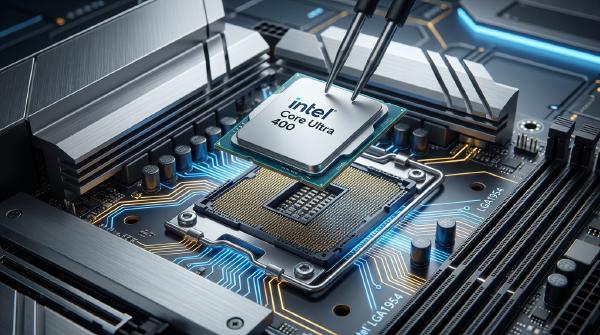
Intel Nova Lake Gaming Rumor: BFC Cache Could Make the Difference
Intel’s upcoming Nova Lake desktop processors may deliver only incremental gaming improvements over the existing Arrow Lake lineup unless buyers opt for models featuring a rumored large-cache enhancement.
According to hardware leaker kopite7kimi, standard Nova Lake processors without the rumored BFC configuration offer gaming performance “quite similar” to Arrow Lake. The cache-enhanced variants are reportedly intended to improve gaming performance through a larger last-level cache (bLLC), following a strategy similar in principle to AMD’s 3D V-Cache technology.
The claims surfaced on October 13, 2026, and remain unconfirmed by Intel. No independent retail-chip benchmarks are available to establish the actual gaming performance of either configuration.
The rumor raises an important question for Intel’s next desktop CPU generation: Will Nova Lake deliver a meaningful gaming upgrade across the lineup, or will its largest gains depend on purchasing a specialized cache-enhanced model?
🎮 Nova Lake Gaming Performance: What the Leak Claims #
Nova Lake-S is expected to form Intel’s next major desktop processor generation, reportedly using the Core Ultra 4000 naming scheme.
According to kopite7kimi, conventional Nova Lake models without the additional cache are expected to perform similarly to Arrow Lake in gaming workloads. The leaker also described the BFC variant as an attempt to improve Nova Lake’s gaming competitiveness.
The original report was covered by Club386’s analysis of the Nova Lake gaming leak.
These claims should be interpreted cautiously. The term “similar to Arrow Lake” does not identify a specific processor, benchmark suite, resolution, or testing configuration. It could refer to the original Core Ultra 200S lineup or the more recently improved Core Ultra 200S Plus series.
Those products have different gaming performance profiles, making the distinction important when estimating what Nova Lake might deliver.
Why the comparison with Arrow Lake matters #
Intel’s original Arrow Lake desktop processors faced criticism for gaming performance that frequently fell behind competing AMD Ryzen processors and some older Intel models.
The subsequent Arrow Lake Refresh, marketed as the Core Ultra 200S Plus series, improved performance through several changes, including increased die-to-die interconnect speed, additional efficient cores on selected models, and software-level optimization.
However, improvements over previous Intel processors did not eliminate the competitive gap against AMD’s gaming-focused CPUs.
If standard Nova Lake matches Arrow Lake Refresh, the new generation could offer a stronger starting point than the original Arrow Lake launch. If the comparison instead refers to the initial Core Ultra 200S lineup, the implications would be less encouraging.
Until comparable benchmarks are available, neither interpretation should be treated as confirmed.
🧠 What Is the BFC Cache in Intel Nova Lake? #
The rumored BFC suffix distinguishes selected Nova Lake models that reportedly feature an enlarged last-level cache.
The design is associated with the previously discussed concept of a big last-level cache, or bLLC. Its purpose is to improve gaming performance by allowing the processor to retain more frequently accessed data close to its execution cores.
The exact meaning of the BFC branding and the final technical implementation have not been officially confirmed by Intel.
How a larger L3 cache can improve gaming #
Games frequently access relatively small but important sets of data, including object states, physics information, game logic, and simulation data.
When the required data is already available in the processor’s cache, the CPU can access it without fetching it from system memory. Cache hits generally have lower latency and consume less energy than accessing DRAM.
A larger cache can therefore help in workloads that repeatedly access data sets that would otherwise exceed the available cache capacity.
Potential benefits include:
- Higher frame rates: Reduced memory-access delays can improve CPU-limited game performance.
- Better frame-time consistency: Keeping more frequently used data in cache can reduce some sources of execution latency.
- Improved performance in simulation-heavy games: Workloads with large sets of frequently accessed game-state data may benefit from additional cache capacity.
However, cache size alone does not determine gaming performance. Cache latency, architecture, clock speed, memory configuration, game-engine behavior, and scheduling all influence the results.
The benefits also vary significantly between games. A title limited primarily by GPU performance may gain little from a larger CPU cache, while a latency-sensitive competitive game may benefit considerably.
How Intel’s approach compares with AMD 3D V-Cache #
AMD’s Ryzen X3D processors use vertically stacked cache to increase the amount of L3 cache available to the CPU. This has helped AMD establish a strong position in gaming workloads that benefit from reduced memory-access latency.
Intel’s rumored bLLC design appears to pursue a similar performance objective: reduce the frequency with which gaming workloads need to access system memory.
That does not establish that Intel will use the same packaging technology or achieve equivalent results. The physical implementation, cache capacity, latency characteristics, and resulting performance remain unknown.
The relevant comparison will be the performance delivered in real games, not simply the amount of cache listed in the specifications.
For additional context, see KAD’s analysis of AMD 3D V-Cache and gaming performance.
📋 Leaked Nova Lake Desktop CPU Lineup #
A rumored Nova Lake-S product table published by Tom’s Hardware on October 2, 2026, lists seven potential desktop models, including three with the BFC suffix.
The reported lineup includes Core Ultra 9, Core Ultra 7, and Core Ultra 5 processors, with both standard and cache-enhanced configurations.
Core Ultra 9 4970K BFC #
The rumored flagship model is the Core Ultra 9 4970K BFC.
Its reported specifications include:
- CPU configuration: 8 performance cores, 16 efficient cores, and 4 low-power efficient cores, for 28 cores in total.
- L3 cache: Up to 144MB, according to the leak.
- Thermal design power: A reported 125W.
- Integrated graphics: Reportedly includes 32 execution units.
The large cache is expected to be the defining feature of this model, potentially giving it a more substantial gaming advantage than standard Nova Lake processors.
These specifications remain unverified, and the reported cache capacity should not be treated as a final retail specification.
Core Ultra 9 4950K #
The Core Ultra 9 4950K is reportedly the flagship model without the BFC designation.
The leaked configuration lists the same 8 performance cores, 16 efficient cores, and 4 low-power efficient cores as the 4970K BFC, but without the additional large-cache configuration.
If the reported lineup is accurate, the comparison between these two processors could provide the clearest indication of how much gaming performance Intel gains from the cache enhancement.
It would also help separate the benefits of the underlying Nova Lake architecture from those attributable specifically to the enlarged cache.
Core Ultra 7 and Core Ultra 5 models #
The leaked lineup also includes the Core Ultra 7 4870K BFC and Core Ultra 7 4850K, along with several Core Ultra 5 models.
The Core Ultra 7 variants reportedly differentiate themselves through the cache-enhanced configuration, while the standard Core Ultra 5 models target lower product tiers without the additional cache.
As with the flagship models, the configurations, final names, pricing, and launch timing remain unconfirmed.
The reported lineup is best understood as a preliminary product roadmap rather than a definitive list of retail specifications.
📊 Arrow Lake Refresh Provides a More Relevant Performance Baseline #
One reason the Nova Lake rumor has attracted attention is that Intel’s latest Arrow Lake Refresh processors have already improved the company’s competitive position in gaming.
Tom’s Hardware tested the Core Ultra 7 270K Plus against AMD’s Ryzen 7 9800X3D using a 17-game benchmark suite at 1080p with an NVIDIA GeForce RTX 5090.
In that test, the 270K Plus was approximately 20% slower than the Ryzen 7 9800X3D on average, although it was around 10% faster than Intel’s previous Core Ultra 7 265K.
The findings are detailed in Tom’s Hardware’s Core Ultra 7 270K Plus review.
Why testing conditions matter #
The 20% performance difference reflects a particular test configuration, not a universal gap across all games and resolutions.
At 1080p with a high-end GPU, the processor is more likely to become a performance bottleneck, making CPU architecture and cache behavior more visible. At higher resolutions, GPU limitations can reduce the differences between processors.
Individual games can also produce substantially different results.
For example, a game that frequently accesses a large working set may respond differently to additional cache than one dominated by GPU processing or other computational patterns.
Nova Lake therefore needs to be evaluated using multiple games and controlled configurations before its position relative to Arrow Lake Refresh or AMD’s X3D lineup can be established.
What would make Nova Lake a meaningful upgrade? #
The most useful comparison would test three categories of processors under identical conditions:
- Existing Arrow Lake Refresh processors, to establish the current Intel baseline.
- Standard Nova Lake processors, to measure the gains from the new CPU platform without the cache enhancement.
- Nova Lake BFC variants, to isolate the additional contribution of the larger cache.
Such testing should cover gaming averages, one-percent-low frame rates, power consumption, and performance across different resolutions.
It should also include productivity benchmarks, since a CPU with substantial core resources may remain attractive for development and content creation even if its gaming improvements are limited.
🔍 What the Rumor Means for Intel’s Gaming Strategy #
If the leak proves accurate, Intel may be using two distinct product strategies within the Nova Lake lineup.
Standard processors would provide the new platform’s general-purpose CPU capabilities, while BFC models would target users who place a higher priority on gaming performance.
This segmentation could allow Intel to compete in multiple markets without requiring every processor to carry the additional cache configuration.
However, it also creates a risk: if standard Nova Lake processors deliver only modest gaming gains over Arrow Lake Refresh, buyers focused on gaming may have little reason to upgrade unless the BFC models offer a substantial advantage.
Pricing will be equally important. A cache-enhanced processor could be technically competitive but difficult to recommend if its price premium is too large.
Intel must also balance gaming performance against productivity performance, power consumption, platform costs, and availability.
The final outcome will depend on the full product stack rather than one flagship benchmark.
✅ Conclusion: The BFC Models May Determine Nova Lake’s Gaming Prospects #
The latest Nova Lake leak suggests that Intel’s next desktop CPU generation may deliver gaming performance similar to Arrow Lake in its standard configurations, while selected BFC models use a larger last-level cache to pursue higher gaming performance.
The rumored Core Ultra 9 4970K BFC, with a reported 28-core configuration and up to 144MB of L3 cache, represents the most prominent example of this strategy. Its non-BFC counterpart, the Core Ultra 9 4950K, could provide a useful comparison for evaluating the cache’s actual contribution.
However, no official specifications or independent retail benchmarks currently establish these performance claims. The reference to Arrow Lake is also ambiguous because the original Core Ultra 200S processors and the improved 200S Plus lineup deliver different gaming results.
For buyers, the practical decision should wait until Intel confirms the product specifications, pricing, and availability and independent reviewers can measure performance under controlled conditions.
If the leak is accurate, the success of Nova Lake in gaming may depend less on the generation number and more on whether Intel’s cache-enhanced models deliver a meaningful advantage at a competitive price.