Intel Nova Lake-S Confirmed for New LGA1954 Socket in 2027
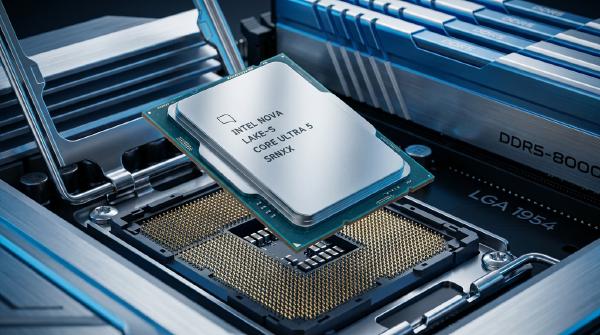
Intel has officially confirmed that its next-generation Nova Lake-S desktop processors will move to a new LGA1954 socket, replacing the current LGA1851 platform.
The change means Nova Lake-S will not be backward-compatible with existing 800-series motherboards used by Arrow Lake-S. Users planning to upgrade to the upcoming Core Ultra 400 series desktop processors will therefore need a new motherboard based on Intel’s 900-series chipset platform.
Intel currently targets Q1 2027 for the Nova Lake-S desktop launch.
The socket transition is particularly significant because it provides the first direct official confirmation of a platform change that had previously appeared mainly through leaks, shipping records, and third-party hardware roadmaps.
🔎 Intel Officially Links LGA1954 to Nova Lake-S #
The clearest confirmation comes from Intel’s official Design-In Tools Store, where an engineering validation kit explicitly connects the new socket with Intel’s Nova Lake-S platform.
The listing is titled:
LGA1954 NVL-S Interposer Gen5 VR Testing Tool ILM KitThe important identifier is NVL-S, Intel’s internal abbreviation for the Nova Lake-S desktop platform.
The listed hardware is not a consumer retail product. Instead, it is intended for hardware partners and motherboard manufacturers conducting platform-level validation.
Typical use cases include:
- Voltage Regulator Module (VRM) validation
- Power-delivery testing
- Socket and processor interface validation
- Platform stability testing
- Mechanical ILM validation
- Engineering qualification of upcoming motherboards
The listing therefore provides substantially stronger evidence than earlier references to LGA1954 found in shipping manifests, component leaks, and cooler compatibility roadmaps.
More importantly, it represents Intel’s first direct official acknowledgment of the LGA1954 socket assignment for Nova Lake-S.
🧩 Nova Lake-S Platform Compatibility #
Nova Lake-S represents a significant platform transition rather than a drop-in processor upgrade.
| Component | Arrow Lake-S | Nova Lake-S |
|---|---|---|
| Processor Family | Core Ultra 200 series | Core Ultra 400 series |
| Socket | LGA1851 | LGA1954 |
| Motherboard Generation | 800-series | 900-series |
| Example Chipset | Z890 | 900-series successor |
| Compatibility | Current platform | Requires new platform |
The most important point for existing desktop users is straightforward:
LGA1954 is not backward-compatible with LGA1851.
Nova Lake-S will therefore require a new motherboard.
Why the Socket Change Matters #
A socket transition is more than a change in the number of contacts.
The new platform can involve revisions to:
- Pin allocation
- Power-delivery interfaces
- Contact density
- Electrical signaling
- Socket keying
- Mechanical dimensions
- ILM specifications
- VRM requirements
These changes determine whether a processor can physically and electrically operate on an existing motherboard.
Consequently, even if Nova Lake-S retains some architectural or platform-level similarities with Arrow Lake-S, the LGA1954 interface prevents it from functioning as a simple CPU-only upgrade for LGA1851 systems.
🖥️ What Existing Intel Desktop Users Need to Know #
For owners of current Arrow Lake-S systems, the upgrade path is relatively clear.
An existing LGA1851 motherboard can continue to support compatible processors designed for that platform, but it will not provide a migration path to Nova Lake-S.
A Nova Lake-S upgrade will require:
- A Core Ultra 400-series Nova Lake-S processor
- A 900-series motherboard
- A compatible cooling solution or mounting hardware if required by the new socket
- Appropriate DDR5 memory and other platform components supported by the new motherboard
The processor itself cannot simply be removed from an LGA1851 system and replaced with Nova Lake-S.
This makes Nova Lake-S a platform upgrade, rather than a conventional CPU upgrade.
⚡ Engineering Validation Begins Before Launch #
Intel’s Design-In Tools Store listing also provides insight into the stage of platform development.
An engineering kit focused on VRM testing and socket validation indicates that motherboard and platform partners are already working with hardware associated with the next-generation interface.
This is an important distinction.
Consumer launch hardware may still be months away, but motherboard development, electrical validation, power-delivery qualification, and mechanical testing must occur substantially earlier.
For motherboard manufacturers, the transition to LGA1954 means validating an entirely new platform around requirements that differ from existing LGA1851 designs.
The process typically involves:
Processor / Socket Definition
          ↓
Electrical & Mechanical Validation
          ↓
VRM / Power Delivery Testing
          ↓
Motherboard Engineering Samples
          ↓
Firmware & Platform Validation
          ↓
Mass Production
          ↓
Consumer Launch
The appearance of an official engineering validation tool therefore represents a meaningful milestone in the platform’s development cycle.
📅 Nova Lake-S Launch Window #
Intel currently targets Q1 2027 for the Nova Lake-S desktop platform.
The upcoming lineup is expected to correspond to the Core Ultra 400 series, while compatible desktop motherboards will move to Intel’s 900-series chipset generation.
However, Intel has not yet fully disclosed the architectural specifications of the retail Nova Lake-S processors.
Important details still awaiting official confirmation include:
- Final core configurations
- Performance-core and efficiency-core architecture
- CPU clock frequencies
- Cache configuration
- Integrated GPU capabilities
- AI acceleration features
- Memory support
- PCIe configuration
- Power limits
- Product segmentation
- Launch pricing
These specifications are expected to become clearer as the platform approaches its commercial release.
🔧 What This Means for the Upgrade Cycle #
The LGA1954 transition reinforces an important characteristic of Intel’s desktop platform strategy: CPU upgrades are increasingly tied to broader platform changes.
For users purchasing an LGA1851 system today, Nova Lake-S should not be viewed as a future drop-in upgrade.
Instead, the upgrade path is:
LGA1851 + 800-Series
        ↓
Current Intel Desktop Platform

Nova Lake-S
        ↓
LGA1954 + 900-Series
        ↓
New Motherboard Required
For enthusiasts planning a long-term upgrade strategy, this socket separation is an important consideration when evaluating the useful lifespan of an existing platform.
🚀 The Bigger Picture #
Intel’s official LGA1954 confirmation removes an important piece of uncertainty surrounding Nova Lake-S.
The next-generation desktop platform will introduce:
- Nova Lake-S processors
- Core Ultra 400-series branding
- LGA1954 socket
- 900-series motherboards
- A new platform-level power and validation ecosystem
The most immediate consequence for desktop users is simple: Nova Lake-S will require a motherboard upgrade for existing LGA1851 systems.
With a Q1 2027 launch currently targeted, more architectural and performance details should emerge as Intel and its motherboard partners move from engineering validation toward final platform qualification.
For current LGA1851 owners, the takeaway is equally straightforward: if Nova Lake-S is part of the future upgrade plan, budget for the motherboard as well as the processor.