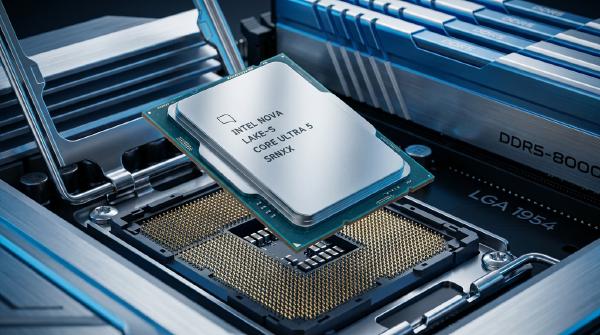
Intel Nova Lake-S Leak: 22-Core Core Ultra 5 Gets 108MB Gaming Cache
A new round of leaks suggests Intel is preparing two Core Ultra 5 desktop processors based on its upcoming Nova Lake-S architecture, each featuring 22 CPU cores and an unusually large 108MB bLLC (big Last-Level Cache). If accurate, these chips would mark Intel’s first effort to bring an oversized gaming-oriented cache architecture into its mainstream desktop lineup.
The leaked processors reportedly include both a 125W unlocked model for enthusiasts and a 65W locked variant aimed at mainstream systems. While Intel has yet to officially confirm these specifications, the rumors indicate an aggressive strategy to strengthen gaming performance in the highly competitive mid-range CPU segment.
🖥️ Two 22-Core Nova Lake-S CPUs Surface #
According to reports from hardware publications including Tom’s Hardware and TechPowerUp, two previously unannounced Nova Lake-S processors have appeared in recent leaks.
Both chips reportedly share the same core configuration:
- 6 Coyote Cove Performance Cores (P-Cores)
- 12 Arctic Wolf Efficient Cores (E-Cores)
- 4 Low-Power Efficient Cores (LP E-Cores)
This results in a total of:
- 22 CPU cores
The primary distinction between the two models lies in their power targets:
| Model | Power Rating | Characteristics |
|---|---|---|
| Unlocked Variant | 125W | Overclockable “K”-series processor for enthusiasts |
| Locked Variant | 65W | Standard desktop processor optimized for efficiency and ease of use |
Both processors are rumored to include the same 108MB bLLC, positioning them as gaming-focused offerings despite belonging to Intel’s Core Ultra 5 family.
🎮 Understanding Intel’s 108MB bLLC #
One of the most notable aspects of the leak is the introduction of bLLC, Intel’s large last-level cache implementation designed to reduce memory latency during gaming workloads.
The concept closely resembles AMD’s successful 3D V-Cache strategy.
Instead of frequently retrieving data from comparatively slower system memory, a significantly larger on-chip cache allows latency-sensitive applications to keep more game data close to the CPU cores.
Potential benefits include:
- Reduced memory access latency
- Improved gaming performance
- Better frame-time consistency
- Higher CPU utilization efficiency
Games are among the workloads that benefit most from larger cache capacities because they repeatedly access relatively small datasets during simulation, physics, and AI processing.
📈 Bringing Large Cache to the Mid-Range #
Traditionally, processors featuring exceptionally large cache capacities have been reserved for premium desktop CPUs.
AMD’s Ryzen X3D processors are a prominent example, offering substantial gaming gains but commanding higher prices than their conventional counterparts.
If Intel introduces 108MB bLLC to the Core Ultra 5 lineup, it would significantly lower the cost of entry for gamers seeking cache-optimized performance.
Such a move could reshape competition in the mainstream desktop market by providing:
- More affordable gaming CPUs
- Higher gaming performance at mid-range price points
- Greater pressure on competing processors in the same segment
Rather than limiting advanced cache technology to flagship products, Intel would effectively extend it to a much broader audience.
⚠️ Leaked Specifications Remain Unconfirmed #
Despite growing attention surrounding these processors, it is important to remember that all currently available information originates from unofficial sources.
Some discrepancies have already emerged.
For example, Igor’s Lab has noted inconsistencies between different reports regarding Nova Lake’s core configurations and product specifications.
Details that remain uncertain include:
- Final cache implementation
- Operating frequencies
- Product naming
- SKU positioning
- Launch timing
Intel has not publicly commented on any of the reported specifications.
🔍 Can Nova Lake Improve Intel’s Gaming Performance? #
The rumored cache expansion appears to address one of Intel’s most widely discussed weaknesses in recent desktop generations.
While Arrow Lake introduced meaningful architectural improvements, many gaming benchmarks showed relatively modest gains compared to competing processors equipped with AMD’s 3D V-Cache technology.
Adding a substantially larger last-level cache could help Intel narrow that gap, particularly in workloads where memory latency has a measurable impact on frame rates.
However, several important questions remain unanswered:
- How much gaming performance will 108MB bLLC actually deliver?
- Will cache-equipped models carry a significant price premium?
- Can the 65W processor sustain high boost frequencies during extended gaming sessions?
- How effectively will Nova Lake balance cache capacity, power consumption, and thermal performance?
Only independent benchmarking after launch will provide definitive answers.
💡 Why These Leaks Matter #
If the reported specifications prove accurate, Nova Lake-S could represent one of Intel’s most significant changes to its mainstream desktop strategy in years.
Potential highlights include:
- 22-core processors entering the Core Ultra 5 segment
- 108MB gaming-focused cache
- Overclockable and efficiency-oriented variants
- Greater emphasis on gaming performance
- Increased competition with AMD’s X3D lineup
For PC builders focused on gaming rather than flagship workstation performance, these processors could become compelling alternatives if Intel prices them competitively.
🏁 Final Thoughts #
Although still based entirely on unofficial leaks, the rumored 22-core Nova Lake-S Core Ultra 5 processors suggest Intel is preparing a stronger response to the growing popularity of large-cache gaming CPUs. By pairing a 108MB bLLC with a high core count and offering both 125W enthusiast and 65W mainstream variants, Intel appears to be targeting gamers who want premium gaming performance without stepping into flagship price brackets.
Until Intel formally unveils Nova Lake-S, however, these specifications should be viewed as preliminary. Final cache configurations, clock speeds, and pricing may all change before launch, but the leaks provide an intriguing preview of Intel’s evolving desktop CPU roadmap.