Intel Responds to Arrow Lake Criticism as Nova Lake Takes Shape
Intel has publicly addressed the disappointing reception of its Arrow Lake desktop processors, acknowledging the challenges the platform faced among gamers and PC enthusiasts. During COMPUTEX 2026, company executives outlined a strategy centered on aggressively priced Arrow Lake Refresh processors, positioning them as the first step toward rebuilding consumer confidence ahead of the anticipated arrival of Nova Lake later this year.
For Intel, the issue extends beyond the performance of a single CPU generation. The company is attempting to restore credibility within the enthusiast community after a launch that failed to meet expectations in one of the industry’s most influential market segments.
🎮 Arrow Lake Struggles to Win Over Gamers #
Before launch, Arrow Lake was expected to mark a major architectural leap for Intel’s desktop lineup. Enthusiasts anticipated improvements in both gaming and productivity workloads, especially as competition with AMD continued to intensify.
However, real-world testing produced a more mixed picture.
Gaming Performance Disappointments #
The most significant criticism centered on gaming performance.
Across multiple popular AAA titles, benchmark results showed that some Arrow Lake processors delivered frame rates that were only marginally better—or in certain cases lower—than their predecessors. While performance varied by title and system configuration, the results failed to deliver the clear generational leap many consumers expected.
For gaming-focused buyers, perception matters almost as much as raw performance. Once reports emerged suggesting that the newest generation was not consistently outperforming older alternatives, negative sentiment spread quickly throughout enthusiast communities.
Productivity Strength Wasn’t Enough #
Arrow Lake’s productivity performance remained competitive in many workloads, including:
- Content creation
- Multithreaded applications
- Professional software
- General desktop computing
However, strong productivity numbers were not enough to offset concerns from gamers, who represent a highly visible and influential segment of the DIY PC market.
As a result, several major technology publications excluded Arrow Lake from their top gaming CPU recommendations, further reinforcing the perception that the platform had missed its target audience.
💰 Arrow Lake Refresh Becomes a Reputation-Recovery Strategy #
At COMPUTEX 2026, Intel executives openly acknowledged the need to rebuild enthusiasm around the desktop platform.
In an interview with Tom’s Hardware, Intel Client Computing Group Senior Director of Product Management Nish Neelalojanan explained that the pricing strategy behind the new Arrow Lake Refresh lineup was intentionally designed to restore consumer confidence.
The most notable examples include:
- Core Ultra 7 270K Plus
- Core Ultra 5 250K Plus
According to Intel’s positioning, these processors offer stronger overall value than the original Arrow Lake launch products while carrying significantly more attractive pricing.
An Unusual Product Hierarchy #
One of the most surprising aspects of the refresh lineup is how it compares with the original flagship.
Reports suggest that the Core Ultra 7 270K Plus can outperform the earlier Core Ultra 9 285K in a variety of workloads despite being offered at a substantially lower price point.
Historically, Intel’s desktop lineup has followed a predictable hierarchy:
- Higher-tier processors command premium pricing.
- Flagship models remain the fastest products.
- Lower-priced SKUs fill value-oriented segments.
The Arrow Lake Refresh strategy partially breaks this convention.
By offering stronger value at dramatically lower prices, Intel appears willing to sacrifice traditional product segmentation in favor of rebuilding goodwill among enthusiasts.
🔄 Why Pricing Matters More Than Ever #
In the enthusiast market, recovering from a disappointing launch often requires more than incremental performance improvements.
Price-to-performance ratio plays a major role in shaping public perception.
Aggressively priced products can:
- Encourage former Intel users to reconsider the platform.
- Attract cost-conscious system builders.
- Improve community sentiment.
- Create momentum ahead of future launches.
For Intel, Arrow Lake Refresh appears to serve exactly this purpose—a bridge between a difficult launch cycle and the next major architectural transition.
🚀 Nova Lake Becomes the Real Target #
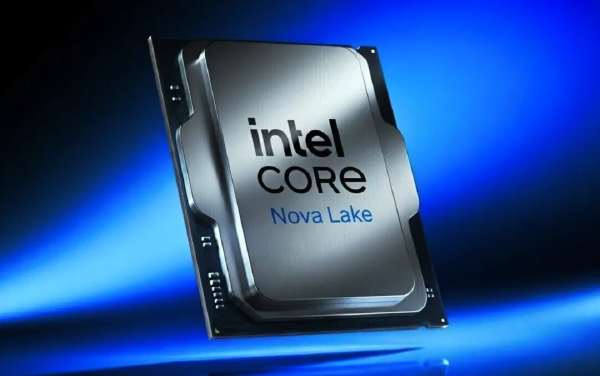
While Arrow Lake Refresh addresses short-term concerns, Intel’s long-term focus is clearly centered on Nova Lake.
The company has confirmed that Nova Lake remains on schedule for launch toward the end of 2026, making it one of the most anticipated desktop CPU releases in recent years.
Intel is expected to use Nova Lake as an opportunity to reset the competitive landscape against AMD.
🔮 Rumored bLLC Technology Targets AMD’s Gaming Advantage #
One of the most widely discussed Nova Lake rumors involves a new cache architecture known as bLLC (Big Last Level Cache).
Although Intel has not officially disclosed technical details, industry reports suggest the technology is being developed to improve gaming performance by increasing the amount of cache available to CPU cores.
The concept naturally draws comparisons to AMD’s highly successful 3D V-Cache technology, which has become a major differentiator for processors such as the Ryzen X3D series.
Potential goals of bLLC include:
- Higher gaming frame rates
- Reduced memory-access latency
- Better performance in CPU-limited workloads
- Stronger competitiveness against AMD’s gaming-focused products
At present, however, detailed specifications and real-world performance data remain unavailable.
Consumers should treat current discussions as speculation until Intel provides official technical disclosures.
⚔️ A New Pricing Battle Could Be Coming #
Perhaps the most intriguing aspect of Nova Lake is not its architecture but its potential pricing strategy.
If Intel continues the aggressive pricing approach seen with Arrow Lake Refresh, Nova Lake could become one of the company’s most competitive launches in years.
Industry observers increasingly expect Intel to pursue:
- More aggressive launch pricing
- Stronger price-to-performance positioning
- Direct competition with AMD across multiple segments
- Faster promotional activity after launch
Should this occur, the desktop CPU market could experience its most intense competitive pricing environment in several years.
🛠️ What Builders Should Consider #
For consumers planning a system upgrade, the timing question becomes increasingly important.
Buy Now If: #
- You find significant discounts on current-generation CPUs.
- Your existing system is limiting productivity or gaming performance.
- You need an upgrade immediately.
Consider Waiting If: #
- You’re planning a completely new build later in 2026.
- Gaming performance is your highest priority.
- You want to evaluate Nova Lake and AMD’s next responses before making a purchase decision.
As always, final purchasing decisions should be based on independently verified benchmarks rather than pre-launch rumors.
📈 Why This Matters #
Intel’s response to Arrow Lake demonstrates how quickly market perception can shift in the enthusiast PC industry.
Strong productivity performance alone is no longer sufficient to win over desktop enthusiasts. Gaming performance, value, efficiency, and pricing all play critical roles in shaping public opinion.
The Arrow Lake Refresh lineup appears to be Intel’s attempt to regain momentum, but Nova Lake will likely determine whether the company can fully restore its position among gamers and DIY builders.
If Intel successfully combines a new gaming-focused architecture with aggressive pricing, Nova Lake could become one of the most important CPU launches of the decade—and potentially reignite a fierce battle for desktop CPU leadership.