Intel Nova Lake Core Ultra 400: Up to 52 Cores Coming by 2027
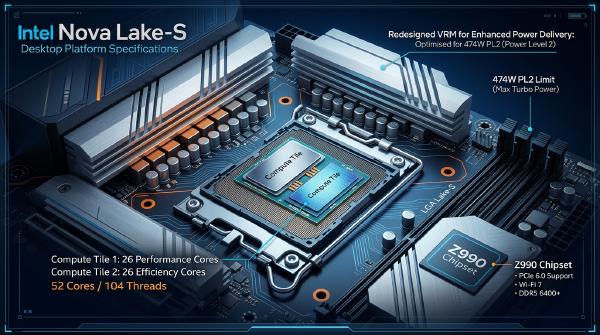
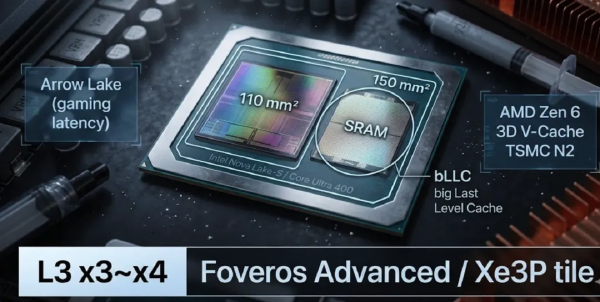
Intel’s next-generation desktop processor family, Nova Lake, is gradually taking shape through a series of industry leaks. Expected to launch under the Core Ultra 400 branding, the lineup is reportedly scheduled for a phased rollout throughout 2027, culminating with a flagship 52-core processor in the second half of the year.
Beyond a significant increase in core counts, Nova Lake is expected to introduce a new desktop platform featuring faster DDR5 memory, expanded PCIe connectivity, next-generation integrated graphics, enhanced AI acceleration, and a new CPU socket. Although Intel has yet to officially confirm these details, the leaked roadmap provides valuable insight for enthusiasts and professionals planning future PC upgrades.
🚀 Core Ultra 400 Branding Replaces Core Ultra 200 #
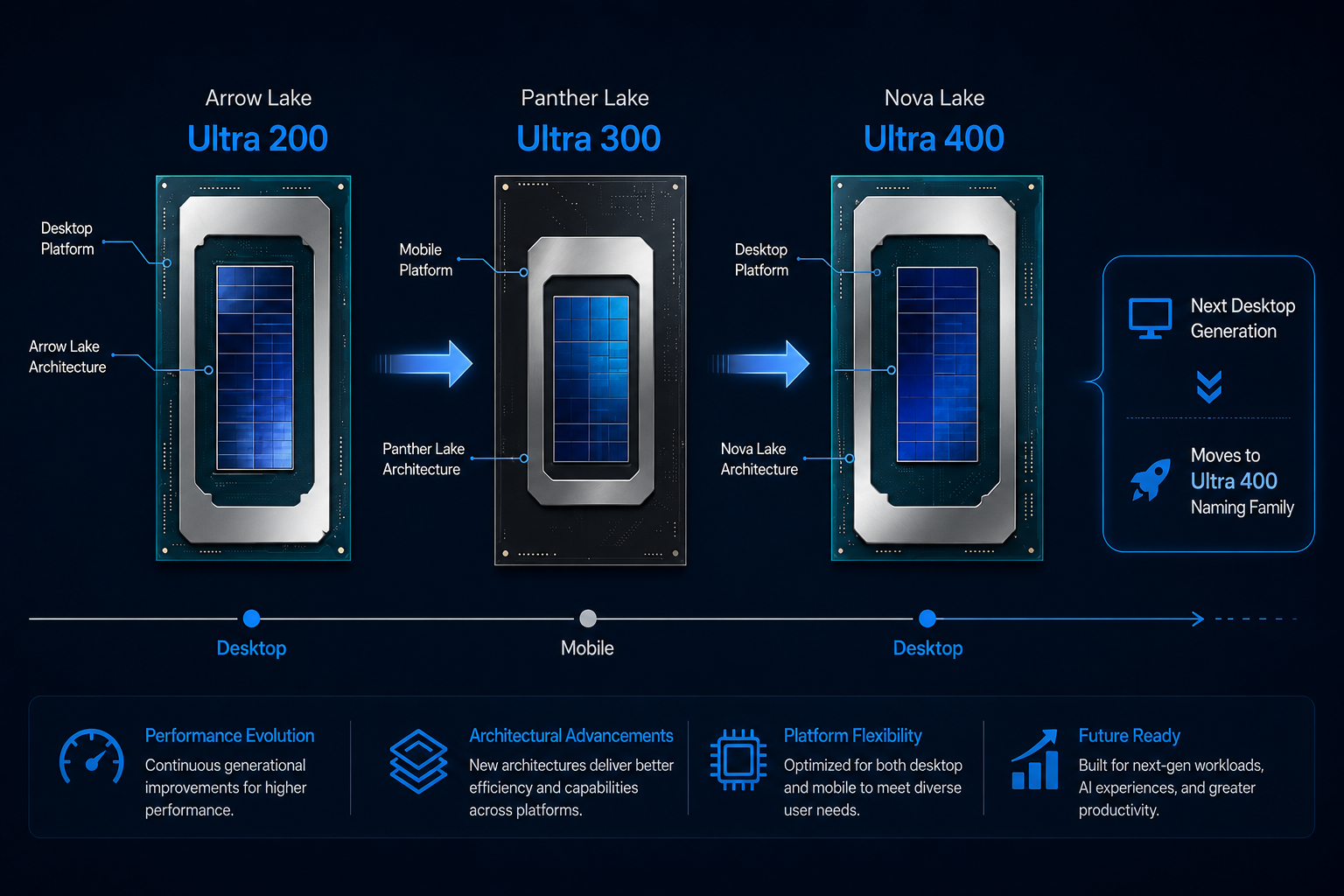
Intel has maintained a consistent naming strategy across its latest processor generations:
- Arrow Lake desktop processors are marketed as the Core Ultra 200 Series.
- Panther Lake mobile processors belong to the Core Ultra 300 Series.
- Nova Lake is expected to become the Core Ultra 400 Series for desktop platforms.
A sequential branding strategy simplifies product identification, making it easier for consumers to distinguish processor generations without relying solely on architecture codenames.
📅 Multi-Phase Launch Roadmap #
According to current leaks, Intel plans to introduce Nova Lake in multiple stages rather than releasing the full product stack simultaneously.
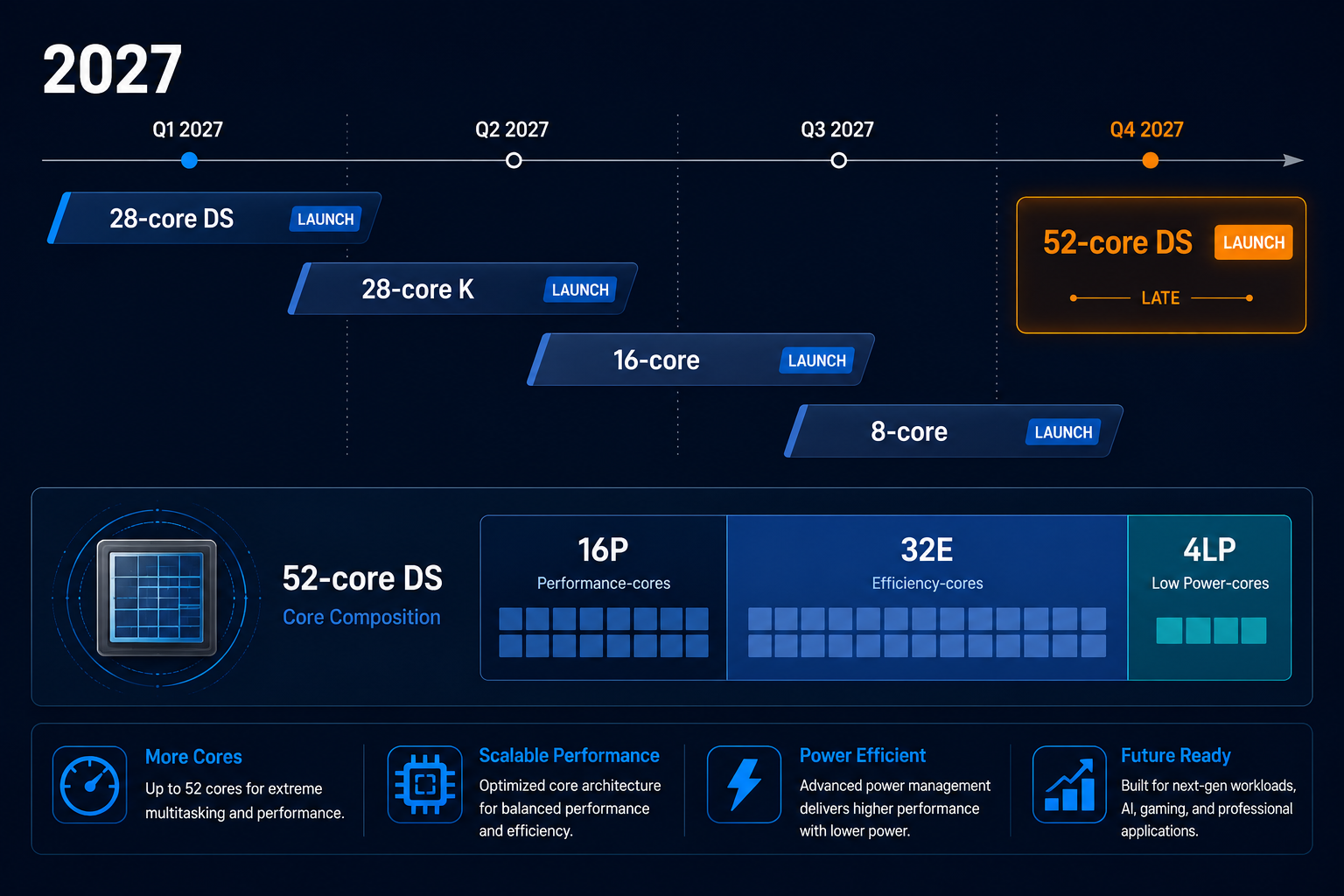
The initial launch is expected to focus on high-end 28-core desktop processors using the internal DS package, with availability projected between January and March 2027.
The rollout is expected to continue as follows:
| Expected Launch Window | Processor Family |
|---|---|
| January – March 2027 | 28-core DS models |
| March – April 2027 | 28-core unlocked K-Series |
| Late March – May 2027 | 16-core and 8-core models |
| Late May – September 2027 | Flagship 52-core DS processor |
This staggered release allows Intel to address different market segments over time, beginning with enthusiasts and professional creators before expanding into mainstream desktop offerings.
🖥️ Flagship 52-Core Configuration #
The most anticipated processor in the Nova Lake lineup is the flagship 52-core model.
Based on current information, the processor will feature:
- 16 Coyote Cove Performance Cores (P-Cores)
- 32 Arctic Wolf Efficiency Cores (E-Cores)
- 4 Low-Power Efficiency Cores (LP E-Cores)
This hybrid architecture delivers a total of 52 CPU cores, more than doubling the core count of the current Core Ultra 9 285K, which offers 24 cores.
The increased parallel processing capability is expected to benefit heavily threaded workloads, including:
- 3D rendering
- Video production
- Software compilation
- Scientific simulations
- Virtual machine hosting
- AI inference and model development
While gaming performance will depend on clock frequencies, cache hierarchy, and scheduling optimizations, professional workloads stand to gain the most from the dramatic increase in available compute resources.
⚙️ Platform Upgrades Beyond the CPU #
Nova Lake is expected to introduce substantial improvements across the desktop platform, extending well beyond processor performance.
Key platform enhancements reportedly include:
- DDR5-8000 memory support
- Up to 24 PCIe 5.0 lanes
- Thunderbolt 5 connectivity
- Xe3 Celestial integrated graphics
- NPU 5 AI accelerator
DDR5-8000 Memory #
Support for DDR5-8000 enables significantly higher memory bandwidth, benefiting workloads that rely heavily on rapid data movement, including content creation, simulation, virtualization, and memory-sensitive gaming.
Expanded PCIe 5.0 Connectivity #
With up to 24 PCIe 5.0 lanes, users can deploy multiple high-speed NVMe SSDs alongside next-generation graphics cards without quickly exhausting available bandwidth.
The additional connectivity also improves flexibility for expansion cards such as high-speed networking, storage controllers, and AI accelerators.
Thunderbolt 5 #
Native Thunderbolt 5 support increases external bandwidth for demanding peripherals, including:
- High-performance external SSD arrays
- Multiple high-resolution displays
- Professional docking stations
- External GPU and accelerator solutions
Xe3 Celestial Integrated Graphics #
Nova Lake is also expected to introduce Intel’s Xe3 Celestial integrated GPU architecture, providing improved graphics capabilities for systems that do not require discrete GPUs while accelerating media encoding and display workloads.
NPU 5 AI Engine #
Intel’s next-generation NPU 5 is designed to accelerate local AI workloads with greater efficiency.
Potential applications include:
- AI-powered productivity software
- Image and video enhancement
- On-device generative AI
- Speech recognition
- Intelligent background processing
As AI capabilities continue moving from cloud services to local devices, dedicated neural processing hardware is becoming an increasingly important component of desktop platforms.
🔌 New LGA 1954 Socket #
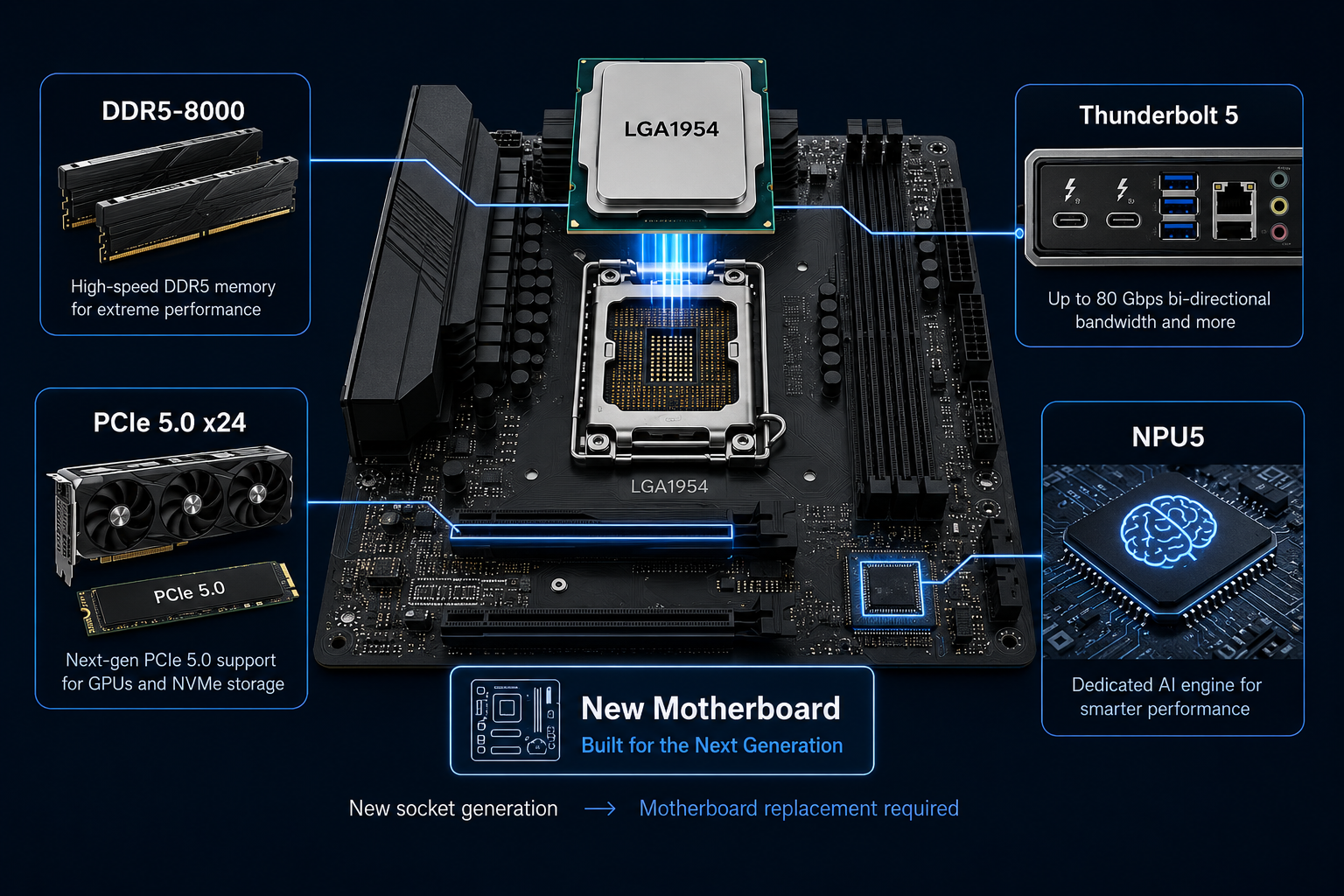
Nova Lake will reportedly transition to an entirely new LGA 1954 socket.
As a result, existing Arrow Lake motherboards will not support Nova Lake processors, requiring users to upgrade both the CPU and motherboard.
For buyers considering an Arrow Lake platform today, this represents an important long-term consideration, as there is currently no expected upgrade path to Nova Lake without replacing the motherboard.
🌡️ Power Characteristics #
Despite the substantial increase in processing cores, leaked specifications suggest that Intel intends to keep power consumption within familiar enthusiast desktop limits.
The flagship processor is expected to feature:
| Specification | Value |
|---|---|
| Processor Base Power (PBP) | 150 W |
| Maximum Turbo Power (MTP) | 253 W |
These figures are comparable to previous flagship desktop processors, indicating that existing high-end air coolers and 360 mm liquid cooling solutions should remain suitable for most enthusiast systems.
Actual thermal behavior, however, will ultimately depend on boost algorithms, sustained workloads, motherboard power profiles, and cooling implementation.
📈 Outlook #
Although Intel has not officially announced the Nova Lake desktop family, current leaks suggest a substantial architectural leap for the company’s next-generation desktop platform. Higher core counts, faster memory support, expanded PCIe bandwidth, improved integrated graphics, dedicated AI acceleration, and Thunderbolt 5 collectively position the Core Ultra 400 series as a significant upgrade over the current generation.
Prospective system builders should keep in mind that all reported specifications, release windows, and product configurations remain based on pre-release information. Intel may revise launch schedules or hardware specifications before Nova Lake officially reaches the market.