Intel Nova Lake-S Leak: A Mid-Range APU Killer Emerges
The latest leaks surrounding Intel’s Nova Lake-S (Core Ultra 400S), emerging in April 2026, point to a highly strategic move: a mid-range processor designed to directly challenge AMD’s long-standing dominance in the APU (Accelerated Processing Unit) segment.
This isn’t a typical desktop CPU with basic integrated graphics. Instead, it represents Intel’s first serious push toward making entry-level discrete GPUs unnecessary for a large portion of users.
🎯 A New Class of Mid-Range Processor #
The leaked SKU features a 16-core hybrid configuration (4P + 8E + 4 LP-E), intentionally scaled back from flagship designs to prioritize graphics performance.
Key Design Choices #
- Balanced core layout: Enough CPU performance for gaming and multitasking
- Silicon reallocation: More die area dedicated to the integrated GPU
- Target audience: Mainstream users rather than extreme enthusiasts
This marks a shift from “CPU-first” design to a more balanced compute + graphics approach.
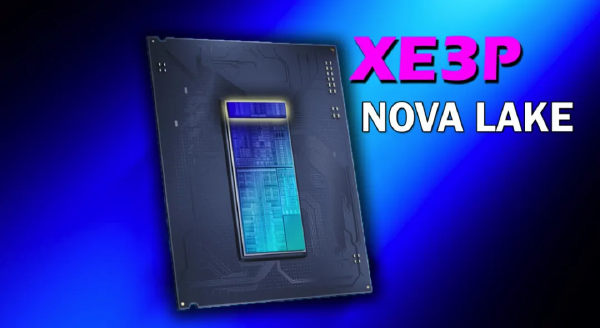
🖥️ Xe3P Graphics: The Real Headliner #
The defining feature of this SKU is its dramatically upgraded integrated GPU.
Graphics Specifications #
- 12 Xe3P cores (vs. typical 2 Xe3 cores on standard desktop SKUs)
- Based on Xe3P (Performance/Pro) architecture
- Designed for sustained 3D workloads—not just display output
Platform Implications #
- Requires dual VCCGT VRM phases on the motherboard
- Indicates significantly higher power draw for the iGPU
- Positions the chip closer to a fused CPU + discrete GPU design
This is Intel’s clearest signal yet that integrated graphics are no longer an afterthought.
🚧 Solving the Bandwidth Bottleneck #
A powerful iGPU is only effective if it can access data fast enough. Intel addresses this constraint through both memory and architectural optimizations.
Memory Advancements #
- Native support for DDR5-8000+
- Compatibility with CUDIMM modules
- Provides the bandwidth needed for high-performance graphics workloads
SoC Tile Optimization #
- iGPU and LP-E cores are placed on a dedicated tile
- Reduces latency between the graphics engine and memory controller
- Improves data locality and throughput
Together, these changes aim to eliminate the traditional bandwidth starvation problem seen in integrated graphics.
🎮 Performance Targets: Replacing Entry-Level GPUs #
Early projections suggest this integrated GPU could compete with both high-end iGPUs and lower-tier discrete cards.
Expected Performance Range #
- Comparable to AMD Radeon 890M
- Competitive with GTX 1650 / RTX 3050 (6GB)
- Similar class to Intel Arc A380 / B380
Real-World Gaming #
- 1080p High settings in modern titles
- 1440p Medium with XeSS upscaling
- Console-like experience without a discrete GPU
If realized, this would effectively collapse the distinction between integrated and entry-level discrete graphics.
⚖️ Why Intel Targets the Mid-Range #
Intel’s decision to place this powerful iGPU in the Core Ultra 5 / 7 tier is deliberate.
Strategic Positioning #
- High-end users: Already rely on dedicated GPUs (RTX 5090-class or similar)
- Mid-range users: Most likely to benefit from strong integrated graphics
Ideal Use Cases #
- Small Form Factor (SFF) builds
- Budget gaming PCs
- Home theater systems
- Low-noise, low-power desktops
This segment represents the largest opportunity for GPU displacement.
📊 Specification Snapshot #
| Feature | Details |
|---|---|
| CPU Configuration | 16 cores (4P + 8E + 4 LP-E) |
| Integrated GPU | 12 Xe3P cores |
| Socket | LGA1954 |
| Memory Support | DDR5-8000+, CUDIMM |
| Target Segment | Mid-range / SFF / budget gaming |
🔮 Final Take: The Beginning of the End for Entry GPUs? #
Nova Lake-S signals a turning point in desktop computing:
- Integrated graphics are approaching discrete GPU territory
- Memory bandwidth and architecture are finally catching up
- Mid-range CPUs are becoming all-in-one gaming platforms
However, whether this fully eliminates the $200 GPU market depends on:
- Real-world performance consistency
- Driver maturity and software optimization
- Competitive response from AMD and NVIDIA
What’s clear is that Intel is no longer content to play catch-up—it’s actively trying to redefine the entry-level gaming stack.