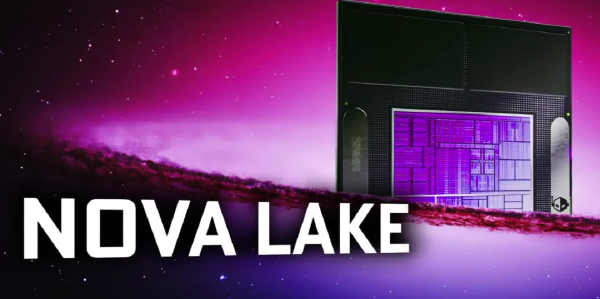
Intel Nova Lake: 52-Core Desktop CPU Redefines Performance
Intel’s Nova Lake (Core Ultra 400S), expected in late 2026, represents a major architectural shift beyond Arrow Lake. With configurations reaching 52 cores and up to 288MB of bLLC (Big Last Level Cache), Intel is not simply scaling performance—it is redesigning the desktop CPU to address modern bottlenecks such as multi-die latency, memory pressure, and AMD’s long-standing gaming advantage.
Below is a technical breakdown of the key challenges Nova Lake is designed to solve.
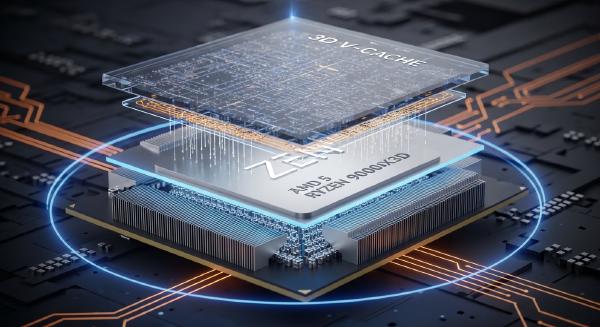
🎮 The Gaming Bottleneck: Challenging 3D V-Cache #
AMD’s X3D processors have led gaming benchmarks due to their large L3 cache. Nova Lake introduces a direct response through its bLLC architecture.
- Massive cache pool: Ranges from 144MB to 288MB
- On-die data access: Reduces reliance on slower DDR5 system memory
- Real-world impact:
- Higher average FPS
- Significant improvement in 1% low FPS
- Reduced stuttering and frame-time inconsistency
By keeping more game data close to the cores, Nova Lake aims to deliver smoother and more consistent gaming performance.
🧩 The Multi-Die Latency Problem #
To achieve 52 cores, Nova Lake adopts a dual-tile (multi-die) architecture.
- Traditional issue: Cross-die communication introduces latency penalties
- Nova Lake approach:
- Uses a massive shared 288MB bLLC as a unified cache layer
- Minimizes the need for inter-tile data transfers
- Improves locality of reference across workloads
This design allows the processor to behave more like a single cohesive unit, despite being physically split across multiple compute tiles.
⚙️ Multitasking and Efficiency Redesign #
Nova Lake introduces new core architectures:
- Coyote Cove (Performance cores)
- Arctic Wolf (Efficiency cores)
Hybrid Configuration #
- 16 Performance cores (P-cores)
- 32 Efficiency cores (E-cores)
- 4 Low-Power Efficiency cores (LPE cores)
Functional Separation #
- LPE cores: Handle OS-level and background tasks
- Primary cores (P + E): Dedicated to foreground workloads
This separation reduces interference from background processes, allowing high-priority tasks—such as gaming or rendering—to run without interruption.
🔌 Platform Evolution: LGA1954 Socket #
Supporting a 52-core desktop CPU requires a new platform foundation.
- Socket upgrade: Transition from LGA1851 to LGA1954
- Power delivery: Base power targets around 175W
- I/O expansion: Supports complex dual-tile interconnects
Memory Advancements #
- Native support for DDR5-8000
- Compatibility with CUDIMM and CSODIMM modules
- Improved bandwidth to match increased core count
This platform ensures that memory and power infrastructure can keep pace with the CPU’s expanded capabilities.
📊 Nova Lake SKU Strategy (Late 2026) #
| Tier | Configuration | Cache | Primary Goal |
|---|---|---|---|
| Core Ultra 9 | 52 cores (dual-tile) | 288MB bLLC | Compete with X3D and HEDT |
| Core Ultra 7 | 24–28 cores | 144MB bLLC | High-end gaming |
| Core Ultra 5 | 14–20 cores | Standard | Mainstream performance |
| Core Ultra 3 | 6–10 cores | Standard | Entry-level |
🔮 Final Take: Scaling Without Compromise #
Nova Lake reflects Intel’s belief that scaling core counts on the desktop can succeed—if supported by the right architectural innovations.
The introduction of bLLC is central to this vision:
- Bridges the gap between raw compute power and low-latency access
- Mitigates traditional downsides of multi-die designs
- Directly targets AMD’s strength in gaming workloads
Rather than choosing between high core counts and responsiveness, Nova Lake attempts to deliver both.