
Intel Raptor Lake NEXT Leak: DDR4 Support Extends Budget PC Lifespan
🧠 Intel’s Dual-Track CPU Strategy for 2027 #
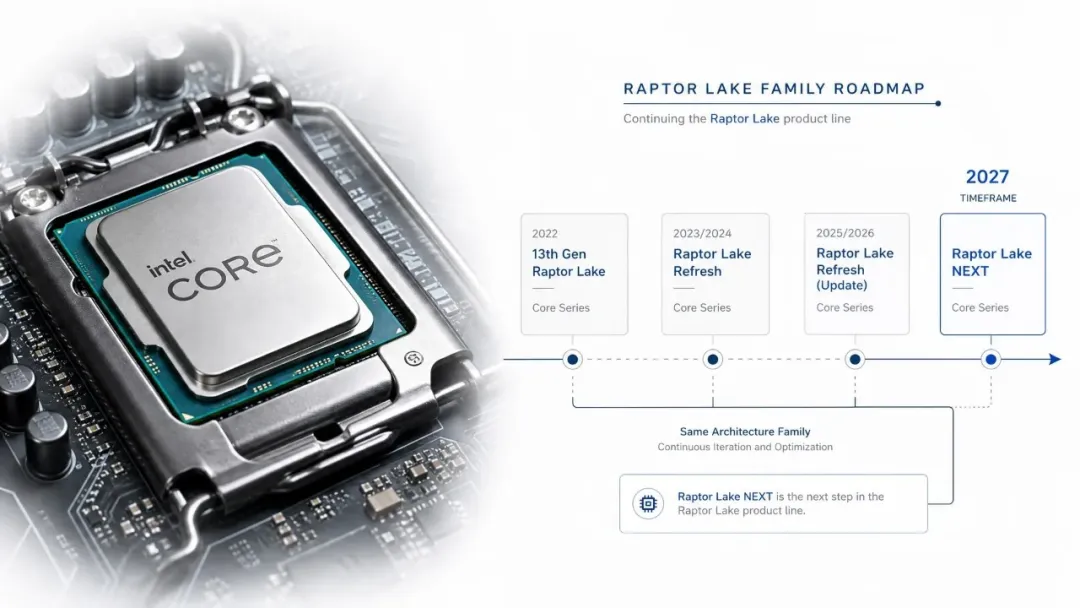
Intel is reportedly preparing a refreshed CPU lineup, tentatively called Raptor Lake NEXT, expected in early 2027. The lineup is designed to run in parallel with next-generation Nova Lake processors, effectively splitting Intel’s desktop ecosystem into two distinct platform tiers.
This approach reflects a growing market divide driven by memory pricing pressures, with DDR4 remaining a viable option for cost-sensitive builders while DDR5 becomes the default for flagship systems.
🧩 Raptor Lake Evolution and Extended Lifecycle #
From flagship architecture to long-term value platform #
Raptor Lake has already undergone multiple iterations:
- 13th Gen Raptor Lake (original launch)
- 14th Gen Raptor Lake Refresh (incremental tuning)
- Core Series rebrand under Intel’s unified naming strategy
The rumored Raptor Lake NEXT continuation suggests Intel is extending the lifecycle of a mature, high-yield architecture to serve the mainstream and budget segments.
This strategy maximizes silicon reuse while maintaining competitiveness in lower-cost market segments.
⚙️ Platform Segmentation: Nova Lake vs Raptor Lake NEXT #
Clear split between premium and budget ecosystems #
Intel’s 2027 roadmap reportedly divides platforms as follows:
Intel Nova Lake
→ LGA 1954 socket
→ DDR5 only
→ High-end performance tier

Intel Raptor Lake NEXT
→ LGA 1700 socket
→ DDR4 / DDR5 support
→ Budget and mainstream tier
This dual-platform model allows Intel to:
- Push Nova Lake as a premium DDR5-native ecosystem
- Retain compatibility with existing LGA 1700 infrastructure
- Offer a low-cost upgrade path without motherboard replacement
For users still on DDR4 systems, this significantly lowers the barrier to incremental CPU upgrades.
💾 DDR4 vs DDR5 Economics Driving Market Demand #
Memory pricing reshaping platform decisions #
The continued high cost of DDR5 has created a sustained demand for DDR4-based systems, particularly among DIY builders and budget-conscious users.
| Platform Tier | Socket | Memory Type | Cost Profile |
|---|---|---|---|
| Premium | LGA 1954 / AM5-class | DDR5 / LPDDR5X | High |
| Mainstream legacy | LGA 1700 / AM4-class | DDR4 / DDR5 | Low–Moderate |
DDR4’s resurgence is largely driven by:
- Lower system build cost
- Mature motherboard ecosystem
- Sufficient performance for mainstream workloads
- Avoidance of DDR5 price premiums
As a result, Intel continues extending production of Raptor Lake Refresh SKUs to serve this demand segment.
🔄 Industry-Wide Impact on CPU and Memory Strategy #
Extending legacy platforms for market stability #
The rumored Raptor Lake NEXT release aligns with a broader industry trend of extending older platforms instead of forcing rapid adoption cycles.
Key implications include:
- Longer lifespan for LGA 1700 ecosystem
- Continued DDR4 availability in retail and OEM channels
- Increased segmentation between entry and enthusiast builds
- Slower forced migration to DDR5 platforms
AMD is also expected to participate in this extended lifecycle trend by sustaining AM4-based offerings alongside newer DDR5 platforms.
🧭 Builder Perspective: Practical Upgrade Strategy #
For PC builders, this roadmap suggests a more flexible upgrade environment:
- DDR4 systems remain viable for cost-focused upgrades
- LGA 1700 may continue receiving CPU refreshes
- DDR5 adoption becomes optional rather than mandatory in the near term
This reduces the total platform migration cost, especially for users prioritizing GPU performance over memory bandwidth scaling.
🧩 Conclusion: A Prolonged Transition to DDR5 Dominance #
The rumored Raptor Lake NEXT initiative reflects Intel’s pragmatic response to uneven DDR5 adoption.
Rather than forcing an immediate transition, Intel appears to be maintaining dual-platform continuity—preserving DDR4 compatibility for budget segments while advancing DDR5 as the premium standard.
This extended transition phase effectively stabilizes the PC ecosystem during a period of volatile memory pricing and uneven platform adoption.