
Morgan Stanley: AMD EPYC Venice to Outship NVIDIA Vera in 2027
Morgan Stanley’s latest semiconductor industry report projects that AMD’s EPYC Venice processors, based on the Zen 6 architecture, will ship 6.75 million units in 2027, surpassing the projected 5.75 million units for NVIDIA’s Vera server CPUs.
Both product lines are expected to rely heavily on TSMC’s leading-edge process nodes and advanced packaging technologies, while the growing push toward custom silicon developed by AI companies introduces a major new competitive factor for the server CPU market.
📦 TSMC’s Advanced Packaging Demand Accelerates #
The report highlights a broader industry shift: as Agentic AI workloads become more prevalent, CPUs are increasingly becoming significant consumers of advanced packaging technologies such as CoWoS.
This trend is expected to intensify through 2027 as hyperscalers and AI infrastructure providers continue scaling compute deployments.
Key TSMC Packaging Trends for 2027 #
| Metric | Projection |
|---|---|
| TSMC monthly wafer capacity | 200,000 wafers |
| NVIDIA CoWoS-L consumption | 910,000 units |
| CoWoS-L YoY growth | 40% |
| NVIDIA data center revenue growth | 52% YoY |
NVIDIA is expected to remain TSMC’s largest CoWoS customer in 2027, driven primarily by demand for its Blackwell and Rubin AI GPU families.
In addition, strong pre-orders for CoWoS-R packaging are expected to support a rapid ramp-up of NVIDIA’s Vera CPU platform.
Morgan Stanley notes that NVIDIA has already delivered initial Vera CPU samples to major customers including:
- Anthropic
- OpenAI
- SpaceX
- Oracle
🖥️ AMD EPYC Venice vs. NVIDIA Vera #
2027 Server CPU Shipment Forecast #
| Feature | AMD EPYC Venice | NVIDIA Vera |
|---|---|---|
| Architecture | Zen 6 | Custom Arm-based |
| Process Node | TSMC 2nm | TSMC 3nm |
| Packaging | Advanced Packaging | CoWoS-R |
| Primary Workloads | AI and HPC | Agentic AI |
| 2027 Shipments | 6.75 million | 5.75 million |
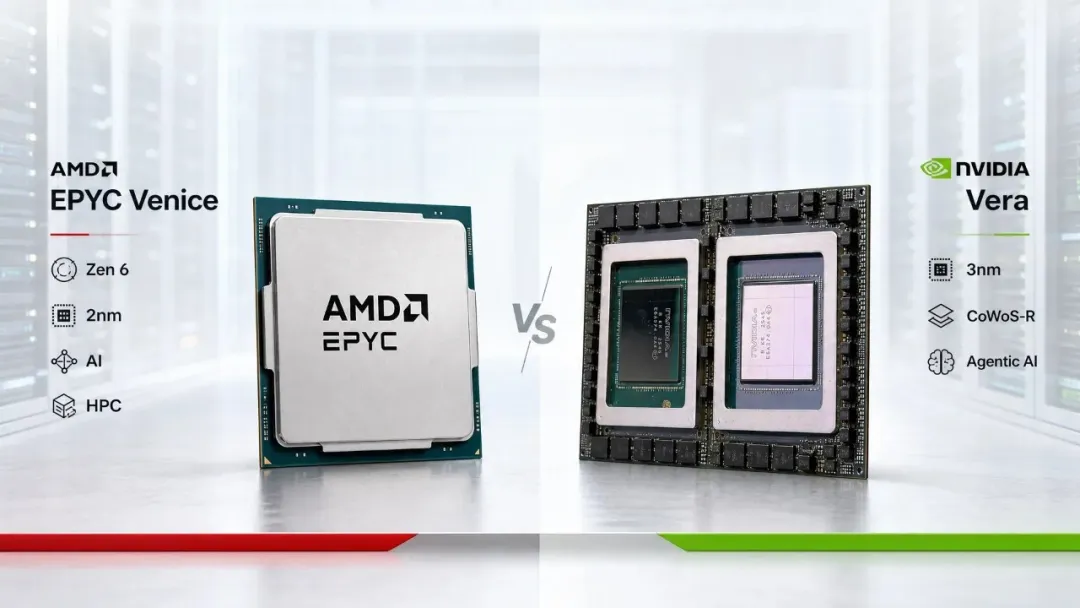
NVIDIA Vera #
NVIDIA’s Vera CPU is designed specifically for Agentic AI infrastructure and has reportedly entered mass production at TSMC.
The company has publicly stated its ambition to become the world’s largest CPU supplier. If Morgan Stanley’s forecast proves accurate, shipping 5.75 million server CPUs only a few years after launch would represent a remarkable achievement.
AMD EPYC Venice #
AMD’s EPYC Venice platform targets both AI and high-performance computing (HPC) workloads and is built using TSMC’s advanced 2nm manufacturing process.
Morgan Stanley forecasts:
- 6.75 million shipments in 2027
- 17% higher shipment volume than NVIDIA Vera
- 5.4× growth compared to 2026
Such growth would make EPYC Venice one of AMD’s fastest-scaling server processor generations.
📈 AI Infrastructure Continues Driving CPU Demand #
Although AMD and NVIDIA compete directly in the server market, Morgan Stanley believes both vendors will benefit from the same industry trend: rapidly expanding AI infrastructure.
Major demand drivers include:
- Large-scale AI training clusters
- AI inference deployments
- Agentic AI workloads
- Cloud data center expansion
- Enterprise AI adoption
- HPC modernization
As AI systems continue to grow in complexity, CPUs remain essential for orchestration, scheduling, memory management, storage, networking, and system-level coordination alongside GPUs.
🧠 Custom Silicon Emerges as the Biggest Competitive Variable #
Perhaps the report’s most notable conclusion is that AMD and NVIDIA may ultimately face greater competition from custom silicon than from each other.
Leading AI and cloud companies are increasingly investing in proprietary processors tailored to their own infrastructure, including:
- OpenAI
- Amazon
This shift is fueling an industry-wide debate over whether organizations should continue relying on general-purpose processors or develop application-specific chips optimized for their own AI workloads.
Potential advantages of custom silicon include:
- Higher performance-per-watt
- Better workload-specific optimization
- Reduced long-term infrastructure costs
- Tighter hardware-software integration
- Greater control over supply chains
Morgan Stanley does not disclose expected production volumes or deployment schedules for these in-house processors. However, the continued rise of custom silicon is expected to become one of the most important factors shaping the future server processor market.
📊 Outlook #
Morgan Stanley’s projections suggest that 2027 will be a defining year for the AI server CPU industry.
While AMD’s EPYC Venice is forecast to outship NVIDIA’s Vera platform, the broader competitive landscape is evolving beyond traditional CPU vendors. Future market leadership will increasingly depend on three competing approaches:
- General-purpose server CPUs from AMD
- AI-optimized CPU platforms from NVIDIA
- Custom silicon developed by hyperscalers and leading AI companies
As demand for AI computing infrastructure continues to accelerate, advanced semiconductor manufacturing and packaging technologies will remain at the center of industry competition.